Oak Ridge researchers and Oklo outline how TRISO fuel and recycling could reshape the nuclear fuel cycle
May 18, 2026 | Oak Ridge National Laboratory, Office of Science, Department of Energy (DOE), Executive, Federal
This article was created by AI summarizing key points discussed. AI makes mistakes, so for full details and context, please refer to the video of the full meeting. Please report any errors so we can fix them. Report an error »
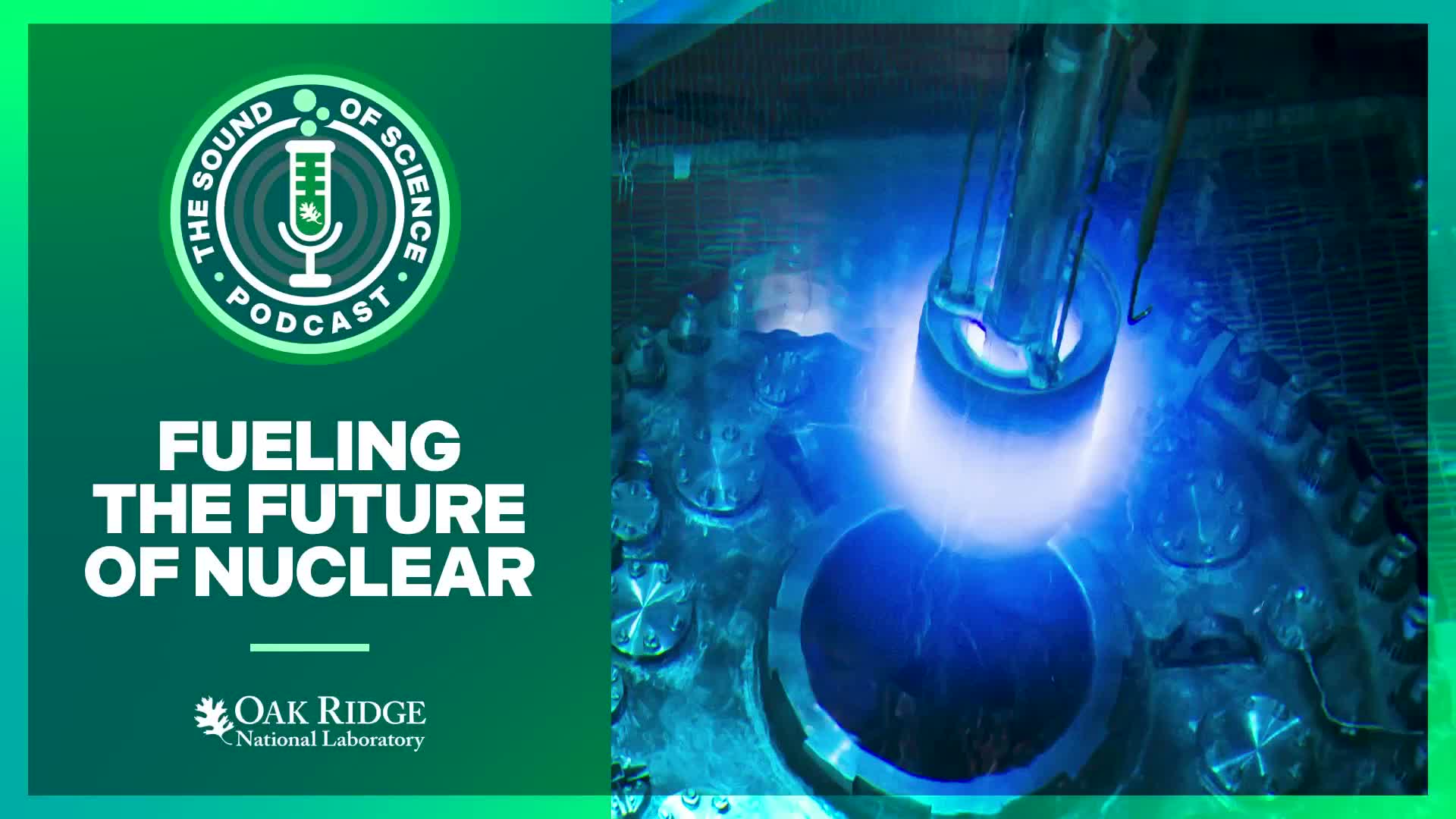
Oak Ridge National Laboratory researchers and an Oklo executive described how advanced fuel forms and new recycling techniques could change how the United States uses, reuses and ultimately disposes of nuclear fuel.
"If we treat the fuel as a pile of hot rocks, I can't really ask it to do all that much," said Andy Nelson, who leads the nuclear energy and fuel cycle division at Oak Ridge National Laboratory, arguing that fuel behaves like a living materials problem inside reactors and requires continuous study over years to understand evolving properties.
Nelson and other ORNL scientists emphasized TRISO (tristructural isotropic) particle fuel as an example of that design shift. Instead of long cylindrical fuel rods, TRISO divides fuel into millions of coated particles roughly the size of a poppy seed; each particle has layered carbon and ceramic coatings intended to provide distributed containment so one defective particle does not compromise the whole assembly.
Lee Martin, who leads ORNL's integrated fuel cycle section, described trade-offs at the back end of the cycle. "About 5% of what comes out of the reactor is truly waste," Martin said, noting that while recycling can recover uranium and potentially valuable radioisotopes, it does not eliminate waste and creates new processing challenges.
Martin and other researchers discussed the longstanding PUREX (plutonium‑uranium redox extraction) aqueous separation process — an international industrial standard for decades — and current research into alternative approaches. Some researchers are exploring thermal preprocessing steps to remove volatile radionuclides (tritium, iodine, krypton) before chemical separation to reduce downstream complexity.
Ed Petit Dimash, vice president of recycling at Oklo, said his company is building an integrated commercial approach that includes recycling and fabrication. Oklo plans to use recycled material for its first core (material DOE previously processed from the EBR‑2 experimental reactor) and has proposed a campus in Oak Ridge that would colocate recycling, fuel fabrication and isotope recovery.
Petit Dimash described the recycling technology Oklo intends to deploy as pyroprocessing — a largely dry, nonaqueous technique that company representatives say can enable a smaller facility with a lower hazard profile compared with traditional aqueous reprocessing. He said the company has selected a site on the former K‑25 campus in Oak Ridge for that work and emphasized advantages that local infrastructure and workforce provide.
Speakers cautioned that technical and economic choices — whether to pursue a closed fuel cycle, which recycling technologies to use, and how to design fuel for long‑term disposal pathways — remain complex. Nelson noted it can take two to three decades from an idea to a vendor‑manufactured, licensed fuel product, a timeline ORNL and others are working to shorten with modern computational and experimental tools.
The podcast framed these developments as part of a broader moment in which commercial motivation, national energy and economic priorities, and lab capabilities are aligning to accelerate fuel innovation. The hosts said future episodes will explore additional nuclear topics, including fusion.
The account above is based on a Sound of Science episode produced by Oak Ridge National Laboratory and includes direct quotes and paraphrases from those interviews.
"If we treat the fuel as a pile of hot rocks, I can't really ask it to do all that much," said Andy Nelson, who leads the nuclear energy and fuel cycle division at Oak Ridge National Laboratory, arguing that fuel behaves like a living materials problem inside reactors and requires continuous study over years to understand evolving properties.
Nelson and other ORNL scientists emphasized TRISO (tristructural isotropic) particle fuel as an example of that design shift. Instead of long cylindrical fuel rods, TRISO divides fuel into millions of coated particles roughly the size of a poppy seed; each particle has layered carbon and ceramic coatings intended to provide distributed containment so one defective particle does not compromise the whole assembly.
Lee Martin, who leads ORNL's integrated fuel cycle section, described trade-offs at the back end of the cycle. "About 5% of what comes out of the reactor is truly waste," Martin said, noting that while recycling can recover uranium and potentially valuable radioisotopes, it does not eliminate waste and creates new processing challenges.
Martin and other researchers discussed the longstanding PUREX (plutonium‑uranium redox extraction) aqueous separation process — an international industrial standard for decades — and current research into alternative approaches. Some researchers are exploring thermal preprocessing steps to remove volatile radionuclides (tritium, iodine, krypton) before chemical separation to reduce downstream complexity.
Ed Petit Dimash, vice president of recycling at Oklo, said his company is building an integrated commercial approach that includes recycling and fabrication. Oklo plans to use recycled material for its first core (material DOE previously processed from the EBR‑2 experimental reactor) and has proposed a campus in Oak Ridge that would colocate recycling, fuel fabrication and isotope recovery.
Petit Dimash described the recycling technology Oklo intends to deploy as pyroprocessing — a largely dry, nonaqueous technique that company representatives say can enable a smaller facility with a lower hazard profile compared with traditional aqueous reprocessing. He said the company has selected a site on the former K‑25 campus in Oak Ridge for that work and emphasized advantages that local infrastructure and workforce provide.
Speakers cautioned that technical and economic choices — whether to pursue a closed fuel cycle, which recycling technologies to use, and how to design fuel for long‑term disposal pathways — remain complex. Nelson noted it can take two to three decades from an idea to a vendor‑manufactured, licensed fuel product, a timeline ORNL and others are working to shorten with modern computational and experimental tools.
The podcast framed these developments as part of a broader moment in which commercial motivation, national energy and economic priorities, and lab capabilities are aligning to accelerate fuel innovation. The hosts said future episodes will explore additional nuclear topics, including fusion.
The account above is based on a Sound of Science episode produced by Oak Ridge National Laboratory and includes direct quotes and paraphrases from those interviews.
View the Full Meeting & All Its Details
This article offers just a summary. Unlock complete video, transcripts, and insights as a Founder Member.
✓
Watch full, unedited meeting videos
✓
Search every word spoken in unlimited transcripts
✓
AI summaries & real-time alerts (all government levels)
✓
Permanent access to expanding government content
30-day money-back guarantee
