Office of Early Childhood: ARPA seed funding ends; core trainings to continue but some stipends and degree supports will not
May 18, 2026 | Boston City, Suffolk County, Massachusetts
This article was created by AI summarizing key points discussed. AI makes mistakes, so for full details and context, please refer to the video of the full meeting. Please report any errors so we can fix them. Report an error »
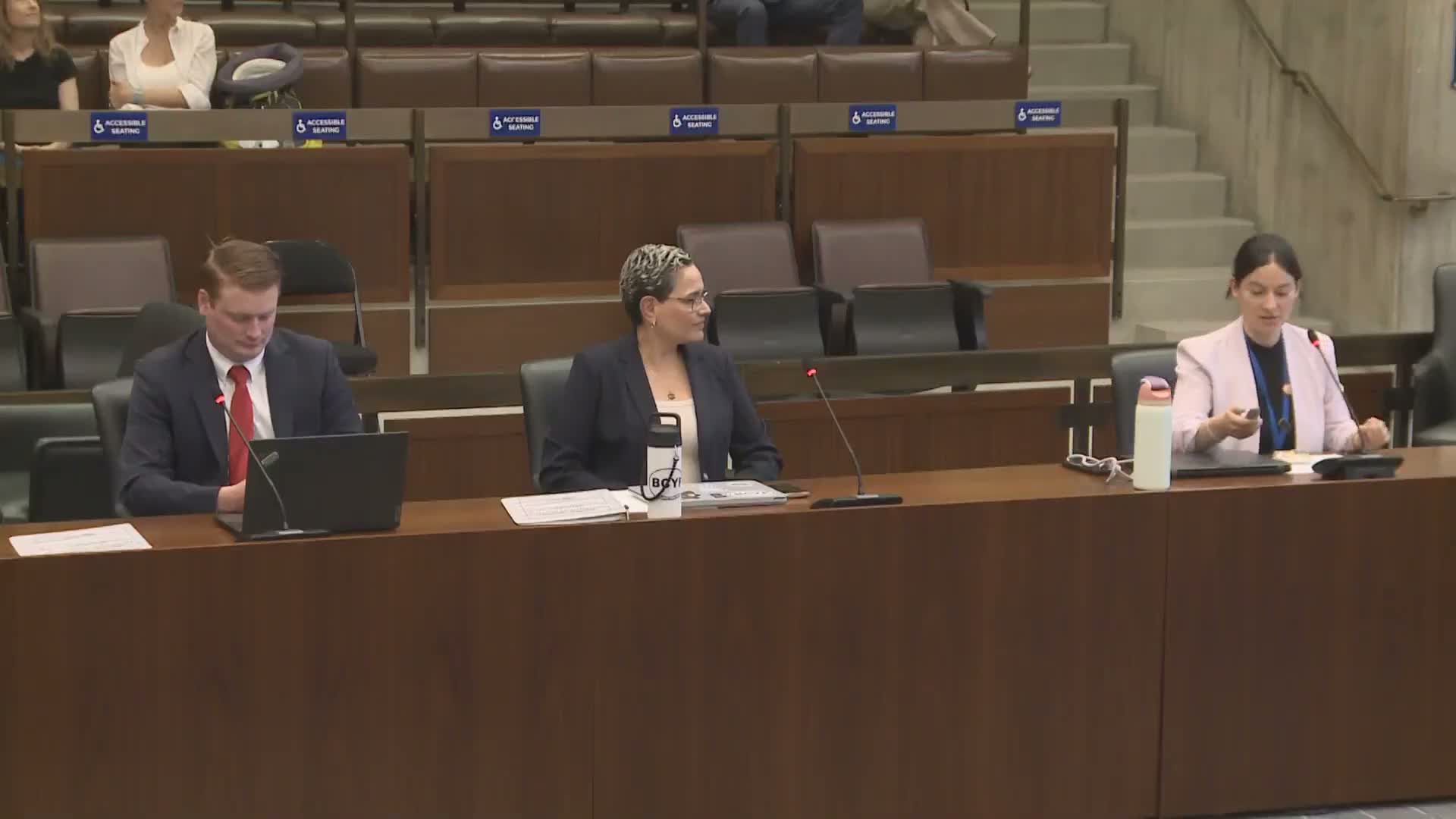
Paula Gaviria Villareal, analytics and program director for the Office of Early Childhood, told the Ways and Means Committee May 18 that the office has used ARPA funds that seeded a range of provider trainings and workforce supports and that most training offerings will continue under operational funding.
"As I mentioned before, there won't be any more ARPA funds, but we will continue our programming with operational funds," Villareal said, adding that while trainings such as business training, tech and marketing, ESOL and licensing support will continue, stipends tied to completion and the ARPA‑funded free‑degree supports cannot be fully maintained by the reduced operational budget.
Villareal gave quantitative context: the office has served more than 590 family child care providers across Boston’s 14 neighborhoods since 2019; about 90% of those providers remain open. She said the office’s trainings are majority female (99%), with 94% women of color and 68% speaking a language other than English; Spanish is the most common training language and over half of provider participants take trainings in Spanish.
Councilors pressed Villareal on funding. She confirmed the office’s ARPA allocation for these efforts was cited in committee as about $17,500,000 and that operational funding available last year was $1,148,510; the office has $763,468 in operational funds proposed for FY27 — a reduction Villareal described as roughly 34% from last year. She said the training curricula themselves are intact but the loss affects completion stipends and some degree funding; she pointed to state degree programs that can support some participants and said the office will seek partners to cover stipends.
On capacity, Villareal told councilors the office plans specific FY27 training slots: about 80 participants for business training, 40 for tech and marketing, and 30 for licensing support (plus other ESOL and family‑engagement efforts). She named neighborhoods with notable childcare shortages — Longwood‑Fenway, Allston‑Brighton and Charlestown — and reiterated that licensing is a state responsibility while the city provides support once providers are licensed.
Next steps: Villareal offered to provide exact participant and degree completion counts to councilors on request and to follow up with precise state funding figures for degree supports.
"As I mentioned before, there won't be any more ARPA funds, but we will continue our programming with operational funds," Villareal said, adding that while trainings such as business training, tech and marketing, ESOL and licensing support will continue, stipends tied to completion and the ARPA‑funded free‑degree supports cannot be fully maintained by the reduced operational budget.
Villareal gave quantitative context: the office has served more than 590 family child care providers across Boston’s 14 neighborhoods since 2019; about 90% of those providers remain open. She said the office’s trainings are majority female (99%), with 94% women of color and 68% speaking a language other than English; Spanish is the most common training language and over half of provider participants take trainings in Spanish.
Councilors pressed Villareal on funding. She confirmed the office’s ARPA allocation for these efforts was cited in committee as about $17,500,000 and that operational funding available last year was $1,148,510; the office has $763,468 in operational funds proposed for FY27 — a reduction Villareal described as roughly 34% from last year. She said the training curricula themselves are intact but the loss affects completion stipends and some degree funding; she pointed to state degree programs that can support some participants and said the office will seek partners to cover stipends.
On capacity, Villareal told councilors the office plans specific FY27 training slots: about 80 participants for business training, 40 for tech and marketing, and 30 for licensing support (plus other ESOL and family‑engagement efforts). She named neighborhoods with notable childcare shortages — Longwood‑Fenway, Allston‑Brighton and Charlestown — and reiterated that licensing is a state responsibility while the city provides support once providers are licensed.
Next steps: Villareal offered to provide exact participant and degree completion counts to councilors on request and to follow up with precise state funding figures for degree supports.
View the Full Meeting & All Its Details
This article offers just a summary. Unlock complete video, transcripts, and insights as a Founder Member.
✓
Watch full, unedited meeting videos
✓
Search every word spoken in unlimited transcripts
✓
AI summaries & real-time alerts (all government levels)
✓
Permanent access to expanding government content
30-day money-back guarantee
