Lompoc police PIO urges residents: don’t send gift cards, verify before you pay
May 18, 2026 | Lompoc, Santa Barbara County, California
This article was created by AI summarizing key points discussed. AI makes mistakes, so for full details and context, please refer to the video of the full meeting. Please report any errors so we can fix them. Report an error »
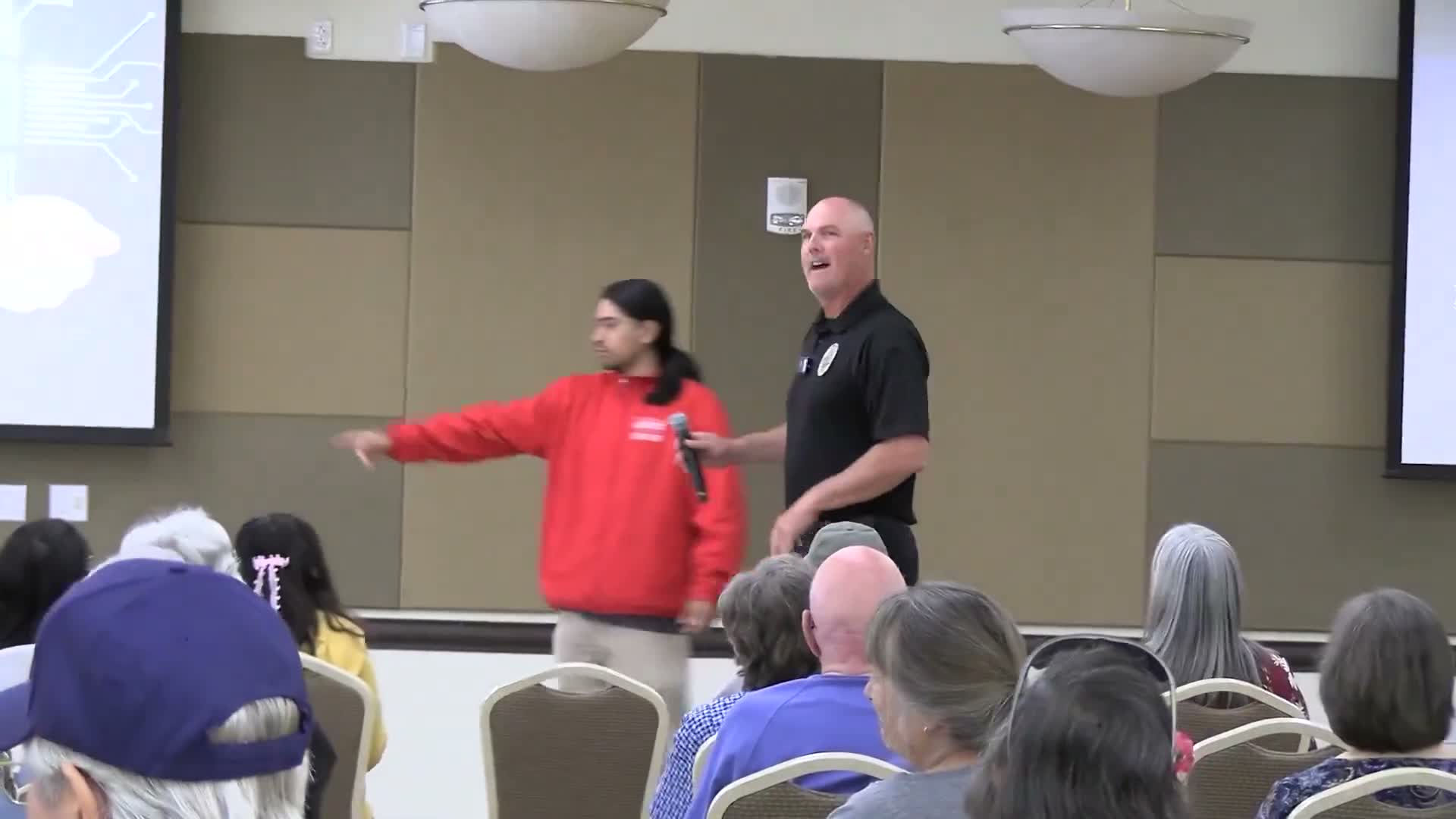
Community Services Sergeant Scott Morgan of the Lompoc Police Department told a packed community session that scammers are growing more sophisticated and that residents should never send money or gift cards in response to urgent-sounding calls or texts.
"If you ever get asked to send a gift card to somebody, what's the answer? No," Morgan said, urging people to slow down, consult family or neighbors and contact police before transferring funds. Morgan, who also serves as the department's public information officer, described cases in which victims repeatedly lost life savings after responding to high-pressure demands.
Why it matters: Morgan said scammers often target seniors and rely on urgency, fabricated legal threats and impersonation to extract payments. At the session he listed common payment methods used by scammers — gift cards, wire transfers and cryptocurrency — and recommended steps residents can take to reduce risk. "You will never get called from us," he added, warning that police do not demand immediate payment over the phone.
Details and precautions: Morgan recommended practical defenses: do not respond to unsolicited texts or calls from unknown numbers; do not click unfamiliar links; verify official-looking emails or payment requests by typing known URLs into a browser; and never give PINs or send gift‑card codes. He described "grandparent" and romance scams that build rapport over time and a variety of phishing and replica-website schemes that can harvest credit-card details.
Banking and technology guidance: A Chase representative at the meeting recommended using credit cards for purchases because disputes do not immediately remove funds from a personal bank account, and both Morgan and residents noted that mobile wallets (Google Wallet, Samsung Wallet) tokenise card numbers and can reduce risk. Morgan also recommended setting travel alerts with banks and working with financial institutions to set monitoring preferences.
Skimmers and point-of-sale tips: Morgan outlined card skimmers at gas pumps, advising people to avoid entering PINs at pumps, look for tamper-evident tape or choose well-maintained stations, and prefer credit or mobile-pay options. He also warned that scammers can use spoofed local numbers and that some pop-up tech-support alerts on computers are fraudulent; his advice was to power down and seek trusted technical help rather than calling numbers shown in a pop-up.
Reporting and follow-up: For local incidents residents should file a police report; Morgan said cases that appear to originate overseas or that are part of large-scale fraud are typically referred to the Internet Crime Complaint Center (IC3) via ic3.gov. He distributed handouts and magnets with the department's contact information and offered help downloading the department's smartphone app for alerts.
What to watch for: red flags Morgan named include isolation or requests to keep a payment secret, unusual or unfamiliar area codes, urgent deadlines, requests for gift-card photos or codes, unsolicited prize notices asking for fees to claim winnings, and full-screen tech-support warnings.
Next steps: Morgan urged residents to report scams promptly, to involve family or trusted advisors before sending money, and to contact their bank immediately if they discover fraudulent charges. The session closed with questions from residents and distribution of printed resources for further help.
"If you ever get asked to send a gift card to somebody, what's the answer? No," Morgan said, urging people to slow down, consult family or neighbors and contact police before transferring funds. Morgan, who also serves as the department's public information officer, described cases in which victims repeatedly lost life savings after responding to high-pressure demands.
Why it matters: Morgan said scammers often target seniors and rely on urgency, fabricated legal threats and impersonation to extract payments. At the session he listed common payment methods used by scammers — gift cards, wire transfers and cryptocurrency — and recommended steps residents can take to reduce risk. "You will never get called from us," he added, warning that police do not demand immediate payment over the phone.
Details and precautions: Morgan recommended practical defenses: do not respond to unsolicited texts or calls from unknown numbers; do not click unfamiliar links; verify official-looking emails or payment requests by typing known URLs into a browser; and never give PINs or send gift‑card codes. He described "grandparent" and romance scams that build rapport over time and a variety of phishing and replica-website schemes that can harvest credit-card details.
Banking and technology guidance: A Chase representative at the meeting recommended using credit cards for purchases because disputes do not immediately remove funds from a personal bank account, and both Morgan and residents noted that mobile wallets (Google Wallet, Samsung Wallet) tokenise card numbers and can reduce risk. Morgan also recommended setting travel alerts with banks and working with financial institutions to set monitoring preferences.
Skimmers and point-of-sale tips: Morgan outlined card skimmers at gas pumps, advising people to avoid entering PINs at pumps, look for tamper-evident tape or choose well-maintained stations, and prefer credit or mobile-pay options. He also warned that scammers can use spoofed local numbers and that some pop-up tech-support alerts on computers are fraudulent; his advice was to power down and seek trusted technical help rather than calling numbers shown in a pop-up.
Reporting and follow-up: For local incidents residents should file a police report; Morgan said cases that appear to originate overseas or that are part of large-scale fraud are typically referred to the Internet Crime Complaint Center (IC3) via ic3.gov. He distributed handouts and magnets with the department's contact information and offered help downloading the department's smartphone app for alerts.
What to watch for: red flags Morgan named include isolation or requests to keep a payment secret, unusual or unfamiliar area codes, urgent deadlines, requests for gift-card photos or codes, unsolicited prize notices asking for fees to claim winnings, and full-screen tech-support warnings.
Next steps: Morgan urged residents to report scams promptly, to involve family or trusted advisors before sending money, and to contact their bank immediately if they discover fraudulent charges. The session closed with questions from residents and distribution of printed resources for further help.
View the Full Meeting & All Its Details
This article offers just a summary. Unlock complete video, transcripts, and insights as a Founder Member.
✓
Watch full, unedited meeting videos
✓
Search every word spoken in unlimited transcripts
✓
AI summaries & real-time alerts (all government levels)
✓
Permanent access to expanding government content
30-day money-back guarantee
