Mount Clemens explores water and sewer rate increases to shore up sewer fund
May 18, 2026 | Mount Clemens, Macomb County, Michigan
This article was created by AI summarizing key points discussed. AI makes mistakes, so for full details and context, please refer to the video of the full meeting. Please report any errors so we can fix them. Report an error »
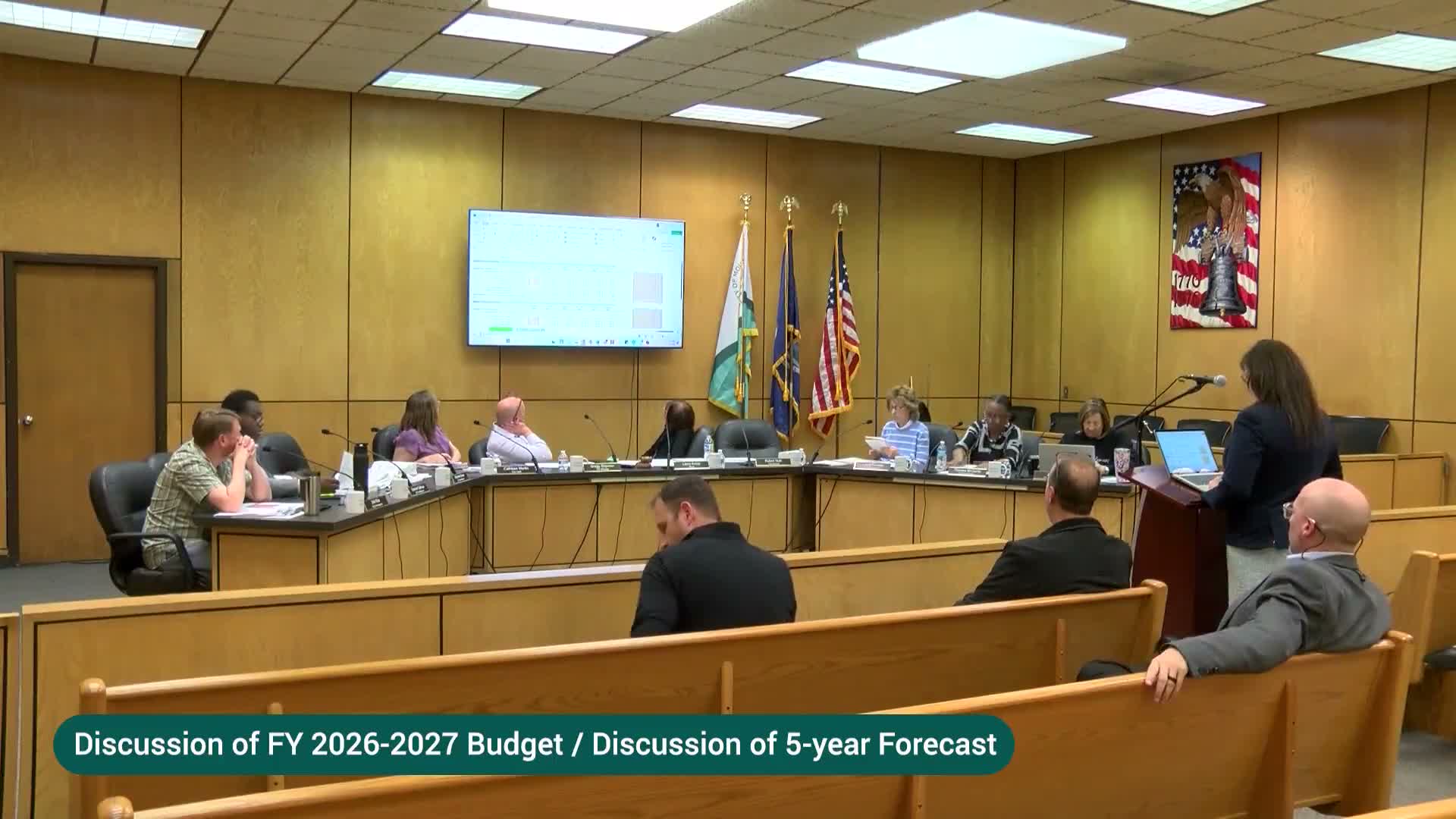
Mount Clemens staff presented a range of options for increasing water and sewer rates to address a projected shortfall in the sewer fund, showing that modest household impacts compound into millions of dollars in system revenue over time.
Danielle Kelly said the city reran sewer cash‑flow models and compared scenarios. "So at 3.5%, the monthly bill on a resident would increase 47¢," Kelly said while explaining a 4% increase would have a similar per‑household effect but faster fiscal relief for the sewer system. She added that over a 10‑year horizon a higher rate could produce roughly $4,600,000 more cash for the system.
Staff and commissioners discussed the distributional effect: residential accounts are the majority of meters and would see about a half‑dollar increase on average, while business customers with larger meters face larger monthly increases. Kelly gave an example for commercial meters: a 3‑inch commercial meter could see roughly $59–$72 per month in additional charges depending on the chosen rate, though commissioners noted many downtown small businesses have smaller meters and would see smaller impacts.
Commissioners debated whether to choose a lower immediate increase (2.9%–3%) consistent with prior plans or to accept a somewhat higher near‑term increase to reduce borrowing and protect long‑term system health. Several commissioners stressed minimizing resident pain while ensuring the sewer fund avoids repeated shortfalls.
Staff also noted assumptions in the model tied to potential one‑time receipts from sale of water‑system assets (ozone equipment, property) and warned those proceeds are uncertain and may be removed from the model if not realized. No formal decision on a rate increase was taken at the session; staff said they would provide further meter‑level detail to show which customers would be most affected and return with updated recommendations.
Danielle Kelly said the city reran sewer cash‑flow models and compared scenarios. "So at 3.5%, the monthly bill on a resident would increase 47¢," Kelly said while explaining a 4% increase would have a similar per‑household effect but faster fiscal relief for the sewer system. She added that over a 10‑year horizon a higher rate could produce roughly $4,600,000 more cash for the system.
Staff and commissioners discussed the distributional effect: residential accounts are the majority of meters and would see about a half‑dollar increase on average, while business customers with larger meters face larger monthly increases. Kelly gave an example for commercial meters: a 3‑inch commercial meter could see roughly $59–$72 per month in additional charges depending on the chosen rate, though commissioners noted many downtown small businesses have smaller meters and would see smaller impacts.
Commissioners debated whether to choose a lower immediate increase (2.9%–3%) consistent with prior plans or to accept a somewhat higher near‑term increase to reduce borrowing and protect long‑term system health. Several commissioners stressed minimizing resident pain while ensuring the sewer fund avoids repeated shortfalls.
Staff also noted assumptions in the model tied to potential one‑time receipts from sale of water‑system assets (ozone equipment, property) and warned those proceeds are uncertain and may be removed from the model if not realized. No formal decision on a rate increase was taken at the session; staff said they would provide further meter‑level detail to show which customers would be most affected and return with updated recommendations.
View the Full Meeting & All Its Details
This article offers just a summary. Unlock complete video, transcripts, and insights as a Founder Member.
✓
Watch full, unedited meeting videos
✓
Search every word spoken in unlimited transcripts
✓
AI summaries & real-time alerts (all government levels)
✓
Permanent access to expanding government content
30-day money-back guarantee
