Finance committee sends resolution seeking dedicated fund to address impacts of Springfield Regional Justice Center to full council
May 18, 2026 | Springfield City, Hampden County, Massachusetts
This article was created by AI summarizing key points discussed. AI makes mistakes, so for full details and context, please refer to the video of the full meeting. Please report any errors so we can fix them. Report an error »
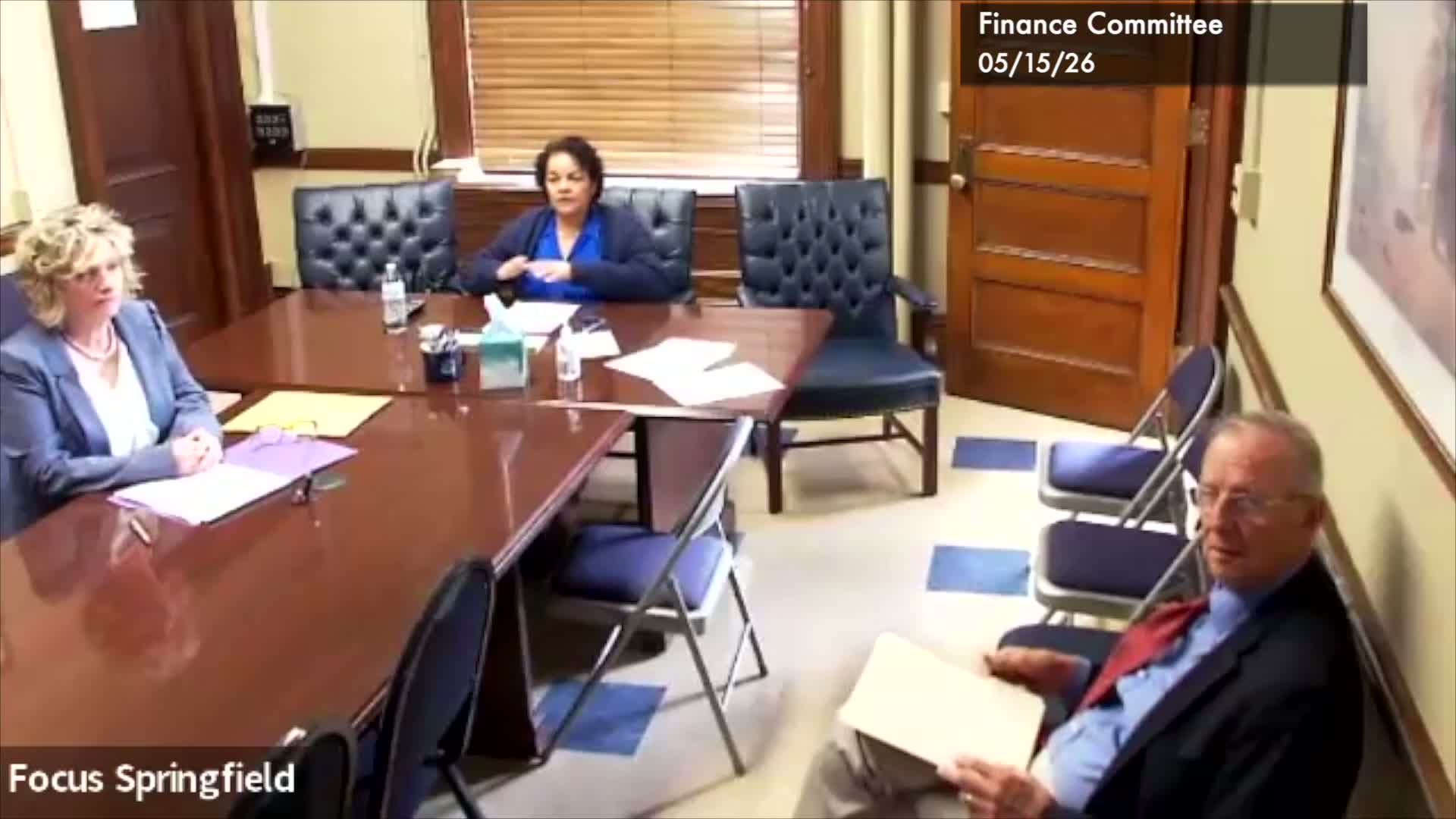
Councilor Zeta Govan convened the Springfield City Finance Committee and moved to send a revised resolution to the full city council that would back the development of a coordinated framework and a dedicated fund to address municipal and community impacts tied to the Springfield Regional Justice Center.
The resolution, read on the record by Karen Lee, supports a life‑cycle approach to impacts from the project and calls for ‘‘a defined and coordinated framework to address impacts associated with the operation of the justice center over time,’’ including roles and communication protocols, public‑health assessment tools where appropriate, and a reserve fund intended to pay for impact‑related needs rather than general municipal uses.
Why it matters: The Commonwealth of Massachusetts, through the Division of Capital Asset Management and Maintenance (DCAM), is advancing the regional facility under a long‑term public‑private partnership. Committee members said the project’s long term lease structure — described in the resolution as spanning roughly 40 years with possible extensions — could shift costs and impacts onto the city unless revenues or mitigation mechanisms are explicitly accounted for.
Councilor Govan cited past local promises of benefits that did not materialize, saying, “when we got MGM here, the residents were told that we were gonna have tax relief because MGM came here, and we have not had tax relief.” Karen Lee urged advance planning and pointed to the Community Preservation Act as a model for a reserve structure: “as I started looking at, how this fund could be developed, that's kind of the framework that I was using,” she said, arguing for a dedicated, transparent fund to support displaced businesses and preserve historic resources.
The resolution lists a range of possible impacts — transportation and traffic, public‑safety coordination, infrastructure and land‑use shifts, environmental and public‑health concerns — and asks the administration to convene a coordinated working group, including DCAM and the selected developer or property owner, relevant city departments, council representatives and community stakeholders, within 60 days of project selection. It also requests a written update to the council within 90 days of project selection summarizing discussions and next steps.
Committee members discussed how municipal revenues typically flow into the general fund and whether a stabilization or reserved fund could be set aside to ensure courthouse‑related revenues support mitigation. A committee member questioned whether tax payments tied to a private developer arrangement would produce additional city revenue; the resolution does not specify funding sources and does not create binding financial obligations.
The Finance Committee voted to forward the resolution to the full city council. Councilor Davila made the motion to send the resolution ‘‘as presented to a full city council chamber,’’ and the motion passed in the committee. The resolution is to be filed this week and placed on the council agenda for the following meeting (not the immediate next meeting, which is occupied by budget hearings).
The resolution is nonbinding: it expresses the council’s intent to pursue governance options and, to the extent permitted by law, to seek a dedicated fund and transparent administration of any resources tied to impact mitigation. If the council approves the resolution, next steps outlined in the text include convening the working group and pursuing any statutory or legislative steps needed to establish a formal governance structure for a dedicated fund.
The resolution, read on the record by Karen Lee, supports a life‑cycle approach to impacts from the project and calls for ‘‘a defined and coordinated framework to address impacts associated with the operation of the justice center over time,’’ including roles and communication protocols, public‑health assessment tools where appropriate, and a reserve fund intended to pay for impact‑related needs rather than general municipal uses.
Why it matters: The Commonwealth of Massachusetts, through the Division of Capital Asset Management and Maintenance (DCAM), is advancing the regional facility under a long‑term public‑private partnership. Committee members said the project’s long term lease structure — described in the resolution as spanning roughly 40 years with possible extensions — could shift costs and impacts onto the city unless revenues or mitigation mechanisms are explicitly accounted for.
Councilor Govan cited past local promises of benefits that did not materialize, saying, “when we got MGM here, the residents were told that we were gonna have tax relief because MGM came here, and we have not had tax relief.” Karen Lee urged advance planning and pointed to the Community Preservation Act as a model for a reserve structure: “as I started looking at, how this fund could be developed, that's kind of the framework that I was using,” she said, arguing for a dedicated, transparent fund to support displaced businesses and preserve historic resources.
The resolution lists a range of possible impacts — transportation and traffic, public‑safety coordination, infrastructure and land‑use shifts, environmental and public‑health concerns — and asks the administration to convene a coordinated working group, including DCAM and the selected developer or property owner, relevant city departments, council representatives and community stakeholders, within 60 days of project selection. It also requests a written update to the council within 90 days of project selection summarizing discussions and next steps.
Committee members discussed how municipal revenues typically flow into the general fund and whether a stabilization or reserved fund could be set aside to ensure courthouse‑related revenues support mitigation. A committee member questioned whether tax payments tied to a private developer arrangement would produce additional city revenue; the resolution does not specify funding sources and does not create binding financial obligations.
The Finance Committee voted to forward the resolution to the full city council. Councilor Davila made the motion to send the resolution ‘‘as presented to a full city council chamber,’’ and the motion passed in the committee. The resolution is to be filed this week and placed on the council agenda for the following meeting (not the immediate next meeting, which is occupied by budget hearings).
The resolution is nonbinding: it expresses the council’s intent to pursue governance options and, to the extent permitted by law, to seek a dedicated fund and transparent administration of any resources tied to impact mitigation. If the council approves the resolution, next steps outlined in the text include convening the working group and pursuing any statutory or legislative steps needed to establish a formal governance structure for a dedicated fund.
Don't Miss a Word: See the Full Meeting!
Go beyond summaries. Unlock every video, transcript, and key insight with a Founder Membership.
✓
Get instant access to full meeting videos
✓
Search and clip any phrase from complete transcripts
✓
Receive AI-powered summaries & custom alerts
✓
Enjoy lifetime, unrestricted access to government data
30-day money-back guarantee
