Linn County noxious weed director defends roadside spraying; commissioners schedule follow-up
May 18, 2026 | Linn County, Kansas
This article was created by AI summarizing key points discussed. AI makes mistakes, so for full details and context, please refer to the video of the full meeting. Please report any errors so we can fix them. Report an error »
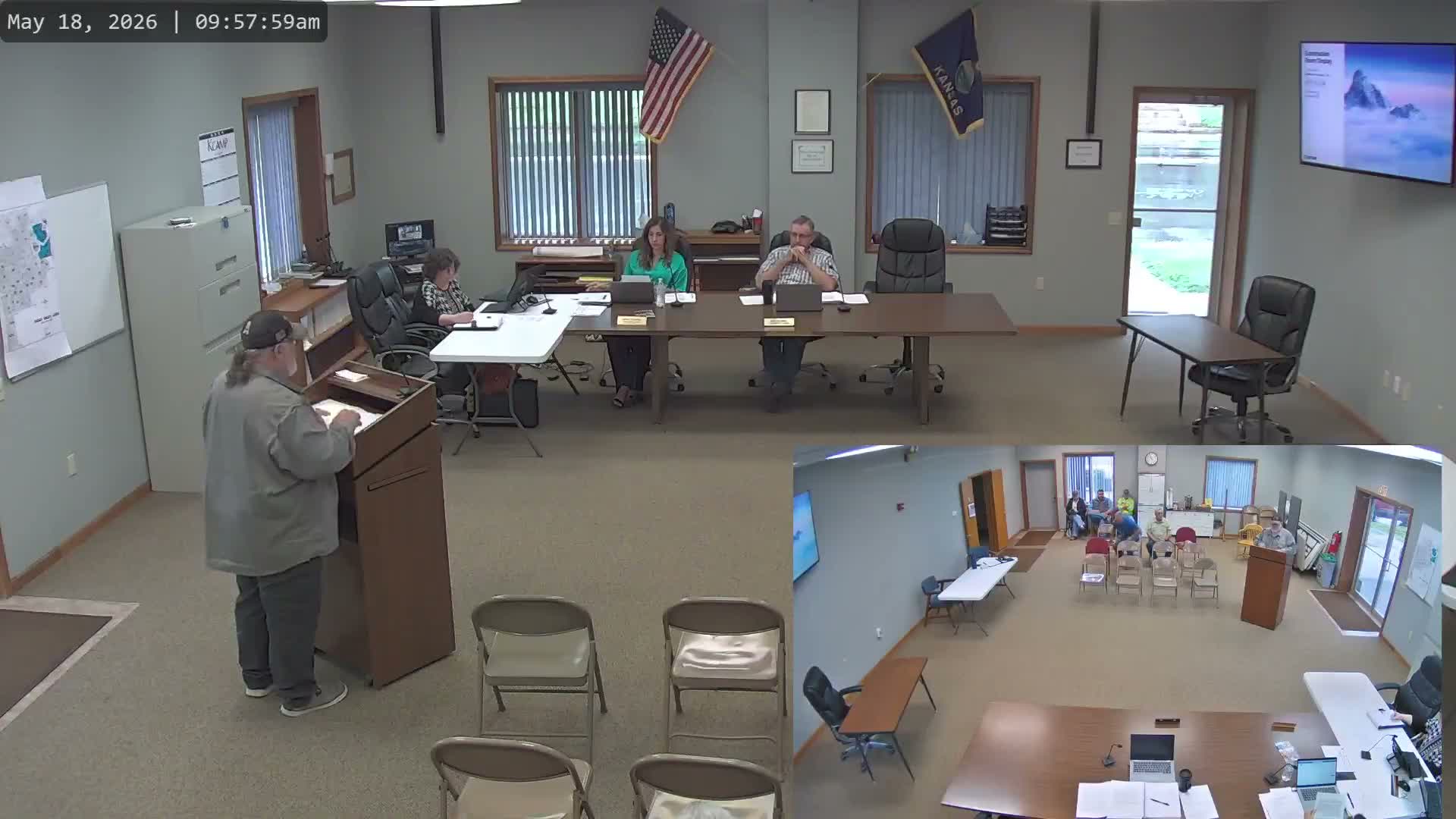
Johnny Taylor, Linn County noxious weed director, told the Board of County Commissioners that the county’s roadside-spraying program aims to control state-recognized noxious weeds, especially Johnson grass, and that a newly adopted plant growth regulator mix is intended to reduce early mowing frequency and encourage healthier root growth.
"The main goal to roadside spraying is fulfill the obligation that Linn County has of controlling and eradicating the state recognized noxious weeds from our rights of way," Taylor said, describing past use of "bare ground" spraying in areas where mowing capacity was insufficient. Taylor said he consulted his supervisor and other county noxious-weed directors before adopting the plant-growth-regulator program and that Miami and Anderson counties have used similar mixes with reported success.
A resident who spoke earlier said she had noticed yellowing and browning along road edges after spraying and warned of increased erosion and damage to property appearance. "A lot of folks take care of their property… their front yard becomes adjacent to the blacktop," the resident said, urging the county to consider alternatives and more cautious testing.
Commissioners questioned whether mechanical mowing or more targeted application could reduce visual impacts and erosion. Chair (speaker 2) said mowing schedules, GWorks tracking and staffing shortfalls would be reviewed and set a follow-up discussion for June 8, asking that supervisor Jesse be present. "We need to come back in a couple of weeks and have a longer discussion about it and exactly, you know, go through everything," the chair said.
Taylor acknowledged the visual effects and apologized to residents for grass discoloration in some spots, saying the plant growth regulator should not create permanently bare ground and that, where possible, mechanical mowing would obviate the need for broadcast spraying. The board asked staff to compile additional information and to include the noxious-weed supervisor in the next discussion.
"The main goal to roadside spraying is fulfill the obligation that Linn County has of controlling and eradicating the state recognized noxious weeds from our rights of way," Taylor said, describing past use of "bare ground" spraying in areas where mowing capacity was insufficient. Taylor said he consulted his supervisor and other county noxious-weed directors before adopting the plant-growth-regulator program and that Miami and Anderson counties have used similar mixes with reported success.
A resident who spoke earlier said she had noticed yellowing and browning along road edges after spraying and warned of increased erosion and damage to property appearance. "A lot of folks take care of their property… their front yard becomes adjacent to the blacktop," the resident said, urging the county to consider alternatives and more cautious testing.
Commissioners questioned whether mechanical mowing or more targeted application could reduce visual impacts and erosion. Chair (speaker 2) said mowing schedules, GWorks tracking and staffing shortfalls would be reviewed and set a follow-up discussion for June 8, asking that supervisor Jesse be present. "We need to come back in a couple of weeks and have a longer discussion about it and exactly, you know, go through everything," the chair said.
Taylor acknowledged the visual effects and apologized to residents for grass discoloration in some spots, saying the plant growth regulator should not create permanently bare ground and that, where possible, mechanical mowing would obviate the need for broadcast spraying. The board asked staff to compile additional information and to include the noxious-weed supervisor in the next discussion.
View the Full Meeting & All Its Details
This article offers just a summary. Unlock complete video, transcripts, and insights as a Founder Member.
✓
Watch full, unedited meeting videos
✓
Search every word spoken in unlimited transcripts
✓
AI summaries & real-time alerts (all government levels)
✓
Permanent access to expanding government content
30-day money-back guarantee
