Senate Republican leader explains 'no' vote on Hennepin County Medical Center aid and urges more transparency
May 18, 2026 | 2026 Legislature MN, Minnesota
This article was created by AI summarizing key points discussed. AI makes mistakes, so for full details and context, please refer to the video of the full meeting. Please report any errors so we can fix them. Report an error »
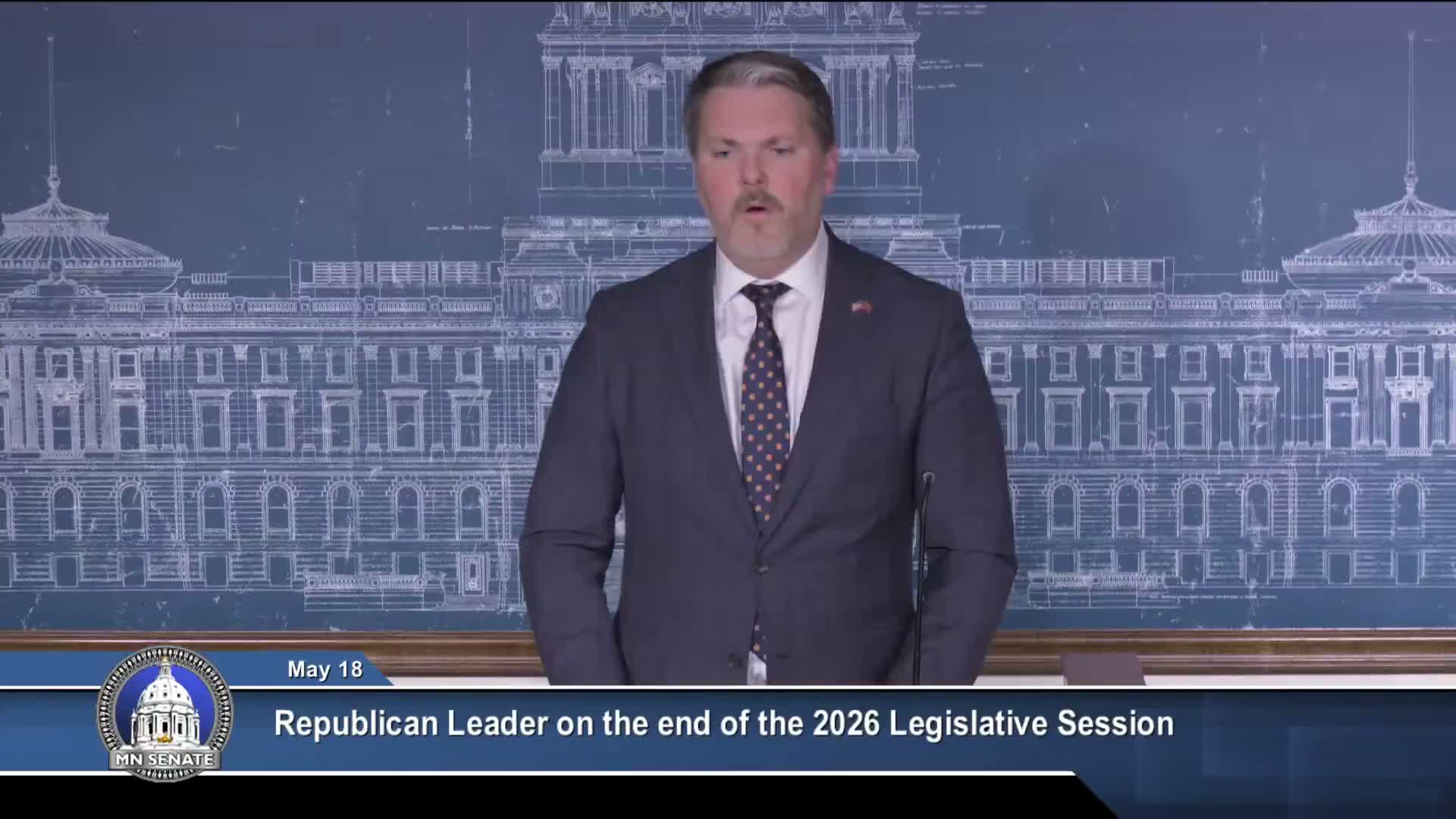
When asked why he voted against a health package measure that included aid for Hennepin County Medical Center, the Senate Republican leader said the provision favored the large Minneapolis hospital while providing only modest help for critical-access hospitals outside the metro area.
"When we have, Hennepin County Medical Center as the centerpiece of that one, but we have so many other hospitals out, critical access hospitals that are out state that this does, help support them a little bit," he said, adding that some hospitals and the hospital association felt the aid was "just a really a small amount for our local hospitals in the outstate." He said he wished the fund had been more expansive.
Reporters also raised concerns about bills being released late in the session without time for members to read them. The leader acknowledged those complaints, calling them "legitimate," and said members were right to voice frustration about having only "10, 15 minutes" to digest new bills.
On transparency, the leader agreed with a reporter quoting Senator Murphy that more openness was needed in compromise and negotiation processes. He criticized closed-door conference-room negotiations and said that when chairs cannot work together matters are often escalated to leadership and doors get closed.
Separately, the leader said the OIG bill passed bipartisanly as one piece of fraud-fighting legislation but questioned whether the administration and agencies would use "their full power and going after" fraud cases.
The briefing ended with the leader saying his caucus will review session work over the summer and bring the results to voters in November.
"When we have, Hennepin County Medical Center as the centerpiece of that one, but we have so many other hospitals out, critical access hospitals that are out state that this does, help support them a little bit," he said, adding that some hospitals and the hospital association felt the aid was "just a really a small amount for our local hospitals in the outstate." He said he wished the fund had been more expansive.
Reporters also raised concerns about bills being released late in the session without time for members to read them. The leader acknowledged those complaints, calling them "legitimate," and said members were right to voice frustration about having only "10, 15 minutes" to digest new bills.
On transparency, the leader agreed with a reporter quoting Senator Murphy that more openness was needed in compromise and negotiation processes. He criticized closed-door conference-room negotiations and said that when chairs cannot work together matters are often escalated to leadership and doors get closed.
Separately, the leader said the OIG bill passed bipartisanly as one piece of fraud-fighting legislation but questioned whether the administration and agencies would use "their full power and going after" fraud cases.
The briefing ended with the leader saying his caucus will review session work over the summer and bring the results to voters in November.
View the Full Meeting & All Its Details
This article offers just a summary. Unlock complete video, transcripts, and insights as a Founder Member.
✓
Watch full, unedited meeting videos
✓
Search every word spoken in unlimited transcripts
✓
AI summaries & real-time alerts (all government levels)
✓
Permanent access to expanding government content
30-day money-back guarantee
