Senate enacts electronic visit verification for high-risk Medicaid programs to curb fraud
May 17, 2026 | 2026 Legislature MN, Minnesota
This article was created by AI summarizing key points discussed. AI makes mistakes, so for full details and context, please refer to the video of the full meeting. Please report any errors so we can fix them. Report an error »
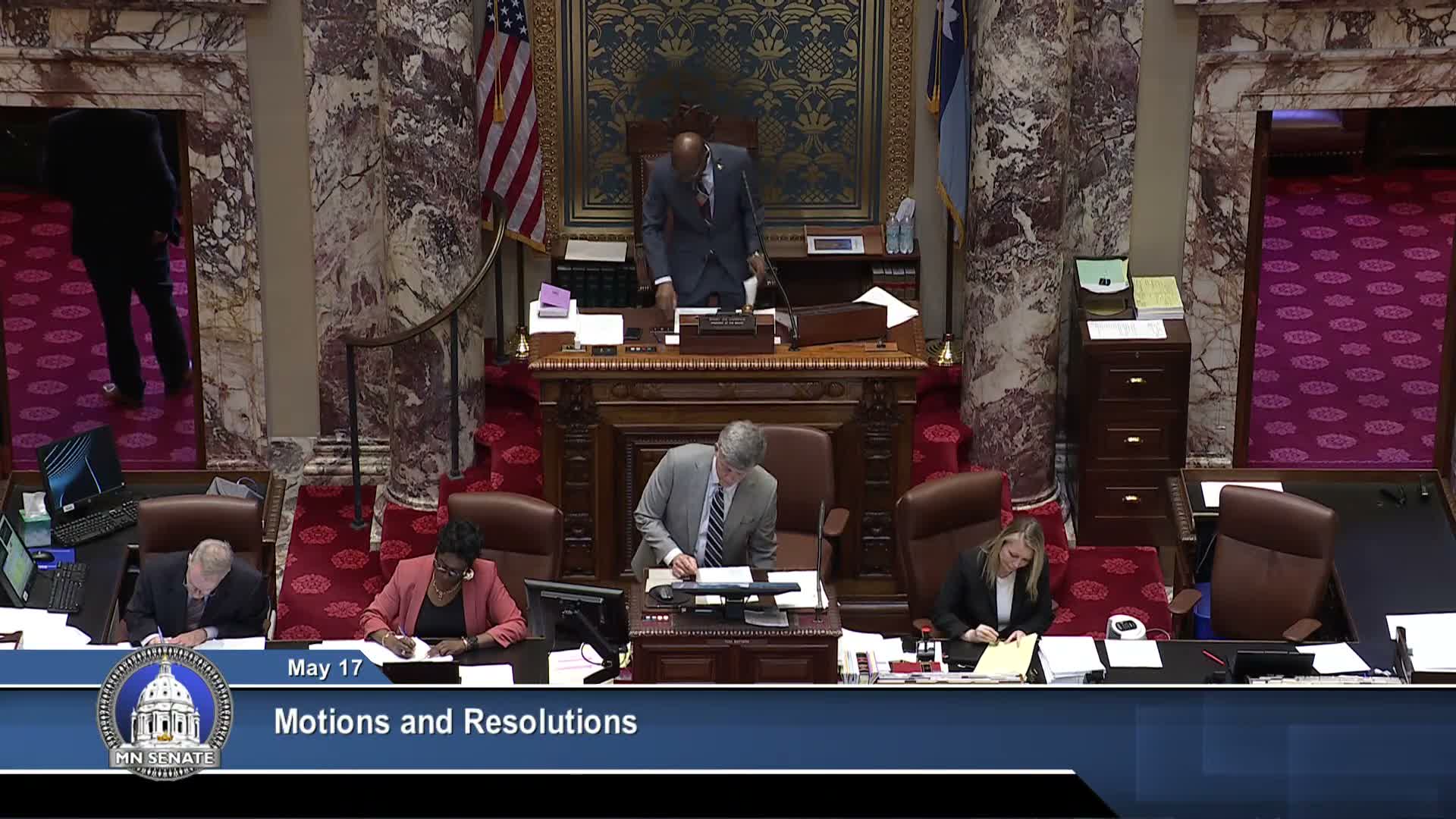
On May 17 the Minnesota Senate passed Senate File 4400, a bill that requires electronic visit verification (EVV) for Medicaid services the Department of Human Services designated as high-risk.
Senator Mohammed, the bill author, told the floor DHS had identified 14 types of Medicaid services vulnerable to fraud and that the bill would require EVV to create a verifiable record that providers are where they say and are delivering services. She said the affected programs include medical transportation (which helps "more than 200,000 Minnesotans") and home- and community-based services serving "more than a 100,000" people, and that collectively the state spends "hundreds of millions of dollars per month" across the 14 programs.
Senator Rasmussen and others supported the bill, describing it as bipartisan work to strengthen program integrity and saying DHS had not fully implemented EVV where required. The bill's supporters argued statutory direction would be needed to complete implementation and reduce losses to fraud.
The secretary recorded final passage at 67 ayes and 0 nays.
What happens next: authors said the statute will direct agencies to implement EVV in identified high-risk programs; sponsors described the measure as a major anti-fraud accomplishment for the session.
Senator Mohammed, the bill author, told the floor DHS had identified 14 types of Medicaid services vulnerable to fraud and that the bill would require EVV to create a verifiable record that providers are where they say and are delivering services. She said the affected programs include medical transportation (which helps "more than 200,000 Minnesotans") and home- and community-based services serving "more than a 100,000" people, and that collectively the state spends "hundreds of millions of dollars per month" across the 14 programs.
Senator Rasmussen and others supported the bill, describing it as bipartisan work to strengthen program integrity and saying DHS had not fully implemented EVV where required. The bill's supporters argued statutory direction would be needed to complete implementation and reduce losses to fraud.
The secretary recorded final passage at 67 ayes and 0 nays.
What happens next: authors said the statute will direct agencies to implement EVV in identified high-risk programs; sponsors described the measure as a major anti-fraud accomplishment for the session.
Don't Miss a Word: See the Full Meeting!
Go beyond summaries. Unlock every video, transcript, and key insight with a Founder Membership.
✓
Get instant access to full meeting videos
✓
Search and clip any phrase from complete transcripts
✓
Receive AI-powered summaries & custom alerts
✓
Enjoy lifetime, unrestricted access to government data
30-day money-back guarantee
