House approves cannabis maintenance package, renames medical combo licenses as 'macro' and removes ratio
May 17, 2026 | 2026 Legislature MN, Minnesota
This article was created by AI summarizing key points discussed. AI makes mistakes, so for full details and context, please refer to the video of the full meeting. Please report any errors so we can fix them. Report an error »
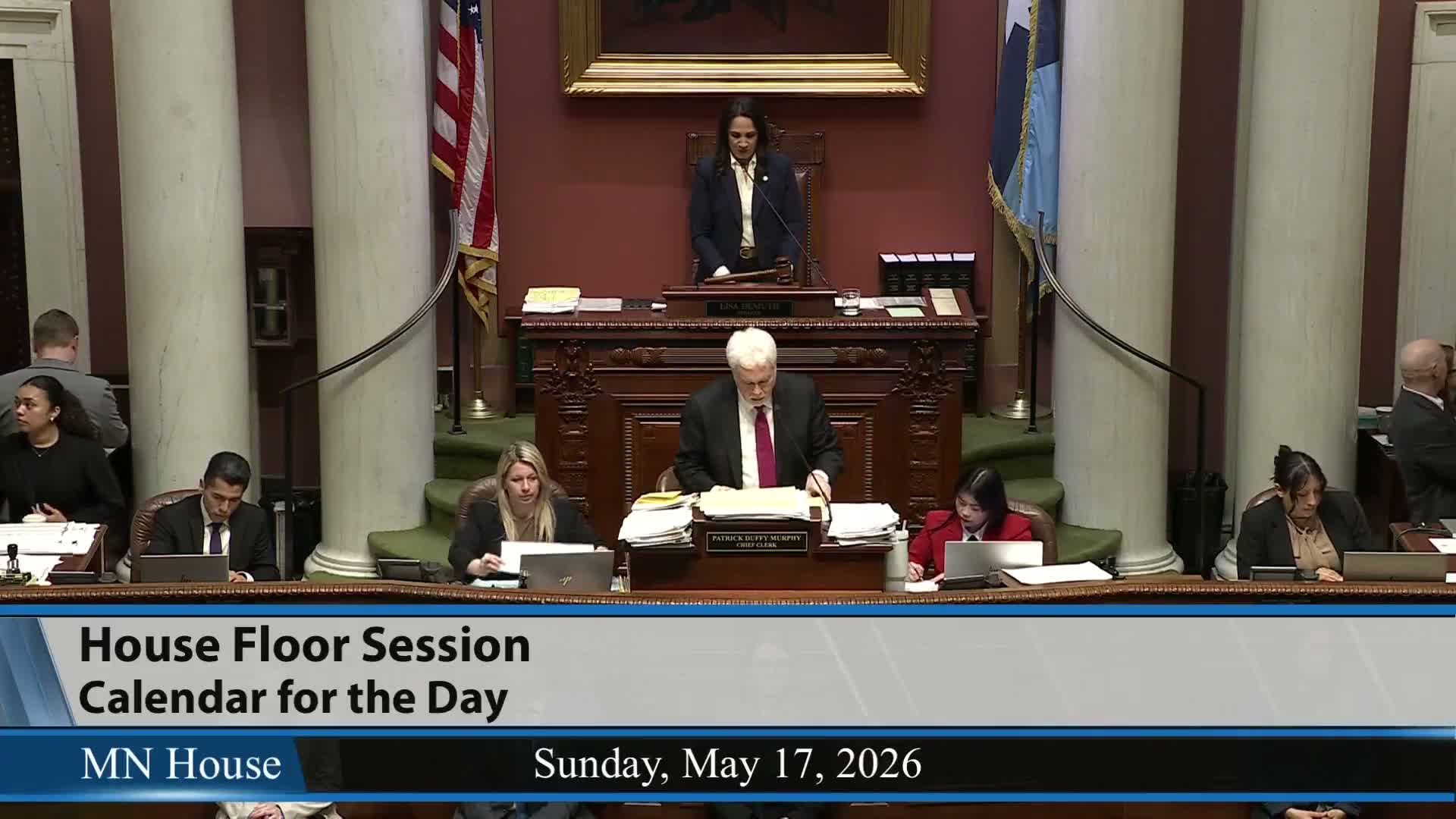
Representative Hansen (author) described the bill as a largely maintenance and stakeholder-driven package crafted with more than 80 participants. The proposal includes business‑facing fixes (allowing limited sale of noncannabis equipment between businesses), data protections for applicants, temporary transporter relief, revival of QR codes for hemp packaging, investor‑friendly changes, and a path for hemp businesses to transition into cannabis.
On the medicinal side, Hansen described renaming medical‑combination licenses to "macro" licenses and eliminating the previously mandated grow‑to‑sale ratio beginning Jan. 1, 2027. She said the bill "right sizes" canopy limits based on empirical data, requires certain product availability standards and testing speedups to avoid bottlenecks, and contains provisions to limit oversaturation by tying caps to market need and operator experience.
Supporters emphasized access to capital and stability for social equity applicants; Representative West said the bill "opens up a door" for investors and warned that abrupt midstream rule changes could invite litigation, calling the canopy approach ‘‘a terrible system’’ that needs correction. Hansen also said the bill launches an initial step toward a medical and medicinal psilocybin program, including a report to prepare for future rulemaking and a directive to pursue federal funding.
The clerk called the roll for the third reading; the bill passed on the recorded vote with 92 ayes and 42 nays and the title was agreed to. The bill will proceed through final legislative steps for enrollment and transmittal.
On the medicinal side, Hansen described renaming medical‑combination licenses to "macro" licenses and eliminating the previously mandated grow‑to‑sale ratio beginning Jan. 1, 2027. She said the bill "right sizes" canopy limits based on empirical data, requires certain product availability standards and testing speedups to avoid bottlenecks, and contains provisions to limit oversaturation by tying caps to market need and operator experience.
Supporters emphasized access to capital and stability for social equity applicants; Representative West said the bill "opens up a door" for investors and warned that abrupt midstream rule changes could invite litigation, calling the canopy approach ‘‘a terrible system’’ that needs correction. Hansen also said the bill launches an initial step toward a medical and medicinal psilocybin program, including a report to prepare for future rulemaking and a directive to pursue federal funding.
The clerk called the roll for the third reading; the bill passed on the recorded vote with 92 ayes and 42 nays and the title was agreed to. The bill will proceed through final legislative steps for enrollment and transmittal.
Don't Miss a Word: See the Full Meeting!
Go beyond summaries. Unlock every video, transcript, and key insight with a Founder Membership.
✓
Get instant access to full meeting videos
✓
Search and clip any phrase from complete transcripts
✓
Receive AI-powered summaries & custom alerts
✓
Enjoy lifetime, unrestricted access to government data
30-day money-back guarantee
