Northshore board debates which events qualify for $50 meeting pay under 2023 compensation rule
May 17, 2026 | Northshore School District, School Districts, Washington
This article was created by AI summarizing key points discussed. AI makes mistakes, so for full details and context, please refer to the video of the full meeting. Please report any errors so we can fix them. Report an error »
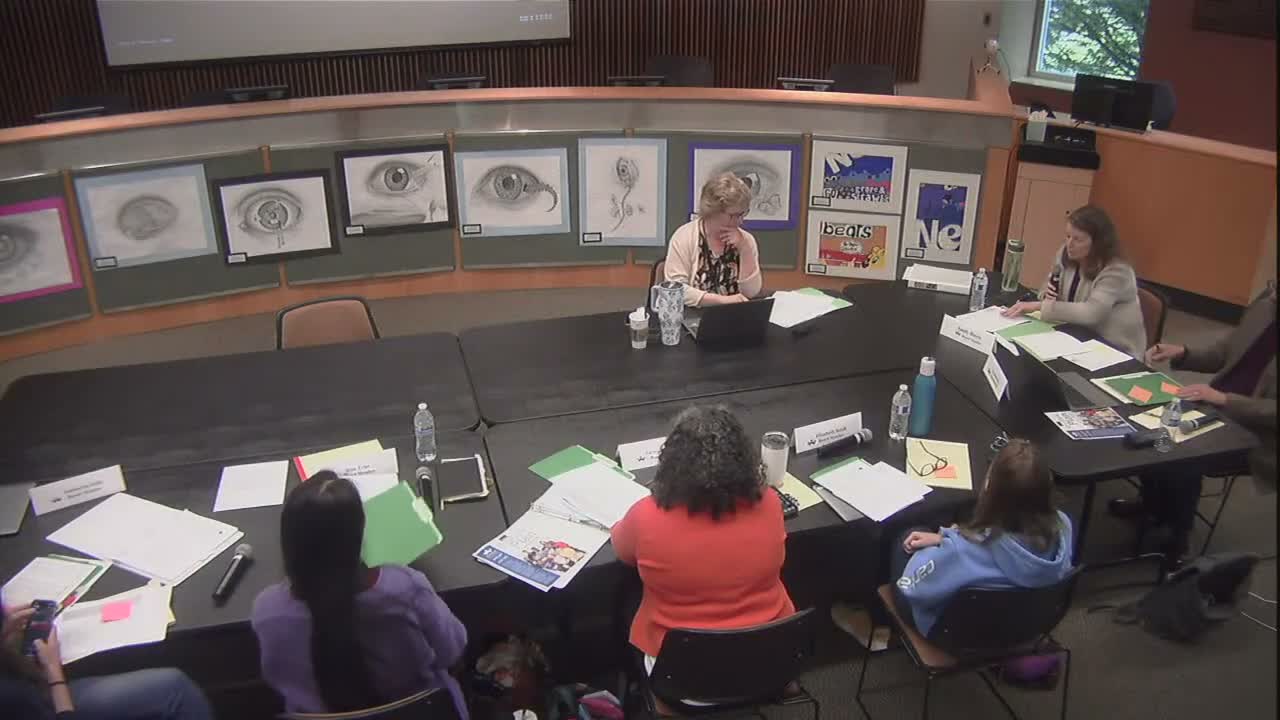
The Northshore School District board reviewed the administration's plan to implement a 2023 board decision that allows elected members to receive compensation for meeting attendance. President Hayes read the statutory limits that the board previously approved: "The compensation that is allowed is $50 per meeting and not more than $4,800 over the course of a year."
Superintendent Dr. Irish framed the policy as a modest recognition of hidden costs that can discourage participation. "There are hidden costs," Dr. Irish said, pointing to childcare and lost wages for working board members: "...you are volunteering to do this, and I need our community to understand that you guys are, going above and beyond and that this is in no way salary..." He noted the district governs roughly 23,000 (or about 21,000) students and said the stipend helps offset participation costs.
Board members debated what counts as a compensable meeting. Several members supported limiting pay to events with a published agenda (regular board business meetings, study sessions scheduled on non‑business days, published trainings and conferences such as WASDA regional and annual conferences, quasi‑judicial hearings, and joint meetings with city councils). A number of members argued that school visits, graduations, ribbon cuttings and other district‑sponsored ceremonies should count when the event is a district activity with public notice.
Peggy, the board administrative/payroll staff, said the board policy language reads "$50 per day or portion thereof for attending board meetings and for performing other services on behalf of the school district," and emphasized auditors will review timesheets. Peggy outlined an administrative process: staff will prepare timesheets placed in board folders, members will sign, Dr. Irish will initial and payroll will process on a pay period running from the 6th to the 5th. Peggy said documentation (published agendas, certificates of training, RSVPs or calendar invites) will be used to back claims for payment.
Board members also discussed retroactive pay and start dates. Staff recommended aligning any retroactive implementation with the current fiscal year (September 1) for payroll/audit reasons; some board members preferred January 1 to avoid term overlap or auditor questions. No final, binding decision was recorded; staff will develop the timesheet and documentation process and return guidance to the board.
Implementation steps noted in the meeting: Peggy will confirm payroll and audit requirements with the deputy auditor, prepare time‑sheet templates and place them in board folders; the superintendent will coordinate any retroactive start date and collect member feedback in two‑on‑one meetings.
Superintendent Dr. Irish framed the policy as a modest recognition of hidden costs that can discourage participation. "There are hidden costs," Dr. Irish said, pointing to childcare and lost wages for working board members: "...you are volunteering to do this, and I need our community to understand that you guys are, going above and beyond and that this is in no way salary..." He noted the district governs roughly 23,000 (or about 21,000) students and said the stipend helps offset participation costs.
Board members debated what counts as a compensable meeting. Several members supported limiting pay to events with a published agenda (regular board business meetings, study sessions scheduled on non‑business days, published trainings and conferences such as WASDA regional and annual conferences, quasi‑judicial hearings, and joint meetings with city councils). A number of members argued that school visits, graduations, ribbon cuttings and other district‑sponsored ceremonies should count when the event is a district activity with public notice.
Peggy, the board administrative/payroll staff, said the board policy language reads "$50 per day or portion thereof for attending board meetings and for performing other services on behalf of the school district," and emphasized auditors will review timesheets. Peggy outlined an administrative process: staff will prepare timesheets placed in board folders, members will sign, Dr. Irish will initial and payroll will process on a pay period running from the 6th to the 5th. Peggy said documentation (published agendas, certificates of training, RSVPs or calendar invites) will be used to back claims for payment.
Board members also discussed retroactive pay and start dates. Staff recommended aligning any retroactive implementation with the current fiscal year (September 1) for payroll/audit reasons; some board members preferred January 1 to avoid term overlap or auditor questions. No final, binding decision was recorded; staff will develop the timesheet and documentation process and return guidance to the board.
Implementation steps noted in the meeting: Peggy will confirm payroll and audit requirements with the deputy auditor, prepare time‑sheet templates and place them in board folders; the superintendent will coordinate any retroactive start date and collect member feedback in two‑on‑one meetings.
Don't Miss a Word: See the Full Meeting!
Go beyond summaries. Unlock every video, transcript, and key insight with a Founder Membership.
✓
Get instant access to full meeting videos
✓
Search and clip any phrase from complete transcripts
✓
Receive AI-powered summaries & custom alerts
✓
Enjoy lifetime, unrestricted access to government data
30-day money-back guarantee
