House passes labor-package changes including minor‑league overtime exemption and rural cancer research funding
May 16, 2026 | 2026 Legislature MN, Minnesota
This article was created by AI summarizing key points discussed. AI makes mistakes, so for full details and context, please refer to the video of the full meeting. Please report any errors so we can fix them. Report an error »
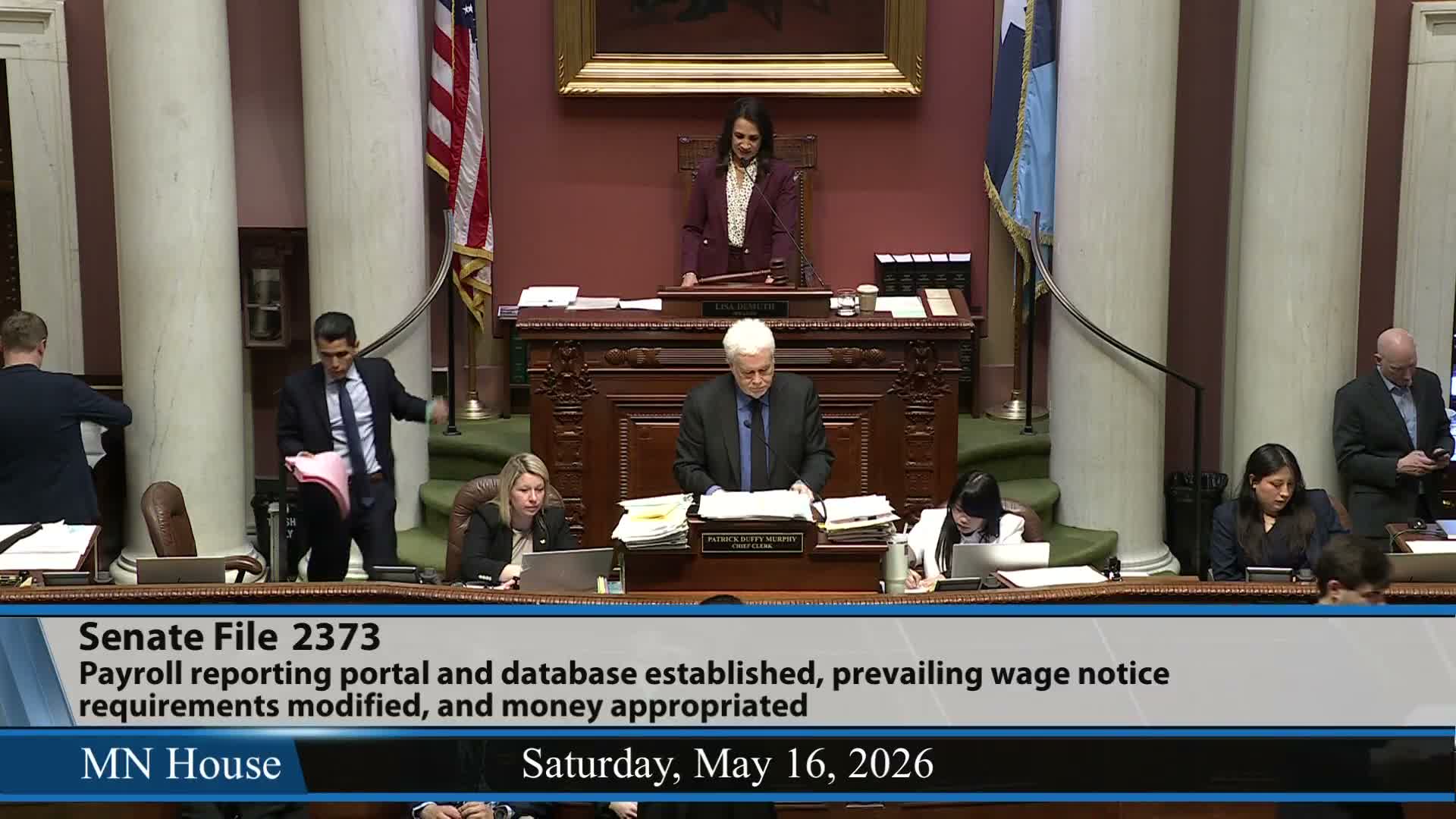
The Minnesota House on Monday passed Senate File 2373, a labor and industry package containing a set of labor provisions carved out from a larger jobs bill, approving the measure as amended by a 107–25 roll call.
The bill’s House author, Representative Jennifer Pinto, described the measure as the labor provisions from a previously passed omnibus jobs bill, with one new tweak addressing minor‑league baseball payroll rules. “The bill, is identical to, provisions that passed off the house floor in house file 37 32 on May 4,” Pinto told colleagues, and said the only substantive new item was a minor‑league baseball overtime provision included through amendment.
Why it matters: supporters said the package advances workforce priorities and includes targeted items for Greater Minnesota. Representative Trey Baker, the amendment sponsor, explained the A2 amendment and its subsequent modifications: among the changes were a minor‑league baseball overtime exemption tied to existing collective‑bargaining coverage and an A10 amendment extending a rural cancer‑research training program that allows Minnesota trainees to study outside the state and return to practice.
Key approved amendments and provisions
- Minor‑league baseball: Representative Baker said the amendment narrows an overtime exemption to players performing team functions covered by a collective‑bargaining agreement and does not change protections for other jobs players hold outside baseball.
- Rural cancer research (A10): Adopted as an amendment to the amendment, A10 extends data use and training timelines to bolster recruitment and retention of oncologists in Greater Minnesota.
- Disability employment access (A7): Representative Ray Rauer said his amendment would reduce backlogs in waiver services and expand options for extended employment; the amendment was adopted.
- Unemployment insurance for laid‑off minors (A8): Representative Johnson P. said the amendment captures minors from mining layoffs not covered last year; members from affected districts urged its inclusion and it was adopted.
What failed or was contentious
Several agriculture‑related proposals were debated but not adopted. Representative Anderson PH offered an amendment (A9) to preserve certain ag program funds from reverting to the general fund, extend meat‑processing grants and support local‑foods and down‑payment assistance programs; opponents objected to its germaneness as a secondary supplemental budget on a labor bill. The amendment to the amendment failed on roll call (61–72) and was not included.
A technical amendment (A13) that would have eased double‑fencing requirements for some farms also drew heated debate. Representative Schultz framed A13 as a relief for small family farms facing an ‘‘unfunded mandate.’’ Representative Jordan warned that removing the double‑fence would increase risk of chronic wasting disease transmission between farmed and wild white‑tailed deer and urged withdrawal. The amendment failed (65–68).
Votes and next steps
The House approved the A2 amendment as amended (125–8) before final passage of the bill. After further floor remarks from chairs and the bill’s sponsors, the House repassed Senate File 2373 as amended by a 107–25 vote; the bill will go to the governor if the Senate concurs with the final House changes or once enrolled as required.
Voices from the floor
Representative Pinto, the bill author, urged a green vote and framed the measure as a set of pragmatic labor reforms. Representative Baker thanked staff and described outreach that produced multiple bipartisan elements. Representative Schultz said he withdrew one proposed amendment (A3) that he judged not germane and criticized other mandates as raising costs for consumers. Representative Jordan argued the proposed fence change posed a disease‑control risk to Minnesota’s deer herd.
The House took the roll call and recorded the final tally as 107 ayes and 25 nays on final passage.
The bill’s House author, Representative Jennifer Pinto, described the measure as the labor provisions from a previously passed omnibus jobs bill, with one new tweak addressing minor‑league baseball payroll rules. “The bill, is identical to, provisions that passed off the house floor in house file 37 32 on May 4,” Pinto told colleagues, and said the only substantive new item was a minor‑league baseball overtime provision included through amendment.
Why it matters: supporters said the package advances workforce priorities and includes targeted items for Greater Minnesota. Representative Trey Baker, the amendment sponsor, explained the A2 amendment and its subsequent modifications: among the changes were a minor‑league baseball overtime exemption tied to existing collective‑bargaining coverage and an A10 amendment extending a rural cancer‑research training program that allows Minnesota trainees to study outside the state and return to practice.
Key approved amendments and provisions
- Minor‑league baseball: Representative Baker said the amendment narrows an overtime exemption to players performing team functions covered by a collective‑bargaining agreement and does not change protections for other jobs players hold outside baseball.
- Rural cancer research (A10): Adopted as an amendment to the amendment, A10 extends data use and training timelines to bolster recruitment and retention of oncologists in Greater Minnesota.
- Disability employment access (A7): Representative Ray Rauer said his amendment would reduce backlogs in waiver services and expand options for extended employment; the amendment was adopted.
- Unemployment insurance for laid‑off minors (A8): Representative Johnson P. said the amendment captures minors from mining layoffs not covered last year; members from affected districts urged its inclusion and it was adopted.
What failed or was contentious
Several agriculture‑related proposals were debated but not adopted. Representative Anderson PH offered an amendment (A9) to preserve certain ag program funds from reverting to the general fund, extend meat‑processing grants and support local‑foods and down‑payment assistance programs; opponents objected to its germaneness as a secondary supplemental budget on a labor bill. The amendment to the amendment failed on roll call (61–72) and was not included.
A technical amendment (A13) that would have eased double‑fencing requirements for some farms also drew heated debate. Representative Schultz framed A13 as a relief for small family farms facing an ‘‘unfunded mandate.’’ Representative Jordan warned that removing the double‑fence would increase risk of chronic wasting disease transmission between farmed and wild white‑tailed deer and urged withdrawal. The amendment failed (65–68).
Votes and next steps
The House approved the A2 amendment as amended (125–8) before final passage of the bill. After further floor remarks from chairs and the bill’s sponsors, the House repassed Senate File 2373 as amended by a 107–25 vote; the bill will go to the governor if the Senate concurs with the final House changes or once enrolled as required.
Voices from the floor
Representative Pinto, the bill author, urged a green vote and framed the measure as a set of pragmatic labor reforms. Representative Baker thanked staff and described outreach that produced multiple bipartisan elements. Representative Schultz said he withdrew one proposed amendment (A3) that he judged not germane and criticized other mandates as raising costs for consumers. Representative Jordan argued the proposed fence change posed a disease‑control risk to Minnesota’s deer herd.
The House took the roll call and recorded the final tally as 107 ayes and 25 nays on final passage.
Don't Miss a Word: See the Full Meeting!
Go beyond summaries. Unlock every video, transcript, and key insight with a Founder Membership.
✓
Get instant access to full meeting videos
✓
Search and clip any phrase from complete transcripts
✓
Receive AI-powered summaries & custom alerts
✓
Enjoy lifetime, unrestricted access to government data
30-day money-back guarantee
