Senate Finance debates bottle-bill overhaul as short-term handling-fee rise draws pushback
May 16, 2026 | Finance, SENATE, Committees, Legislative , Vermont
This article was created by AI summarizing key points discussed. AI makes mistakes, so for full details and context, please refer to the video of the full meeting. Please report any errors so we can fix them. Report an error »
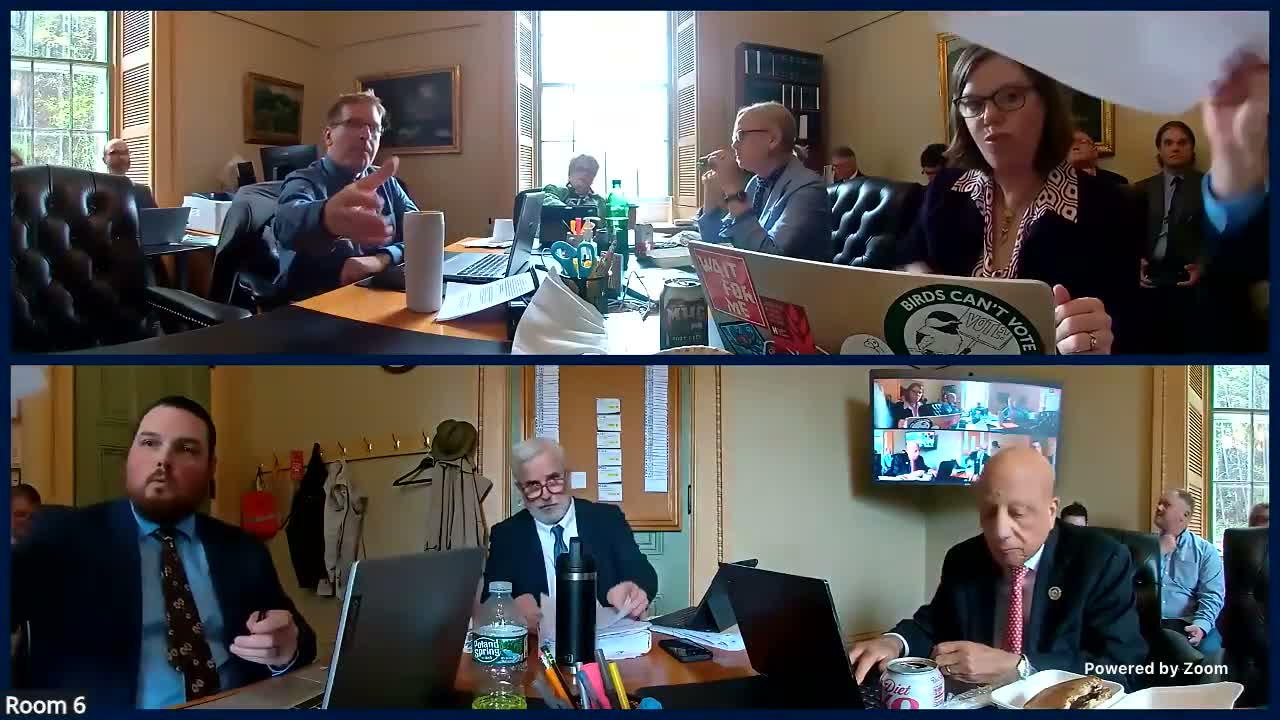
The Senate Finance Committee spent much of its meeting on H.9-15, a proposal to establish a producer responsibility organization (PRO) responsible for a statewide stewardship plan to collect and redeem beverage containers. Committee members heard technical details from counsel and multiple witnesses about how the bill would change handling fees, collection points and short-term fiscal transfers.
Michael Grady, who introduced committee materials, said the measure keeps the 5¢ deposit but clarifies language and raises short-term handling fees to 4.5¢ for commingled material and 5¢ for non‑commingled material until a PRO is fully operating (the temporary handling-fee structure sunsets when the stewardship plan begins on 03/01/2029). The bill also requires minimum convenience standards — for example, at least three points of collection per county and at least one immediate-return location in towns with 7,000 or more residents — and authorizes implementation grants to help producers stand up new systems.
Redemption‑center operators described the system’s strain. "Last year, we redeemed 4,400,000 containers, and we lost $2,900 last year," said Shane Switzer, a redemption-center operator who testified about daily operations and the thin margins many centers face. Switzer told the committee a 1¢ short-term increase to the handling fee would mean roughly $44,000 more for his operation next year and could be the difference between staying open and closing.
Distributors and commingling managers urged caution. "The local distributors — not big national corporations — are typically the deposit initiators," said Bree Deatley, a consultant to the Beverage Association of Vermont. She warned that the extra 1¢ handling-fee increase added by the Senate Natural Resources Committee would raise distributor costs by roughly $1.8 million before the PRO comes online and could be passed through to consumers. Nick Sherming of Lanine Public Affairs, representing Vermont wholesale beverage distributors, echoed that concern and urged more stakeholder work rather than an immediate surcharge.
A fiscal analyst told the committee the bill includes transfers from the Clean Water Fund to the Solid Waste Management Assistance Fund to support four years of implementation grants (roughly $1 million in FY2030 and FY2031, $750,000 in FY2032 and FY2033 — about $3.5 million total). The analyst cautioned that if redemption rates rise under a PRO, unclaimed-deposit revenue flowing to the Clean Water Fund could decline.
Supporters argued the bill modernizes a decades‑old system and invests in bulk-sorting technology that can reduce labor and increase the value of materials recovered. Opponents said the short-term fee increase undermines incentives for redemption centers to negotiate operational changes with a future PRO and shifts costs to small Vermont distributors and consumers.
The committee discussed and drafted committee amendments during the session and voted to report a related committee amendment (H.9-28 as amended) favorably. Committee members directed staff to produce consolidated substitute language and return the revised draft for committee review. No final floor-level vote on the underlying H.9-15 policy package was recorded in this hearing; additional drafting and intercommittee reconciliation were the next procedural steps.
The debate highlighted the trade-offs facing lawmakers: short-term financial assistance to keep redemption centers solvent, and longer-term investments and rules intended to increase convenience and automation. The committee will decide whether to keep the temporary handling-fee increase, adjust grant levels or change convenience requirements as it prepares final language for the floor.
Michael Grady, who introduced committee materials, said the measure keeps the 5¢ deposit but clarifies language and raises short-term handling fees to 4.5¢ for commingled material and 5¢ for non‑commingled material until a PRO is fully operating (the temporary handling-fee structure sunsets when the stewardship plan begins on 03/01/2029). The bill also requires minimum convenience standards — for example, at least three points of collection per county and at least one immediate-return location in towns with 7,000 or more residents — and authorizes implementation grants to help producers stand up new systems.
Redemption‑center operators described the system’s strain. "Last year, we redeemed 4,400,000 containers, and we lost $2,900 last year," said Shane Switzer, a redemption-center operator who testified about daily operations and the thin margins many centers face. Switzer told the committee a 1¢ short-term increase to the handling fee would mean roughly $44,000 more for his operation next year and could be the difference between staying open and closing.
Distributors and commingling managers urged caution. "The local distributors — not big national corporations — are typically the deposit initiators," said Bree Deatley, a consultant to the Beverage Association of Vermont. She warned that the extra 1¢ handling-fee increase added by the Senate Natural Resources Committee would raise distributor costs by roughly $1.8 million before the PRO comes online and could be passed through to consumers. Nick Sherming of Lanine Public Affairs, representing Vermont wholesale beverage distributors, echoed that concern and urged more stakeholder work rather than an immediate surcharge.
A fiscal analyst told the committee the bill includes transfers from the Clean Water Fund to the Solid Waste Management Assistance Fund to support four years of implementation grants (roughly $1 million in FY2030 and FY2031, $750,000 in FY2032 and FY2033 — about $3.5 million total). The analyst cautioned that if redemption rates rise under a PRO, unclaimed-deposit revenue flowing to the Clean Water Fund could decline.
Supporters argued the bill modernizes a decades‑old system and invests in bulk-sorting technology that can reduce labor and increase the value of materials recovered. Opponents said the short-term fee increase undermines incentives for redemption centers to negotiate operational changes with a future PRO and shifts costs to small Vermont distributors and consumers.
The committee discussed and drafted committee amendments during the session and voted to report a related committee amendment (H.9-28 as amended) favorably. Committee members directed staff to produce consolidated substitute language and return the revised draft for committee review. No final floor-level vote on the underlying H.9-15 policy package was recorded in this hearing; additional drafting and intercommittee reconciliation were the next procedural steps.
The debate highlighted the trade-offs facing lawmakers: short-term financial assistance to keep redemption centers solvent, and longer-term investments and rules intended to increase convenience and automation. The committee will decide whether to keep the temporary handling-fee increase, adjust grant levels or change convenience requirements as it prepares final language for the floor.
Don't Miss a Word: See the Full Meeting!
Go beyond summaries. Unlock every video, transcript, and key insight with a Founder Membership.
✓
Get instant access to full meeting videos
✓
Search and clip any phrase from complete transcripts
✓
Receive AI-powered summaries & custom alerts
✓
Enjoy lifetime, unrestricted access to government data
30-day money-back guarantee
