Santa Fe records team reports heavy video-review hours; city to shift some IPRA duties
May 16, 2026 | Santa Fe, Santa Fe County, New Mexico
This article was created by AI summarizing key points discussed. AI makes mistakes, so for full details and context, please refer to the video of the full meeting. Please report any errors so we can fix them. Report an error »
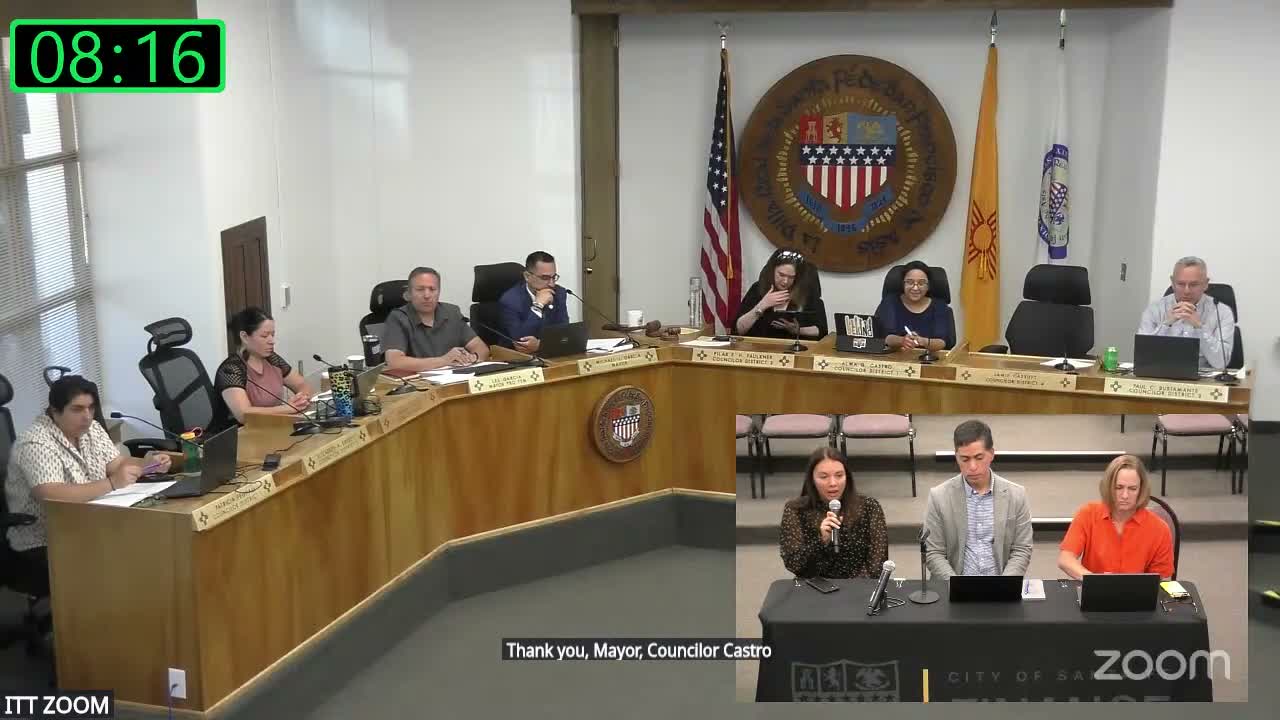
City records staff detailed the volume and cost of public-records processing during the FY27 budget hearing, telling councilors that a reliance on voluminous video requests is increasing staff time and causing vicarious-trauma concerns.
Catherine, a records team member, said the new GovQA platform tracked 138 hours of video review in a recent month in addition to 417 hours spent on other IPRA duties. "That hundred and 38 hours is on top of the 417 hours they have spent so far," she said, adding that out-of-state requesters and requests with voluminous data increase the workload per request.
City Attorney Marcos and staff said they will collaborate with the police department to shift some video-review responsibilities to officers who already have training in incident footage review; police will add a position and cross-train to apply consistent rules to video review. Staff said this change aims to reduce the administrative and emotional burden on city records personnel and the city attorney's office.
Councilors pressed for clarity on resources and cross-departmental supports, including mental-health resources for staff who review traumatic footage. Records staff said some one-time process improvements and platform tracking helped reduce volume of formal IPRA filings, but the per-request workload has grown.
Next steps: staff will continue cross-training, add police capacity for video review, and work with the governing body as needed on resourcing.
Catherine, a records team member, said the new GovQA platform tracked 138 hours of video review in a recent month in addition to 417 hours spent on other IPRA duties. "That hundred and 38 hours is on top of the 417 hours they have spent so far," she said, adding that out-of-state requesters and requests with voluminous data increase the workload per request.
City Attorney Marcos and staff said they will collaborate with the police department to shift some video-review responsibilities to officers who already have training in incident footage review; police will add a position and cross-train to apply consistent rules to video review. Staff said this change aims to reduce the administrative and emotional burden on city records personnel and the city attorney's office.
Councilors pressed for clarity on resources and cross-departmental supports, including mental-health resources for staff who review traumatic footage. Records staff said some one-time process improvements and platform tracking helped reduce volume of formal IPRA filings, but the per-request workload has grown.
Next steps: staff will continue cross-training, add police capacity for video review, and work with the governing body as needed on resourcing.
Don't Miss a Word: See the Full Meeting!
Go beyond summaries. Unlock every video, transcript, and key insight with a Founder Membership.
✓
Get instant access to full meeting videos
✓
Search and clip any phrase from complete transcripts
✓
Receive AI-powered summaries & custom alerts
✓
Enjoy lifetime, unrestricted access to government data
30-day money-back guarantee
