Ways & Means advances S.278 with technical tax fix for cannabis businesses
May 16, 2026 | Ways & Means, HOUSE OF REPRESENTATIVES, Committees, Legislative , Vermont
This article was created by AI summarizing key points discussed. AI makes mistakes, so for full details and context, please refer to the video of the full meeting. Please report any errors so we can fix them. Report an error »
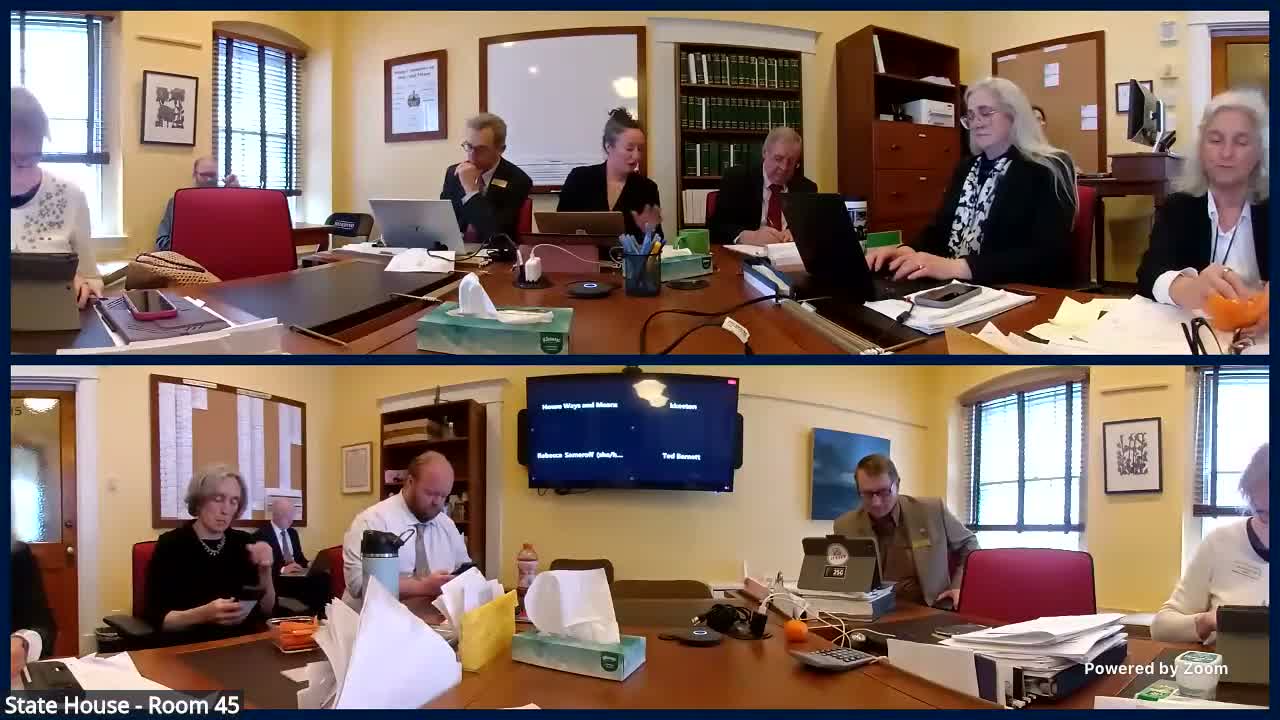
The Ways & Means Committee on May 15 voted 9–1, with one member absent, to find S.278 favorable, advancing a miscellaneous cannabis bill that includes a technical change to how cannabis business income is treated for household income calculations used in property tax credits.
Kirby Keaton, legislative council, explained the bill’s Section 24 would add a subdivision to the definition of modified adjusted gross income so that federal deductions or credits that are excluded under 26 USC section 280 would nonetheless be included for purposes of Vermont’s household income calculation. "What this does is add a new subdivision that clarifies that any federal deductions or credits that are not included in a person's income because they're not allowed under 26 USC section 280 would be allowed to be included in adjusted gross income for purposes of this," Keaton said.
Rebecca Samaroff, deputy commissioner of the Vermont Department of Taxes, told the committee the change is intended to mirror the deductions already allowed on corporate and personal income tax returns so pass-through cannabis businesses are not disadvantaged. "The cost of goods deduction... is already allowed for both corporate and personal income tax," Samaroff said. She described the provision as correcting an oversight from Act 164 and said it raises an equity concern for cannabis business owners that the bill seeks to address.
The bill covers multiple regulatory and fiscal items. A Joint Fiscal Office analyst summarized likely effects: raising per-package and transaction limits could expand the regulated retail market and increase excise and sales tax revenue, event permits in Section 5 would generate up to $5,000 annually split between municipalities and the cannabis regulation fund for two years, and certain fee reductions in Section 10a could, if implemented, reduce fee revenue by "just shy of $105,000" unless a transfer to the regulation fund is made to offset reductions. The bill also includes a provision (Section 27) establishing small filing fees for cultivator cooperatives — $20 on incorporation/merger and $10 for amendments — and converts an annual $50 employee license into a two-year $100 license; the fiscal office said about 1,700 employees currently hold licenses.
James Petalic, chair of the Cannabis Control Board, described several mostly technical requests the board made, including moving a $100 local licensing remittance from quarterly to annual and striking the term "integrated license" from multiple statutes as housekeeping. He also proposed a one-line floor amendment to authorize the board to seek a civil order to collect administrative penalties, saying the authority mirrors the secretary of agriculture’s collection power and would prevent respondents from relinquishing licenses to avoid payment. "It's the exact same authority that the secretary of agriculture has," Petalic said.
Committee members asked for clarifications about whether the tax change affects corporate taxes or pass-through income; Keaton and Samaroff said the provision typically affects pass-through income that flows to a taxpayer’s household income (for example, K-1 income or sole proprietorships) and would allow cost-of-goods-sold and similar business deductions to reduce household AGI for property tax credit calculations.
Representative roll-call votes were read after the discussion. The clerk recorded the yea votes from Representatives Brannigan, Fulcom, Kimball, Madeline, Odey, Wazak, Canfield, Korn Hendricks and one other; Representative Higley recorded the lone no vote; Representative Paige was absent. The chair announced the committee found S.278 favorable, 9–1–1.
After the vote, members discussed filing Petalic’s proposed floor amendment; several members agreed to sign on, and the sponsor said the amendment would be submitted as a floor amendment and circulated to committee members.
Next steps: the committee will forward the bill as favorable and the sponsor expects to submit the one-line floor amendment regarding civil-collection authority ahead of floor consideration.
Kirby Keaton, legislative council, explained the bill’s Section 24 would add a subdivision to the definition of modified adjusted gross income so that federal deductions or credits that are excluded under 26 USC section 280 would nonetheless be included for purposes of Vermont’s household income calculation. "What this does is add a new subdivision that clarifies that any federal deductions or credits that are not included in a person's income because they're not allowed under 26 USC section 280 would be allowed to be included in adjusted gross income for purposes of this," Keaton said.
Rebecca Samaroff, deputy commissioner of the Vermont Department of Taxes, told the committee the change is intended to mirror the deductions already allowed on corporate and personal income tax returns so pass-through cannabis businesses are not disadvantaged. "The cost of goods deduction... is already allowed for both corporate and personal income tax," Samaroff said. She described the provision as correcting an oversight from Act 164 and said it raises an equity concern for cannabis business owners that the bill seeks to address.
The bill covers multiple regulatory and fiscal items. A Joint Fiscal Office analyst summarized likely effects: raising per-package and transaction limits could expand the regulated retail market and increase excise and sales tax revenue, event permits in Section 5 would generate up to $5,000 annually split between municipalities and the cannabis regulation fund for two years, and certain fee reductions in Section 10a could, if implemented, reduce fee revenue by "just shy of $105,000" unless a transfer to the regulation fund is made to offset reductions. The bill also includes a provision (Section 27) establishing small filing fees for cultivator cooperatives — $20 on incorporation/merger and $10 for amendments — and converts an annual $50 employee license into a two-year $100 license; the fiscal office said about 1,700 employees currently hold licenses.
James Petalic, chair of the Cannabis Control Board, described several mostly technical requests the board made, including moving a $100 local licensing remittance from quarterly to annual and striking the term "integrated license" from multiple statutes as housekeeping. He also proposed a one-line floor amendment to authorize the board to seek a civil order to collect administrative penalties, saying the authority mirrors the secretary of agriculture’s collection power and would prevent respondents from relinquishing licenses to avoid payment. "It's the exact same authority that the secretary of agriculture has," Petalic said.
Committee members asked for clarifications about whether the tax change affects corporate taxes or pass-through income; Keaton and Samaroff said the provision typically affects pass-through income that flows to a taxpayer’s household income (for example, K-1 income or sole proprietorships) and would allow cost-of-goods-sold and similar business deductions to reduce household AGI for property tax credit calculations.
Representative roll-call votes were read after the discussion. The clerk recorded the yea votes from Representatives Brannigan, Fulcom, Kimball, Madeline, Odey, Wazak, Canfield, Korn Hendricks and one other; Representative Higley recorded the lone no vote; Representative Paige was absent. The chair announced the committee found S.278 favorable, 9–1–1.
After the vote, members discussed filing Petalic’s proposed floor amendment; several members agreed to sign on, and the sponsor said the amendment would be submitted as a floor amendment and circulated to committee members.
Next steps: the committee will forward the bill as favorable and the sponsor expects to submit the one-line floor amendment regarding civil-collection authority ahead of floor consideration.
Don't Miss a Word: See the Full Meeting!
Go beyond summaries. Unlock every video, transcript, and key insight with a Founder Membership.
✓
Get instant access to full meeting videos
✓
Search and clip any phrase from complete transcripts
✓
Receive AI-powered summaries & custom alerts
✓
Enjoy lifetime, unrestricted access to government data
30-day money-back guarantee
