Valley Bank mortgage manager urges layered funding, community land trusts and consumer protections
May 16, 2026 | Broward County, Florida
This article was created by AI summarizing key points discussed. AI makes mistakes, so for full details and context, please refer to the video of the full meeting. Please report any errors so we can fix them. Report an error »
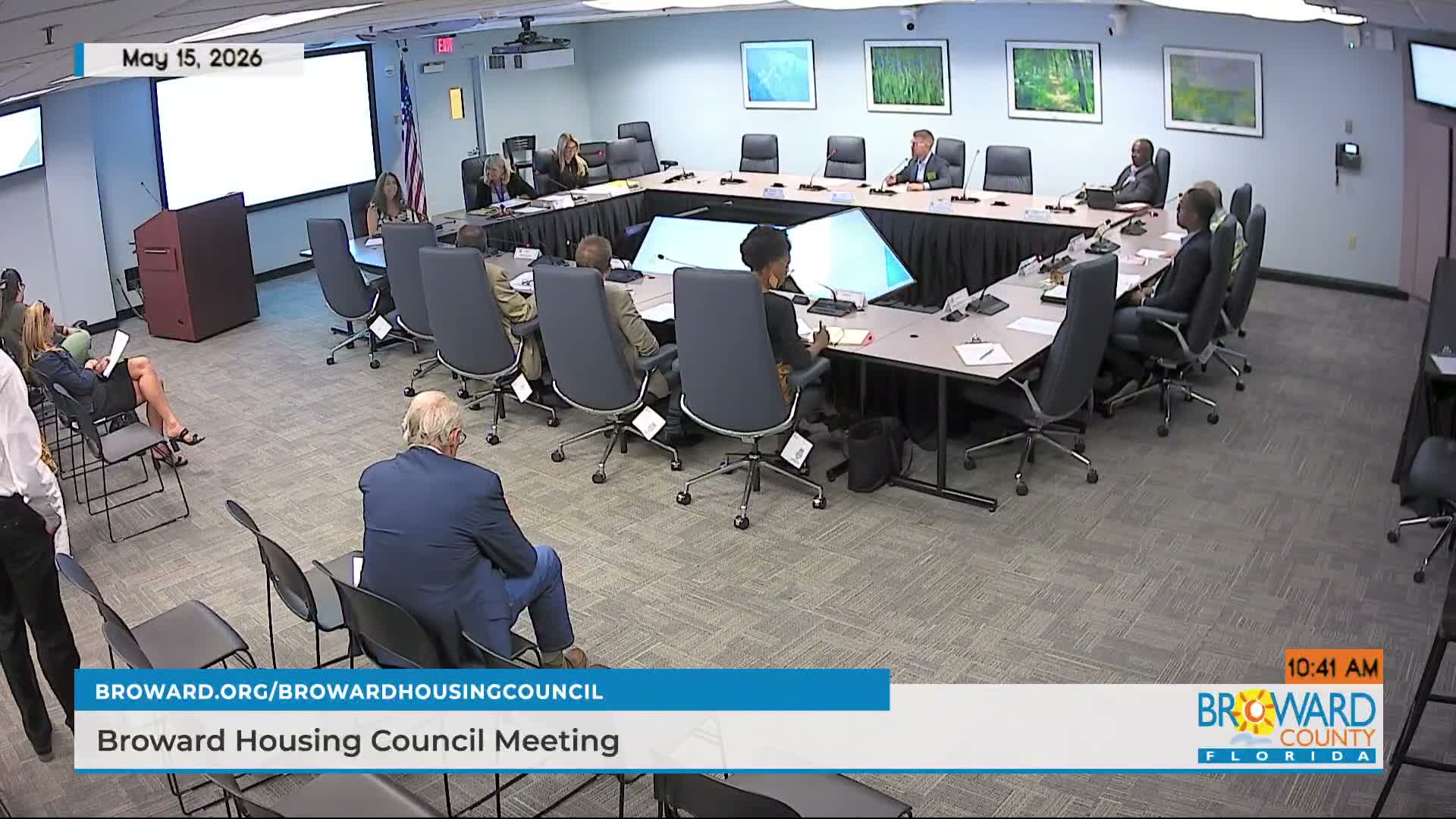
Amy Robbins, vice president and mortgage-branch manager at Valley Bank, presented a lender’s view of current affordability challenges and possible solutions.
She said market prices are beginning to moderate and inventory is rising, but that first-time and low-income buyers still need multiple layers of assistance. "When you have high prices... you're gonna need some layered funding," she said, describing municipality, bank and seller contributions that must be combined with grants or subsidies to make purchases affordable for many households.
Robbins highlighted several barriers: rising homeowners and condo association costs tied to inspections and reserve requirements, elevated insurance and property-tax considerations, and the changing structure of realtor and broker fees that can add closing costs for buyers. She cautioned that some broker-driven products can carry higher rates and points, and said municipalities should maintain underwriting guidelines in subsidy programs to reduce risk.
On underwriting changes, Robbins described FHFA and the GSEs' evolving practices: "Fannie and Freddie... don't have credit score limits" in the same way and are looking at whole-loan underwriting rather than relying on a single minimum credit score, which increases access but may raise debt-to-income exposure for some borrowers.
She recommended increased use of community land trusts (CLTs), shared-equity models and targeted homeownership assistance (the county’s $5,000,000 set-aside was described by staff elsewhere) as mechanisms to maintain long-term affordability. Robbins also urged better consumer education for buyers and more coordination between lenders and municipalities to reduce predatory steering to higher-cost broker products.
During Q&A, council members asked about CLT mechanics and the rise in cosigner use for first-time buyers; Robbins described CLT land-lease models and estimated cosigner rates had risen to around 20% among first-time buyers in her practice.
She said market prices are beginning to moderate and inventory is rising, but that first-time and low-income buyers still need multiple layers of assistance. "When you have high prices... you're gonna need some layered funding," she said, describing municipality, bank and seller contributions that must be combined with grants or subsidies to make purchases affordable for many households.
Robbins highlighted several barriers: rising homeowners and condo association costs tied to inspections and reserve requirements, elevated insurance and property-tax considerations, and the changing structure of realtor and broker fees that can add closing costs for buyers. She cautioned that some broker-driven products can carry higher rates and points, and said municipalities should maintain underwriting guidelines in subsidy programs to reduce risk.
On underwriting changes, Robbins described FHFA and the GSEs' evolving practices: "Fannie and Freddie... don't have credit score limits" in the same way and are looking at whole-loan underwriting rather than relying on a single minimum credit score, which increases access but may raise debt-to-income exposure for some borrowers.
She recommended increased use of community land trusts (CLTs), shared-equity models and targeted homeownership assistance (the county’s $5,000,000 set-aside was described by staff elsewhere) as mechanisms to maintain long-term affordability. Robbins also urged better consumer education for buyers and more coordination between lenders and municipalities to reduce predatory steering to higher-cost broker products.
During Q&A, council members asked about CLT mechanics and the rise in cosigner use for first-time buyers; Robbins described CLT land-lease models and estimated cosigner rates had risen to around 20% among first-time buyers in her practice.
Don't Miss a Word: See the Full Meeting!
Go beyond summaries. Unlock every video, transcript, and key insight with a Founder Membership.
✓
Get instant access to full meeting videos
✓
Search and clip any phrase from complete transcripts
✓
Receive AI-powered summaries & custom alerts
✓
Enjoy lifetime, unrestricted access to government data
30-day money-back guarantee
