Reno County planners propose zoning text amendments to ease parking and loading requirements
May 15, 2026 | Reno County, Kansas
This article was created by AI summarizing key points discussed. AI makes mistakes, so for full details and context, please refer to the video of the full meeting. Please report any errors so we can fix them. Report an error »
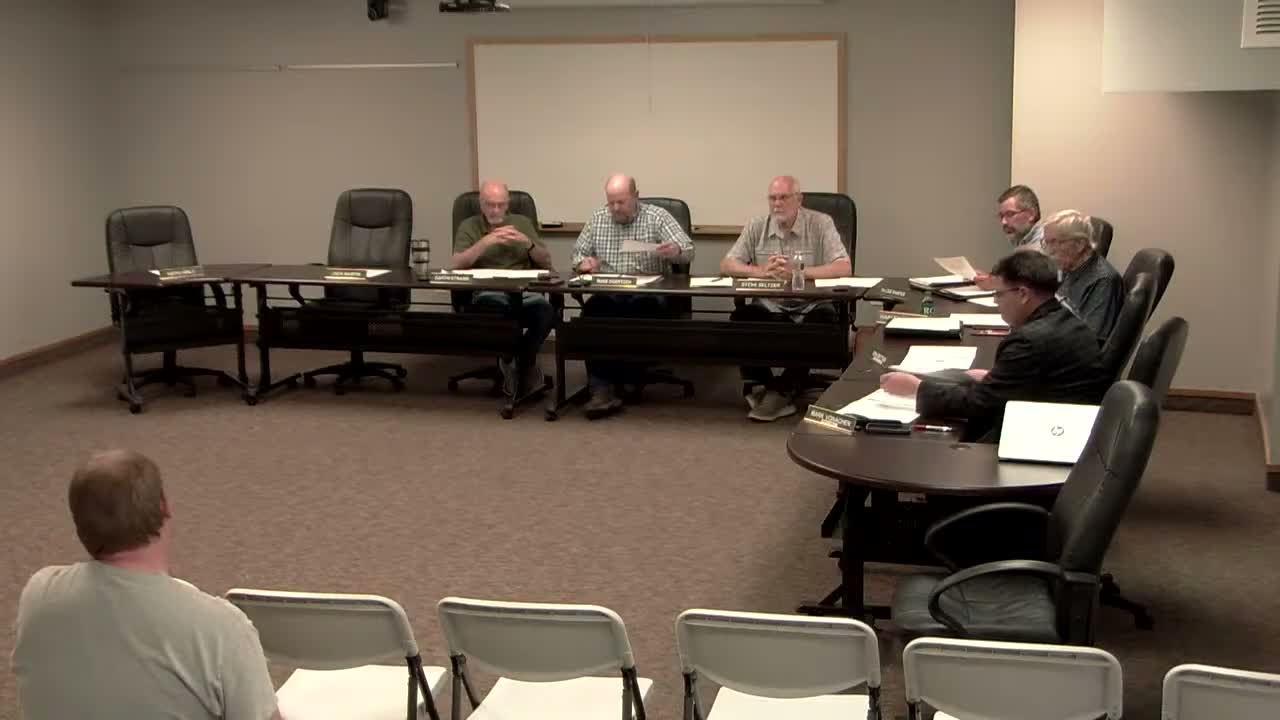
Planning staff presented draft zoning text amendments to Article 10 (parking regulations) and Article 11 (off‑street loading regulations) on May 14, proposing to reduce repeat waivers by giving the conditional use permit process authority to adjust minimum parking and loading requirements.
Staff said the intent is not to remove baseline standards but to let the commission set site‑specific conditions in staff reports and conditions of approval so the commission does not have to add waivers to motions and county commission resolutions each time. "My sole goal really is to try and avoid a situation where we always have to make a motion to approve something and also waive this number of parking spaces," the planning staff member said.
Key draft changes discussed
- Adjustment authority: Keep the existing parking‑requirement charts as a starting point but allow the planning commission to "change" minimum counts through conditions of approval tied to conditional use permits, rather than issuing discrete waivers.
- Stall dimensions: Proposed change to paved parking stall dimensions from 9 by 19 feet to 9 by 18 feet to align with common standards.
- Gravel parking: For unpaved stalls, staff recommended defining a gravel parking stall as 200 square feet to prevent undercounting on unstriped surfaces and to ensure required stall counts on gravel lots.
- Paving and access: For developments on paved roads, off‑street parking and access drives "may" be required to be paved; staff proposed that paving requirements be imposed as a condition of approval when appropriate.
- Screening and maintenance: The draft changes would make screening adjacent to residential uses discretionary ("may") rather than mandatory ("shall"), allowing fencing or live plantings to be required on a case‑by‑case basis during conditional use review.
- Temporary uses: Staff said food trucks and similar temporary vendors would be treated as special events and would require the article 19 special‑event/site plan process rather than being allowed as unsanctioned activity in a parking lot.
- Loading dimensions: Staff proposed removing the automatic 11‑foot vertical clearance requirement that frequently triggered waivers and reserving larger loading‑dock requirements for businesses above charted square‑foot thresholds (for example, the 2,000‑square‑foot retail threshold in the draft chart).
Commissioner discussion
Commissioners probed whether removing waiver language would give staff unchecked authority; staff and several commissioners said the chart would remain a baseline and the conditional use process would preserve case‑level scrutiny. Commissioners asked staff to clarify wording about parking in required setbacks so that residential driveways remain excepted while preventing commercial lots from encroaching on ditches and neighboring property.
Staff said they will make the suggested wording edits (including replacing "reduce or not require" with "change" where appropriate, clarifying driveway and setback language, and reconciling gravel‑stall area with paved dimensions) and return with a line‑by‑line draft for the commission to review; no adoption vote occurred at the May 14 meeting.
Next steps: Staff will revise the draft language and the commission scheduled a detailed line‑by‑line review at a future meeting.
Staff said the intent is not to remove baseline standards but to let the commission set site‑specific conditions in staff reports and conditions of approval so the commission does not have to add waivers to motions and county commission resolutions each time. "My sole goal really is to try and avoid a situation where we always have to make a motion to approve something and also waive this number of parking spaces," the planning staff member said.
Key draft changes discussed
- Adjustment authority: Keep the existing parking‑requirement charts as a starting point but allow the planning commission to "change" minimum counts through conditions of approval tied to conditional use permits, rather than issuing discrete waivers.
- Stall dimensions: Proposed change to paved parking stall dimensions from 9 by 19 feet to 9 by 18 feet to align with common standards.
- Gravel parking: For unpaved stalls, staff recommended defining a gravel parking stall as 200 square feet to prevent undercounting on unstriped surfaces and to ensure required stall counts on gravel lots.
- Paving and access: For developments on paved roads, off‑street parking and access drives "may" be required to be paved; staff proposed that paving requirements be imposed as a condition of approval when appropriate.
- Screening and maintenance: The draft changes would make screening adjacent to residential uses discretionary ("may") rather than mandatory ("shall"), allowing fencing or live plantings to be required on a case‑by‑case basis during conditional use review.
- Temporary uses: Staff said food trucks and similar temporary vendors would be treated as special events and would require the article 19 special‑event/site plan process rather than being allowed as unsanctioned activity in a parking lot.
- Loading dimensions: Staff proposed removing the automatic 11‑foot vertical clearance requirement that frequently triggered waivers and reserving larger loading‑dock requirements for businesses above charted square‑foot thresholds (for example, the 2,000‑square‑foot retail threshold in the draft chart).
Commissioner discussion
Commissioners probed whether removing waiver language would give staff unchecked authority; staff and several commissioners said the chart would remain a baseline and the conditional use process would preserve case‑level scrutiny. Commissioners asked staff to clarify wording about parking in required setbacks so that residential driveways remain excepted while preventing commercial lots from encroaching on ditches and neighboring property.
Staff said they will make the suggested wording edits (including replacing "reduce or not require" with "change" where appropriate, clarifying driveway and setback language, and reconciling gravel‑stall area with paved dimensions) and return with a line‑by‑line draft for the commission to review; no adoption vote occurred at the May 14 meeting.
Next steps: Staff will revise the draft language and the commission scheduled a detailed line‑by‑line review at a future meeting.
View the Full Meeting & All Its Details
This article offers just a summary. Unlock complete video, transcripts, and insights as a Founder Member.
✓
Watch full, unedited meeting videos
✓
Search every word spoken in unlimited transcripts
✓
AI summaries & real-time alerts (all government levels)
✓
Permanent access to expanding government content
30-day money-back guarantee
