Senate advances overhaul of animal‑cruelty statutes, expands forfeiture and security provisions
May 16, 2026 | SENATE, Committees, Legislative , Vermont
This article was created by AI summarizing key points discussed. AI makes mistakes, so for full details and context, please refer to the video of the full meeting. Please report any errors so we can fix them. Report an error »
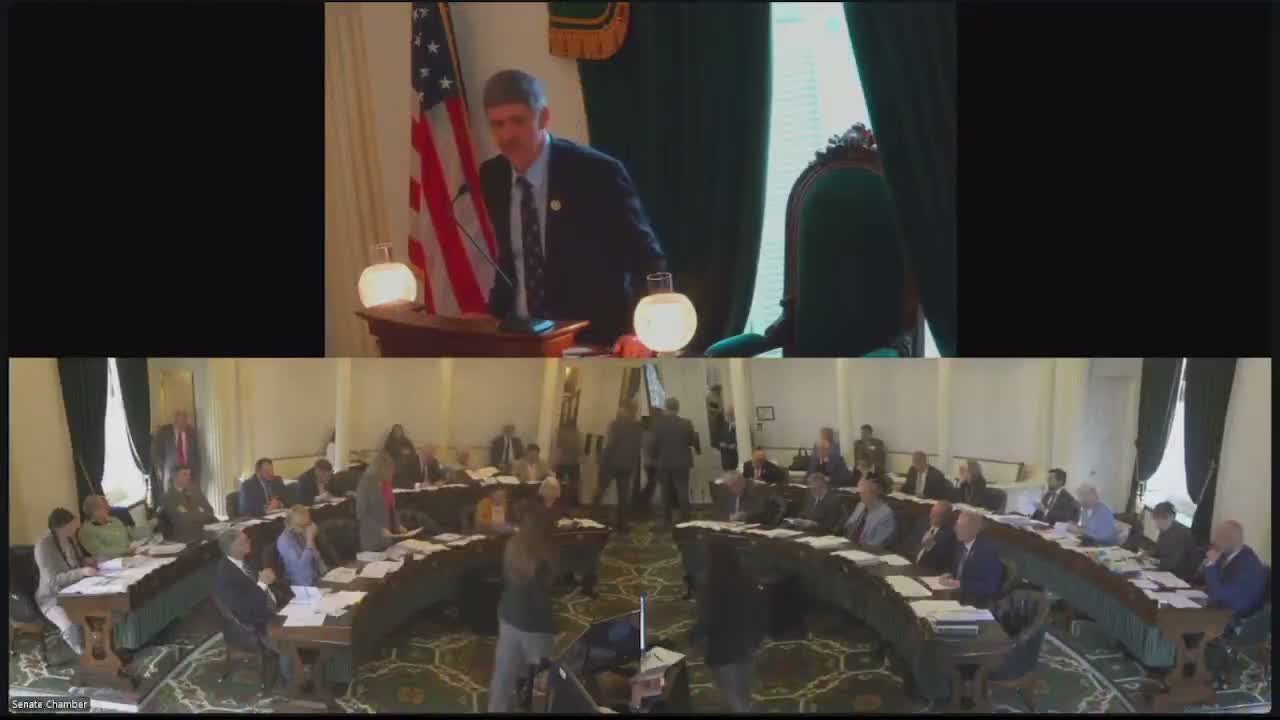
The Vermont Senate advanced H578 on May 18, a broad package of changes to animal‑cruelty law that expands enumerated offenses, increases potential criminal penalties, and creates a civil forfeiture and security system to fund custodial care for seized animals; the Senate proposed the committee’s amendments and ordered the bill for third reading.
Senator Vyhovsky, reporting for the Senate Judiciary Committee, described the bill as ‘‘going on an uncomfortable journey at times’’ because it adds to the lists of conduct that can be misdemeanors or felonies, increases maximum penalties, and makes some sanctions mandatory for repeat offenders. The bill also expands the civil procedures for seizure and forfeiture of animals and requires that petitioners post security to cover custodial care for an initial 40‑day period, with periodic reconciliation thereafter.
The measure creates explicit prohibitions on specified sexualized conduct with animals absent a bona fide veterinary or animal‑husbandry purpose and prohibits possession, filming, or distribution of obscene visual images of such conduct. It also gives courts clearer authority to order forfeiture of animals and to impose future restrictions on ownership, residency with, custody of, or work with animals, in some cases for up to 5 years for misdemeanor offenses and 10 years for felony offenses.
Vyhovsky told senators the Judiciary Committee had lengthy discussions with the director of animal welfare about housing capacity, the costs of caring for seized animals, and the balance between rapid action to protect animals and preserving defendants’ due process rights. The bill creates a rulemaking path for the director of animal welfare to set security amounts and schedules and authorizes an animal welfare fund to receive and reimburse custodial caregivers.
Senate Finance and Appropriations committees reported back with technical changes and a proposed report deadline (Dec. 1, 2026) to study security levels and payment schedules. During floor questions senators probed how the bill treats defensive killing when a person protects a pet during an attack and whether the bill would reach unusual hypotheticals; the presenter said the bill does not change current fact‑specific law governing such incidents.
The Senate voice‑voted to propose the judiciary committee amendment as amended and ordered H578 read a third time; further technical rulemaking and financing details are expected to be addressed before final passage.
Senator Vyhovsky, reporting for the Senate Judiciary Committee, described the bill as ‘‘going on an uncomfortable journey at times’’ because it adds to the lists of conduct that can be misdemeanors or felonies, increases maximum penalties, and makes some sanctions mandatory for repeat offenders. The bill also expands the civil procedures for seizure and forfeiture of animals and requires that petitioners post security to cover custodial care for an initial 40‑day period, with periodic reconciliation thereafter.
The measure creates explicit prohibitions on specified sexualized conduct with animals absent a bona fide veterinary or animal‑husbandry purpose and prohibits possession, filming, or distribution of obscene visual images of such conduct. It also gives courts clearer authority to order forfeiture of animals and to impose future restrictions on ownership, residency with, custody of, or work with animals, in some cases for up to 5 years for misdemeanor offenses and 10 years for felony offenses.
Vyhovsky told senators the Judiciary Committee had lengthy discussions with the director of animal welfare about housing capacity, the costs of caring for seized animals, and the balance between rapid action to protect animals and preserving defendants’ due process rights. The bill creates a rulemaking path for the director of animal welfare to set security amounts and schedules and authorizes an animal welfare fund to receive and reimburse custodial caregivers.
Senate Finance and Appropriations committees reported back with technical changes and a proposed report deadline (Dec. 1, 2026) to study security levels and payment schedules. During floor questions senators probed how the bill treats defensive killing when a person protects a pet during an attack and whether the bill would reach unusual hypotheticals; the presenter said the bill does not change current fact‑specific law governing such incidents.
The Senate voice‑voted to propose the judiciary committee amendment as amended and ordered H578 read a third time; further technical rulemaking and financing details are expected to be addressed before final passage.
Don't Miss a Word: See the Full Meeting!
Go beyond summaries. Unlock every video, transcript, and key insight with a Founder Membership.
✓
Get instant access to full meeting videos
✓
Search and clip any phrase from complete transcripts
✓
Receive AI-powered summaries & custom alerts
✓
Enjoy lifetime, unrestricted access to government data
30-day money-back guarantee
