Kent County sends zoo and museum millage renewal to ballot, adopts distribution agreement after weeks of debate
May 15, 2026 | Kent County, Michigan
This article was created by AI summarizing key points discussed. AI makes mistakes, so for full details and context, please refer to the video of the full meeting. Please report any errors so we can fix them. Report an error »
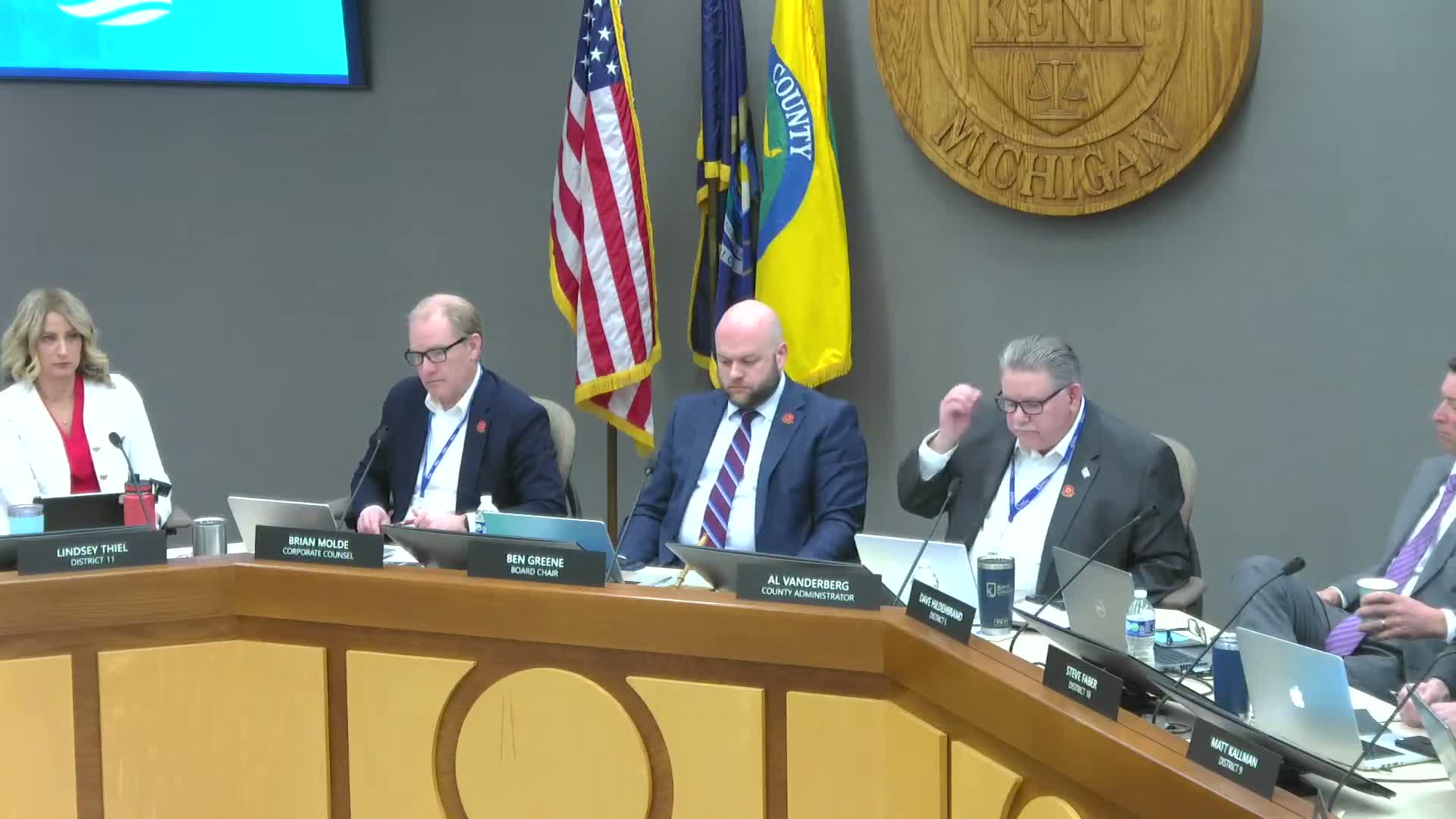
The Kent County Board of Commissioners voted to place a renewal of the John Ball Zoo and Grand Rapids Public Museum millage on the Nov. 3, 2026 general election ballot and adopted memoranda of understanding (MOUs) that define how the proceeds would be distributed if voters approve the measure.
The board, acting after hours of public comment and extended commissioner debate, approved the ballot language and accompanying MOUs in separate actions; the final roll call adopting the MOUs was recorded as 19 yeas and 1 nay. The proposed ballot rate is 0.4086 mills, with first‑year revenue estimated at $15,412,425, and the action to transmit language to the county clerk was conditioned on finalized agreements with both cultural institutions.
Why it matters: The renewal would provide a dedicated revenue stream for two major cultural institutions that serve the county, while the MOUs attempt to codify allocations, reporting and conditions for capital disbursements. Neighbors and some commissioners pressed the board for stronger, enforceable oversight and clearer remedies if the zoo fails to meet obligations tied to green‑space protections and neighborhood impacts.
During public comment, neighbors and community advocates asked the commission to require enforceable compliance tied to millage disbursements. Mattia Spencer Rebert, representing West Side residents, urged the board to “amend the MOU to ensure that there is strong compliance and enforcement provisions for funding disbursement for operational expenses,” saying the neighborhood has experienced “rushed timelines, canceled meetings, insufficient time for review, lack of public engagement” during earlier planning processes.
Dale Robertson, president of the Grand Rapids Public Museum, told commissioners the museum supports the scenario before the board and asked to make the case to voters: “We are committed to the original goal here, which is to try to earn a spot before the ballot,” Robertson said.
Chair Green acknowledged neighborhood concerns and told colleagues he plans to open “a process to revisit the operating agreement,” saying the board has already begun conversations with zoo leadership and administration and that the operating‑agreement review would be pursued separately from the MOUs: “We will immediately start to meet with the museum and the zoo, to get these put in final form and signed. I view that as more of a ministerial duty,” he said.
Several commissioners proposed amendments before the final vote. Minority Vice Chair Faber sought an amendment to allow the museum limited access (up to 10%, capped at $4 million) to a capital allocation fund; that amendment tied 10–10 and failed. A separate amendment directing the county administrator to convene a group to update the zoo operating agreement within 12 months also failed on a 9–11 roll call. Chair Green and other commissioners emphasized a commitment on the record to pursue an operating‑agreement update outside of the formal MOU vote.
What the MOUs say: The documents circulated with the board materials specify a ten‑year allocation framework for operations and a separate capital allocation intended to support long‑term projects tied to the zoo master plan. The packet estimated an initial first‑year levy yield of about $15.4 million and noted an estimated $401,785 in captured tax increment revenue in the first calendar year; final distributions depend on statutory capture rules and the MOUs’ details.
Next steps: The ballot language and MOUs will be transmitted to the clerk for placement on the Nov. 3 ballot only after the county and both institutions execute the agreements. If the renewal is approved by voters, the MOUs specify the processes and conditions under which the county will disburse operations and capital millage funds. The county chair said the board will pursue an operating‑agreement review and regular checkpoints between the parties to address neighborhood concerns and oversight.
The board’s adoption of the ballot language and MOUs does not itself change funding yet; any revenue disbursement depends on voter approval.
The board, acting after hours of public comment and extended commissioner debate, approved the ballot language and accompanying MOUs in separate actions; the final roll call adopting the MOUs was recorded as 19 yeas and 1 nay. The proposed ballot rate is 0.4086 mills, with first‑year revenue estimated at $15,412,425, and the action to transmit language to the county clerk was conditioned on finalized agreements with both cultural institutions.
Why it matters: The renewal would provide a dedicated revenue stream for two major cultural institutions that serve the county, while the MOUs attempt to codify allocations, reporting and conditions for capital disbursements. Neighbors and some commissioners pressed the board for stronger, enforceable oversight and clearer remedies if the zoo fails to meet obligations tied to green‑space protections and neighborhood impacts.
During public comment, neighbors and community advocates asked the commission to require enforceable compliance tied to millage disbursements. Mattia Spencer Rebert, representing West Side residents, urged the board to “amend the MOU to ensure that there is strong compliance and enforcement provisions for funding disbursement for operational expenses,” saying the neighborhood has experienced “rushed timelines, canceled meetings, insufficient time for review, lack of public engagement” during earlier planning processes.
Dale Robertson, president of the Grand Rapids Public Museum, told commissioners the museum supports the scenario before the board and asked to make the case to voters: “We are committed to the original goal here, which is to try to earn a spot before the ballot,” Robertson said.
Chair Green acknowledged neighborhood concerns and told colleagues he plans to open “a process to revisit the operating agreement,” saying the board has already begun conversations with zoo leadership and administration and that the operating‑agreement review would be pursued separately from the MOUs: “We will immediately start to meet with the museum and the zoo, to get these put in final form and signed. I view that as more of a ministerial duty,” he said.
Several commissioners proposed amendments before the final vote. Minority Vice Chair Faber sought an amendment to allow the museum limited access (up to 10%, capped at $4 million) to a capital allocation fund; that amendment tied 10–10 and failed. A separate amendment directing the county administrator to convene a group to update the zoo operating agreement within 12 months also failed on a 9–11 roll call. Chair Green and other commissioners emphasized a commitment on the record to pursue an operating‑agreement update outside of the formal MOU vote.
What the MOUs say: The documents circulated with the board materials specify a ten‑year allocation framework for operations and a separate capital allocation intended to support long‑term projects tied to the zoo master plan. The packet estimated an initial first‑year levy yield of about $15.4 million and noted an estimated $401,785 in captured tax increment revenue in the first calendar year; final distributions depend on statutory capture rules and the MOUs’ details.
Next steps: The ballot language and MOUs will be transmitted to the clerk for placement on the Nov. 3 ballot only after the county and both institutions execute the agreements. If the renewal is approved by voters, the MOUs specify the processes and conditions under which the county will disburse operations and capital millage funds. The county chair said the board will pursue an operating‑agreement review and regular checkpoints between the parties to address neighborhood concerns and oversight.
The board’s adoption of the ballot language and MOUs does not itself change funding yet; any revenue disbursement depends on voter approval.
View the Full Meeting & All Its Details
This article offers just a summary. Unlock complete video, transcripts, and insights as a Founder Member.
✓
Watch full, unedited meeting videos
✓
Search every word spoken in unlimited transcripts
✓
AI summaries & real-time alerts (all government levels)
✓
Permanent access to expanding government content
30-day money-back guarantee
