Port Richey preservation committee favors preliminary inventory and honorary recognition over regulatory controls
May 15, 2026 | Port Richey City, Pasco County, Florida
This article was created by AI summarizing key points discussed. AI makes mistakes, so for full details and context, please refer to the video of the full meeting. Please report any errors so we can fix them. Report an error »
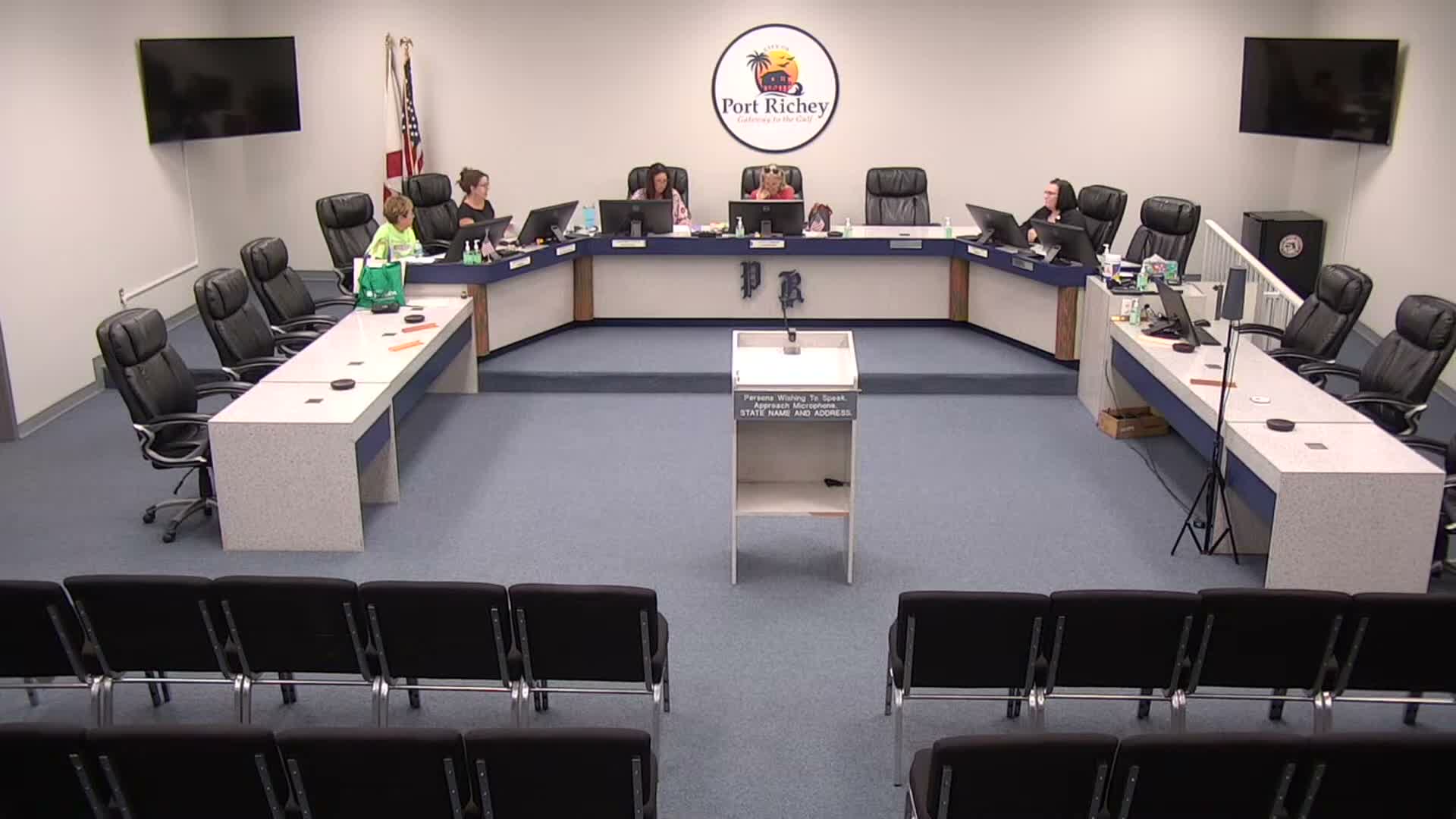
Vice chair Christine Sullivan urged the Port Richey Historical Preservation Committee on May 14 to begin with a low‑commitment inventory of potential historic sites and to assess property‑owner interest before pursuing formal local designations.
"Before undertaking the formal steps to organize and activate the historic preservation commission ... would it be prudent first to assess which potential historic sites still exist within the approximately 3 square mile city limits of Port Richey and to determine whether property owners have interest in pursuing historic designations?" Sullivan said while presenting a written memo to the committee.
Sullivan said public records show very few recognized historic resources inside the city limits and identified the Olsner Mound — added to the National Register of Historic Places in September 2020 — as the primary archaeological site. She contrasted Port Richey’s small, mostly waterfront footprint with neighboring New Port Richey, which maintains a defined downtown historic district and a larger preservation program.
The committee repeatedly flagged flood risk as a central constraint. Members said formal designations often add review requirements that can slow repairs and rebuilding after storms, increase costs for specialized materials and processes, and could discourage owners who need to act quickly to meet federal flood‑insurance or building‑code conditions. "Historic designations can add layers of review and requirements that increase the expense and time needed for maintenance and repairs," Sullivan said.
Because of those constraints, Sullivan recommended an honorary, non‑regulatory recognition program that would focus on mapping, education and voluntary plaques paid for and installed at the owner’s request. She cited New Smyrna Beach as an example of a voluntary plaque program that does not restrict maintenance or flood‑resilience work.
Sullivan also briefed members on the legal framework: state law (Chapter 267 of the Florida Statutes) permits but does not require local preservation ordinances, and the Florida Building Code contains provisions for qualified historic buildings but typically requires a listing or local designation to qualify for certain flexibilities.
Next steps agreed by the committee include a preliminary inventory using county assessor records and the Florida master site file, consultation with the West Pasco Historical Society and targeted field checks. Members agreed to split the work, with each volunteer taking a period to inventory boxes or perform online research and to reconvene with findings.
The committee discussed proposing a small budget line to the city — roughly $2,000–$2,500 — to support a History & Heritage Day event (snacks, a bus tour and outreach materials). Christine Sullivan said she would consult with city staff about adding an appropriate line item and suggested returning later with a formal request to city council.
Members made several motions by voice vote: to enter Sullivan’s memo into the record, that members carry out assigned inventory duties, and to reconvene in four months. The group discussed calendar conflicts and agreed to request September 17 as the next meeting date.
The meeting also included discussion of archival materials stored in the city vault from past History & Heritage events; members agreed to inventory and organize the boxes as part of the work plan.
The committee adjourned after confirming assignments and the proposed fall meeting date.
"Before undertaking the formal steps to organize and activate the historic preservation commission ... would it be prudent first to assess which potential historic sites still exist within the approximately 3 square mile city limits of Port Richey and to determine whether property owners have interest in pursuing historic designations?" Sullivan said while presenting a written memo to the committee.
Sullivan said public records show very few recognized historic resources inside the city limits and identified the Olsner Mound — added to the National Register of Historic Places in September 2020 — as the primary archaeological site. She contrasted Port Richey’s small, mostly waterfront footprint with neighboring New Port Richey, which maintains a defined downtown historic district and a larger preservation program.
The committee repeatedly flagged flood risk as a central constraint. Members said formal designations often add review requirements that can slow repairs and rebuilding after storms, increase costs for specialized materials and processes, and could discourage owners who need to act quickly to meet federal flood‑insurance or building‑code conditions. "Historic designations can add layers of review and requirements that increase the expense and time needed for maintenance and repairs," Sullivan said.
Because of those constraints, Sullivan recommended an honorary, non‑regulatory recognition program that would focus on mapping, education and voluntary plaques paid for and installed at the owner’s request. She cited New Smyrna Beach as an example of a voluntary plaque program that does not restrict maintenance or flood‑resilience work.
Sullivan also briefed members on the legal framework: state law (Chapter 267 of the Florida Statutes) permits but does not require local preservation ordinances, and the Florida Building Code contains provisions for qualified historic buildings but typically requires a listing or local designation to qualify for certain flexibilities.
Next steps agreed by the committee include a preliminary inventory using county assessor records and the Florida master site file, consultation with the West Pasco Historical Society and targeted field checks. Members agreed to split the work, with each volunteer taking a period to inventory boxes or perform online research and to reconvene with findings.
The committee discussed proposing a small budget line to the city — roughly $2,000–$2,500 — to support a History & Heritage Day event (snacks, a bus tour and outreach materials). Christine Sullivan said she would consult with city staff about adding an appropriate line item and suggested returning later with a formal request to city council.
Members made several motions by voice vote: to enter Sullivan’s memo into the record, that members carry out assigned inventory duties, and to reconvene in four months. The group discussed calendar conflicts and agreed to request September 17 as the next meeting date.
The meeting also included discussion of archival materials stored in the city vault from past History & Heritage events; members agreed to inventory and organize the boxes as part of the work plan.
The committee adjourned after confirming assignments and the proposed fall meeting date.
View the Full Meeting & All Its Details
This article offers just a summary. Unlock complete video, transcripts, and insights as a Founder Member.
✓
Watch full, unedited meeting videos
✓
Search every word spoken in unlimited transcripts
✓
AI summaries & real-time alerts (all government levels)
✓
Permanent access to expanding government content
30-day money-back guarantee
