Governor signs HB 757 to extend 'guardian' program and Fortify reporting to colleges and universities
May 15, 2026 | Governor's Cabinet: Rep. DeSantis, Executive , Florida
This article was created by AI summarizing key points discussed. AI makes mistakes, so for full details and context, please refer to the video of the full meeting. Please report any errors so we can fix them. Report an error »
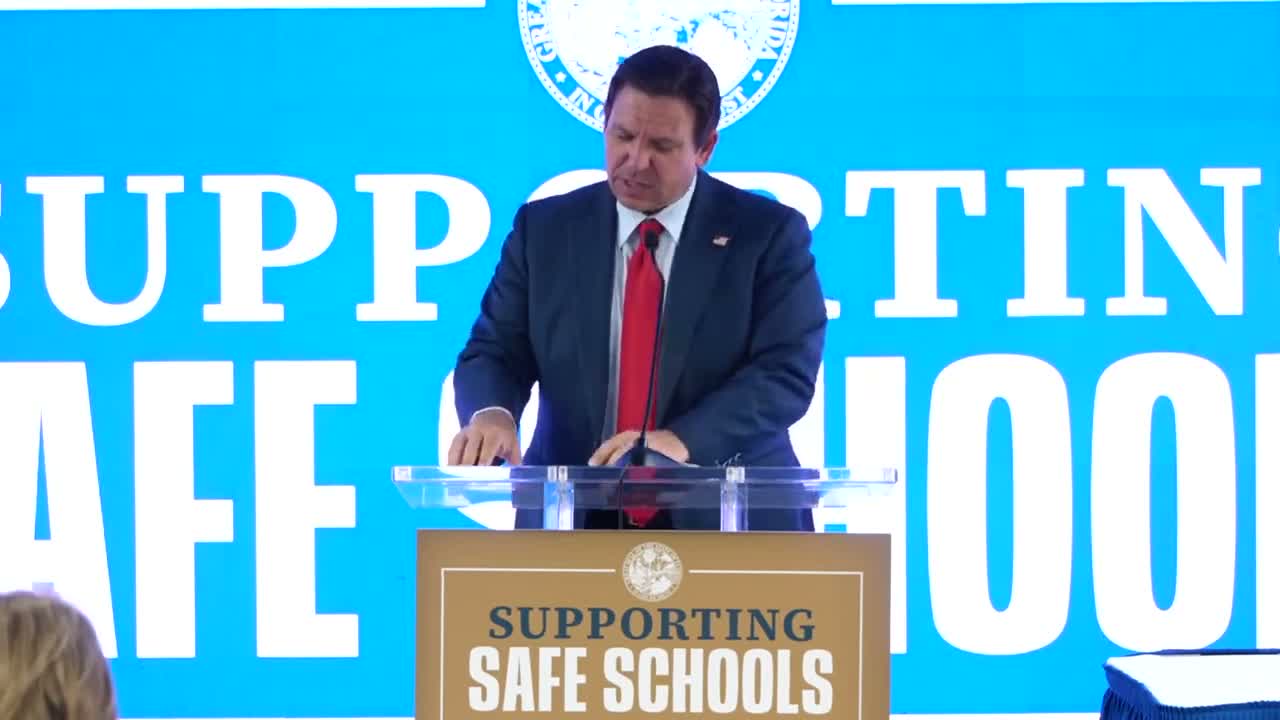
The governor onstage at a signing event said he would sign House Bill 757, a measure that expands the state's voluntary school ‘‘guardian’’ program to public colleges and universities and requires institutions without an existing reporting app to implement Fortify Florida or a comparable system by July 1, 2026.
The bill, the governor said, "expands the school guardian program to public post secondary institutions and require[s] sheriffs to assist in the implementation of the program," and it adds criminal penalties for unlawfully discharging a weapon within 1,000 feet of a campus. "Just since 2019, we've invested $3,100,000,000 on student safety," the governor said, citing prior investments the state has made in security and safety programs.
Why this matters: supporters say placing trained guardians on campus and standardizing reporting and emergency plans will shorten the time between an incident and an armed response and deter attackers who target perceived "gun-free" spaces. The bill also establishes the Active Response and Mitigation of On-Campus Risk Act (ARMOR Act), which the governor described as requiring an active-assailant response plan, a family reunification plan and an annual security risk assessment at each campus.
Commissioner Stasi of the Department of Education, introduced from the platform, called student safety her "number one priority" and thanked bill sponsors Representative Saltzman and Senator Gates for shepherding the legislation. "We will never rest on our laurels," Commissioner Stasi said, praising cooperation between district and campus leaders and law enforcement for planning implementation strategies.
HB 757 contains implementation steps campus leaders must follow, the governor said: institutions must advertise the platform on their websites, install it on devices issued by the institution and bookmark the site on campus computers. The governor also said sheriffs will be required to assist colleges and universities in implementing the guardian program.
The bill includes a provision creating a new criminal offense for discharging a weapon within 1,000 feet of campus when the discharge is not lawful self-defense, and it requires thorough explanation of emergency procedures, youth mental health assistance, and active-shooter training to students and school district staff. The law will also require annual campus security risk assessments to identify and mitigate vulnerabilities.
Supporters at the event — including college and university presidents and a parent who lost a child in the Marjory Stoneman Douglas shooting — described the expanded protections as life-saving and credited years of state policy and local implementation for the change. The governor said he would sign the legislation at the event.
Implementation and next steps: campuses must choose or deploy a reporting application comparable to Fortify Florida by the July 1, 2026 deadline; sheriff offices will be involved in assisting campuses with the guardian program; and colleges will be expected to conduct annual security risk assessments and document emergency and reunification plans.
The signing followed multiple speakers’ remarks and brief public questions; the event closed with the governor thanking attendees and photos with campus leaders.
The bill, the governor said, "expands the school guardian program to public post secondary institutions and require[s] sheriffs to assist in the implementation of the program," and it adds criminal penalties for unlawfully discharging a weapon within 1,000 feet of a campus. "Just since 2019, we've invested $3,100,000,000 on student safety," the governor said, citing prior investments the state has made in security and safety programs.
Why this matters: supporters say placing trained guardians on campus and standardizing reporting and emergency plans will shorten the time between an incident and an armed response and deter attackers who target perceived "gun-free" spaces. The bill also establishes the Active Response and Mitigation of On-Campus Risk Act (ARMOR Act), which the governor described as requiring an active-assailant response plan, a family reunification plan and an annual security risk assessment at each campus.
Commissioner Stasi of the Department of Education, introduced from the platform, called student safety her "number one priority" and thanked bill sponsors Representative Saltzman and Senator Gates for shepherding the legislation. "We will never rest on our laurels," Commissioner Stasi said, praising cooperation between district and campus leaders and law enforcement for planning implementation strategies.
HB 757 contains implementation steps campus leaders must follow, the governor said: institutions must advertise the platform on their websites, install it on devices issued by the institution and bookmark the site on campus computers. The governor also said sheriffs will be required to assist colleges and universities in implementing the guardian program.
The bill includes a provision creating a new criminal offense for discharging a weapon within 1,000 feet of campus when the discharge is not lawful self-defense, and it requires thorough explanation of emergency procedures, youth mental health assistance, and active-shooter training to students and school district staff. The law will also require annual campus security risk assessments to identify and mitigate vulnerabilities.
Supporters at the event — including college and university presidents and a parent who lost a child in the Marjory Stoneman Douglas shooting — described the expanded protections as life-saving and credited years of state policy and local implementation for the change. The governor said he would sign the legislation at the event.
Implementation and next steps: campuses must choose or deploy a reporting application comparable to Fortify Florida by the July 1, 2026 deadline; sheriff offices will be involved in assisting campuses with the guardian program; and colleges will be expected to conduct annual security risk assessments and document emergency and reunification plans.
The signing followed multiple speakers’ remarks and brief public questions; the event closed with the governor thanking attendees and photos with campus leaders.
Don't Miss a Word: See the Full Meeting!
Go beyond summaries. Unlock every video, transcript, and key insight with a Founder Membership.
✓
Get instant access to full meeting videos
✓
Search and clip any phrase from complete transcripts
✓
Receive AI-powered summaries & custom alerts
✓
Enjoy lifetime, unrestricted access to government data
30-day money-back guarantee
