Natural Resources & Energy committee debates H.775 changes on water‑service boundaries, manufactured housing and duplex rules
May 16, 2026 | Natural Resources & Energy, SENATE, Committees, Legislative , Vermont
This article was created by AI summarizing key points discussed. AI makes mistakes, so for full details and context, please refer to the video of the full meeting. Please report any errors so we can fix them. Report an error »
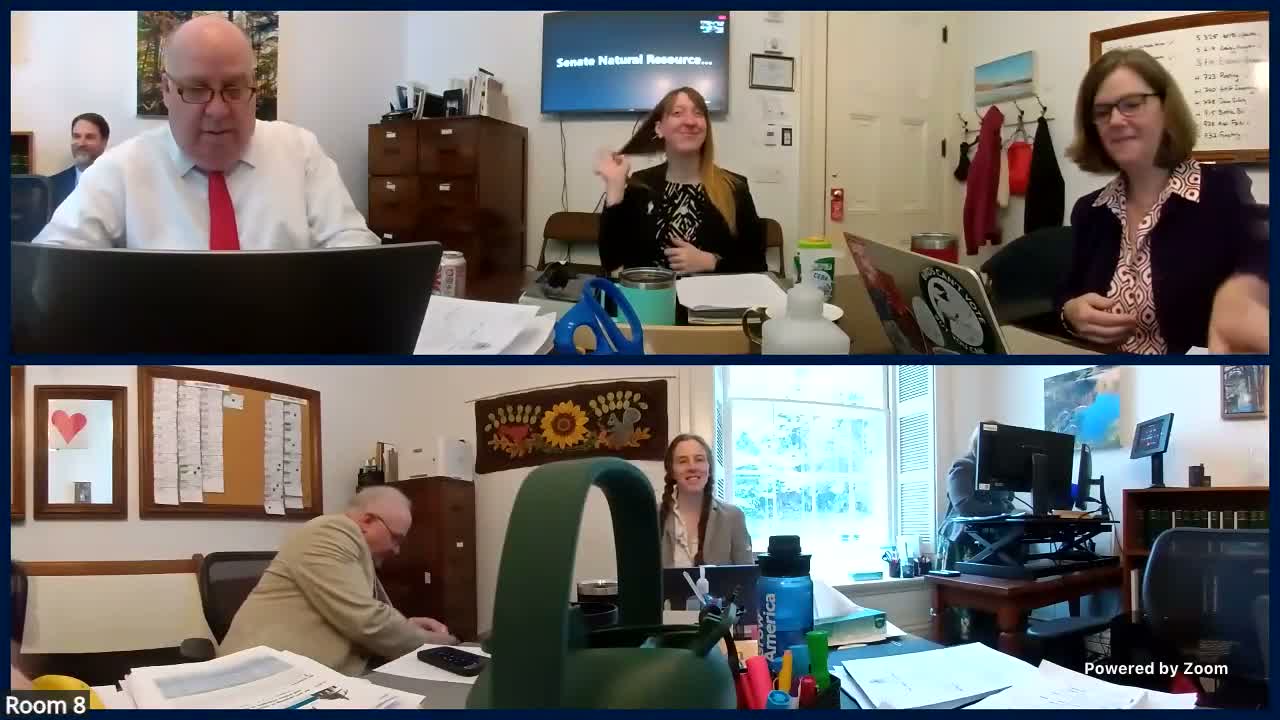
The Natural Resources & Energy committee met May 15 to review H.775, focusing on proposed amendments that would define areas served by municipal water and sewer, expand where manufactured and modular housing may be sited, and change rules for duplexes, quadplexes and accessory dwelling units.
Legislative counsel outlined two approaches to a new statutory definition of areas “served by municipal sewer and water,” saying the draft contains a default rule (an area where residential connections and expansions are available and not prohibited by state regulations, capacity constraints, or municipally adopted capacity agreements) and a second option allowing municipalities to adopt their own boundaries. Counsel also flagged a recent edit by economic development to limit the provision on line 19 to “municipally adopted capacity agreements,” rather than including service agreements.
The committee heard technical concerns from the director of the state drinking‑water protection division, who told members the provision that would remove references to state regulations could “conflict with some of our underlying authorities” that allow the agency to restrict new service connections when infrastructure is insufficient. The director advised the committee that state permitting and operating permits currently identify capacity constraints and allow the agency to work with municipalities on schedules and remedies; removing permit references, she said, could create confusing messaging even if it would not legally remove the agency’s permitting authority.
Members pressed staff on the practical effect. Legislative counsel emphasized the bill’s definition role: identifying where density incentives would apply, not authorizing connections or guaranteeing permits. Committee members debated whether striking the permit language would create false expectations, whether fire districts should be included in the default area, and whether it would be simpler to remove the section now and return with a revised draft and additional testimony.
On Section 10, counsel explained a provision to prevent towns from excluding mobile homes, modular homes, manufactured homes or prefabricated housing from any district that allows year‑round residential development, while permitting towns to apply the same design standards they use for conventional housing. Some members welcomed the change as a measure to increase affordable housing supply; others raised concerns about placing such housing in historic or design‑review districts and said more community input and technical review were needed.
Section 11 and related text on page 19 would make duplexes a permitted use in districts that allow year‑round residential development and require that multi‑unit dwellings of four or fewer units be permitted on the same lot size as a single‑family dwelling in areas served by municipal sewer and water. The draft would also remove bylaw requirements that accessory dwelling units or small multi‑unit structures be on owner‑occupied lots. Members discussed tradeoffs between flexibility that can make projects feasible and local tools used to secure funding or protect long‑term resident populations; several cited examples where neighborhood disagreement or financing requirements delayed or killed projects.
Committee members repeatedly said they wanted more stakeholder testimony — including from municipal zoning officials, downtown/village center representatives, housing‑finance actors and drinking‑water technical staff — before taking further action. Legislative counsel agreed to prepare a new draft for additional review and the committee did not take a formal vote on any of the sections during the meeting.
The committee concluded by asking staff to circulate a revised draft and to schedule follow‑up testimony; members emphasized the need to reconcile the bill’s goals (increasing housing options and density) with existing state permitting and municipal land‑use controls.
Legislative counsel outlined two approaches to a new statutory definition of areas “served by municipal sewer and water,” saying the draft contains a default rule (an area where residential connections and expansions are available and not prohibited by state regulations, capacity constraints, or municipally adopted capacity agreements) and a second option allowing municipalities to adopt their own boundaries. Counsel also flagged a recent edit by economic development to limit the provision on line 19 to “municipally adopted capacity agreements,” rather than including service agreements.
The committee heard technical concerns from the director of the state drinking‑water protection division, who told members the provision that would remove references to state regulations could “conflict with some of our underlying authorities” that allow the agency to restrict new service connections when infrastructure is insufficient. The director advised the committee that state permitting and operating permits currently identify capacity constraints and allow the agency to work with municipalities on schedules and remedies; removing permit references, she said, could create confusing messaging even if it would not legally remove the agency’s permitting authority.
Members pressed staff on the practical effect. Legislative counsel emphasized the bill’s definition role: identifying where density incentives would apply, not authorizing connections or guaranteeing permits. Committee members debated whether striking the permit language would create false expectations, whether fire districts should be included in the default area, and whether it would be simpler to remove the section now and return with a revised draft and additional testimony.
On Section 10, counsel explained a provision to prevent towns from excluding mobile homes, modular homes, manufactured homes or prefabricated housing from any district that allows year‑round residential development, while permitting towns to apply the same design standards they use for conventional housing. Some members welcomed the change as a measure to increase affordable housing supply; others raised concerns about placing such housing in historic or design‑review districts and said more community input and technical review were needed.
Section 11 and related text on page 19 would make duplexes a permitted use in districts that allow year‑round residential development and require that multi‑unit dwellings of four or fewer units be permitted on the same lot size as a single‑family dwelling in areas served by municipal sewer and water. The draft would also remove bylaw requirements that accessory dwelling units or small multi‑unit structures be on owner‑occupied lots. Members discussed tradeoffs between flexibility that can make projects feasible and local tools used to secure funding or protect long‑term resident populations; several cited examples where neighborhood disagreement or financing requirements delayed or killed projects.
Committee members repeatedly said they wanted more stakeholder testimony — including from municipal zoning officials, downtown/village center representatives, housing‑finance actors and drinking‑water technical staff — before taking further action. Legislative counsel agreed to prepare a new draft for additional review and the committee did not take a formal vote on any of the sections during the meeting.
The committee concluded by asking staff to circulate a revised draft and to schedule follow‑up testimony; members emphasized the need to reconcile the bill’s goals (increasing housing options and density) with existing state permitting and municipal land‑use controls.
Don't Miss a Word: See the Full Meeting!
Go beyond summaries. Unlock every video, transcript, and key insight with a Founder Membership.
✓
Get instant access to full meeting videos
✓
Search and clip any phrase from complete transcripts
✓
Receive AI-powered summaries & custom alerts
✓
Enjoy lifetime, unrestricted access to government data
30-day money-back guarantee
