UN officials urge urgent aid to Cuba, seek $94 million as fuel crisis squeezes health services
May 15, 2026 | United Nations, International
This article was created by AI summarizing key points discussed. AI makes mistakes, so for full details and context, please refer to the video of the full meeting. Please report any errors so we can fix them. Report an error »
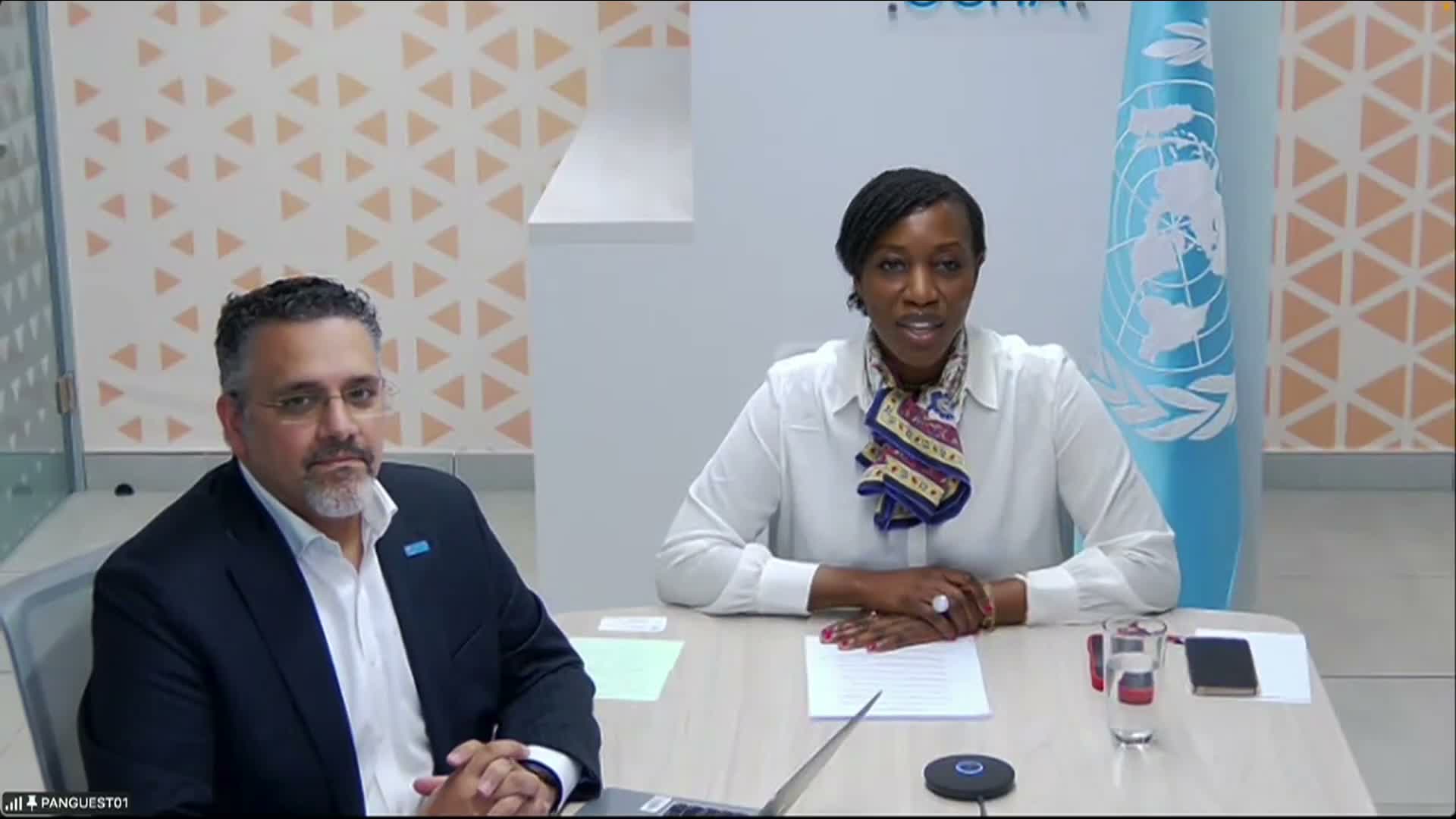
United Nations humanitarian officials on a press briefing described a growing, multifaceted emergency in Cuba driven by repeated climate shocks, economic strain and prolonged energy shortages, and called for rapid, principled delivery of lifesaving aid.
Edem Osorno, introduced as director of the UN Office for the Coordination of Humanitarian Affairs (OCHA) crisis response division, said his team visited Havana and other sites and found the energy crisis has become "an undeniable multiplier of needs" affecting water, food and essential services and undermining the delivery of humanitarian assistance. He said the revised UN action plan — launched in March and adjusted to reflect the energy crisis — seeks $94,000,000 to reach about 2,000,000 people and that so far the plan is less than 30% funded (about $30,000,000 received), leaving roughly a $60,000,000 gap.
"Lifesaving aid must reach people quickly and without delays," Osorno said, adding that the operation needs expedited port clearance, more internal transport capacity and continuous power to maintain monitoring and sustain basic services.
Altaf Musani, introduced as director of emergency health interventions at the World Health Organization, said Cuba's health system "remains operational, but it is under severe and sustained pressure." Musani cited specific service disruptions: "More than a 100,000 patients, including over 11,000 children are waiting for surgeries that have been delayed due to power outages or supply shortages," and he said about 16,000 patients require radiotherapy and more than 12,000 are currently undergoing chemotherapy. He also flagged that more than 32,000 pregnant women face increased risks because of reduced access to diagnostics and limited transport for obstetric emergencies.
Musani warned that power outages now lasting up to 20 hours have forced many hospitals to close most wards except intensive care and emergency services, and he said the fuel shortage is reducing ambulance and referral capacity. He added that routine immunization coverage remains high but is under increasing pressure because of cold-chain and transport disruptions, and that the epidemiological situation raises heightened risks of dengue, chikungunya and other vector- and waterborne diseases.
In questions from the press, Associated Press correspondent Edith Lederer asked whether the UN team's visit coincided with a visit by the U.S. Central Intelligence Agency director. Osorno said the visits did not overlap and that the UN team's engagement was "purely humanitarian," noting discussions with about two dozen ambassadors, including the U.S. chargé d'affaires, to facilitate humanitarian goods and access. On concerns about the U.S. embargo, a question from Evelyn Leopold asked whether the embargo impedes UN work. Osorno replied that humanitarian goods are "not part of that" embargo and stressed the transparency of the UN appeal and funding, naming donors and instruments including the European Union, Spain, Canada, Qatar and the Central Emergency Response Fund.
Asked whether Venezuela's fuel supplies to Cuba had stopped, Osorno declined to engage in political attribution and said the UN is focused on ensuring fuel enters the country "for the purposes of humanitarian aid delivery" while member states continue diplomatic discussions to that end.
Osorno and Musani emphasized the looming hurricane season, noting anticipatory funding the UN has provided so far (including a reported $7,500,000 from pooled funds and $4,000,000 prepositioned before a prior storm) and urging additional donor support to avoid deeper deterioration in living conditions and health outcomes.
The briefing closed after officials said they would continue to press for humanitarian access and funding; no formal decisions or votes were taken during the session.
Edem Osorno, introduced as director of the UN Office for the Coordination of Humanitarian Affairs (OCHA) crisis response division, said his team visited Havana and other sites and found the energy crisis has become "an undeniable multiplier of needs" affecting water, food and essential services and undermining the delivery of humanitarian assistance. He said the revised UN action plan — launched in March and adjusted to reflect the energy crisis — seeks $94,000,000 to reach about 2,000,000 people and that so far the plan is less than 30% funded (about $30,000,000 received), leaving roughly a $60,000,000 gap.
"Lifesaving aid must reach people quickly and without delays," Osorno said, adding that the operation needs expedited port clearance, more internal transport capacity and continuous power to maintain monitoring and sustain basic services.
Altaf Musani, introduced as director of emergency health interventions at the World Health Organization, said Cuba's health system "remains operational, but it is under severe and sustained pressure." Musani cited specific service disruptions: "More than a 100,000 patients, including over 11,000 children are waiting for surgeries that have been delayed due to power outages or supply shortages," and he said about 16,000 patients require radiotherapy and more than 12,000 are currently undergoing chemotherapy. He also flagged that more than 32,000 pregnant women face increased risks because of reduced access to diagnostics and limited transport for obstetric emergencies.
Musani warned that power outages now lasting up to 20 hours have forced many hospitals to close most wards except intensive care and emergency services, and he said the fuel shortage is reducing ambulance and referral capacity. He added that routine immunization coverage remains high but is under increasing pressure because of cold-chain and transport disruptions, and that the epidemiological situation raises heightened risks of dengue, chikungunya and other vector- and waterborne diseases.
In questions from the press, Associated Press correspondent Edith Lederer asked whether the UN team's visit coincided with a visit by the U.S. Central Intelligence Agency director. Osorno said the visits did not overlap and that the UN team's engagement was "purely humanitarian," noting discussions with about two dozen ambassadors, including the U.S. chargé d'affaires, to facilitate humanitarian goods and access. On concerns about the U.S. embargo, a question from Evelyn Leopold asked whether the embargo impedes UN work. Osorno replied that humanitarian goods are "not part of that" embargo and stressed the transparency of the UN appeal and funding, naming donors and instruments including the European Union, Spain, Canada, Qatar and the Central Emergency Response Fund.
Asked whether Venezuela's fuel supplies to Cuba had stopped, Osorno declined to engage in political attribution and said the UN is focused on ensuring fuel enters the country "for the purposes of humanitarian aid delivery" while member states continue diplomatic discussions to that end.
Osorno and Musani emphasized the looming hurricane season, noting anticipatory funding the UN has provided so far (including a reported $7,500,000 from pooled funds and $4,000,000 prepositioned before a prior storm) and urging additional donor support to avoid deeper deterioration in living conditions and health outcomes.
The briefing closed after officials said they would continue to press for humanitarian access and funding; no formal decisions or votes were taken during the session.
Don't Miss a Word: See the Full Meeting!
Go beyond summaries. Unlock every video, transcript, and key insight with a Founder Membership.
✓
Get instant access to full meeting videos
✓
Search and clip any phrase from complete transcripts
✓
Receive AI-powered summaries & custom alerts
✓
Enjoy lifetime, unrestricted access to government data
30-day money-back guarantee
