Kenosha school board rescinds April decision to separate pre-65 retirees from blended health rates
May 15, 2026 | Kenosha School District, School Districts, Wisconsin
This article was created by AI summarizing key points discussed. AI makes mistakes, so for full details and context, please refer to the video of the full meeting. Please report any errors so we can fix them. Report an error »
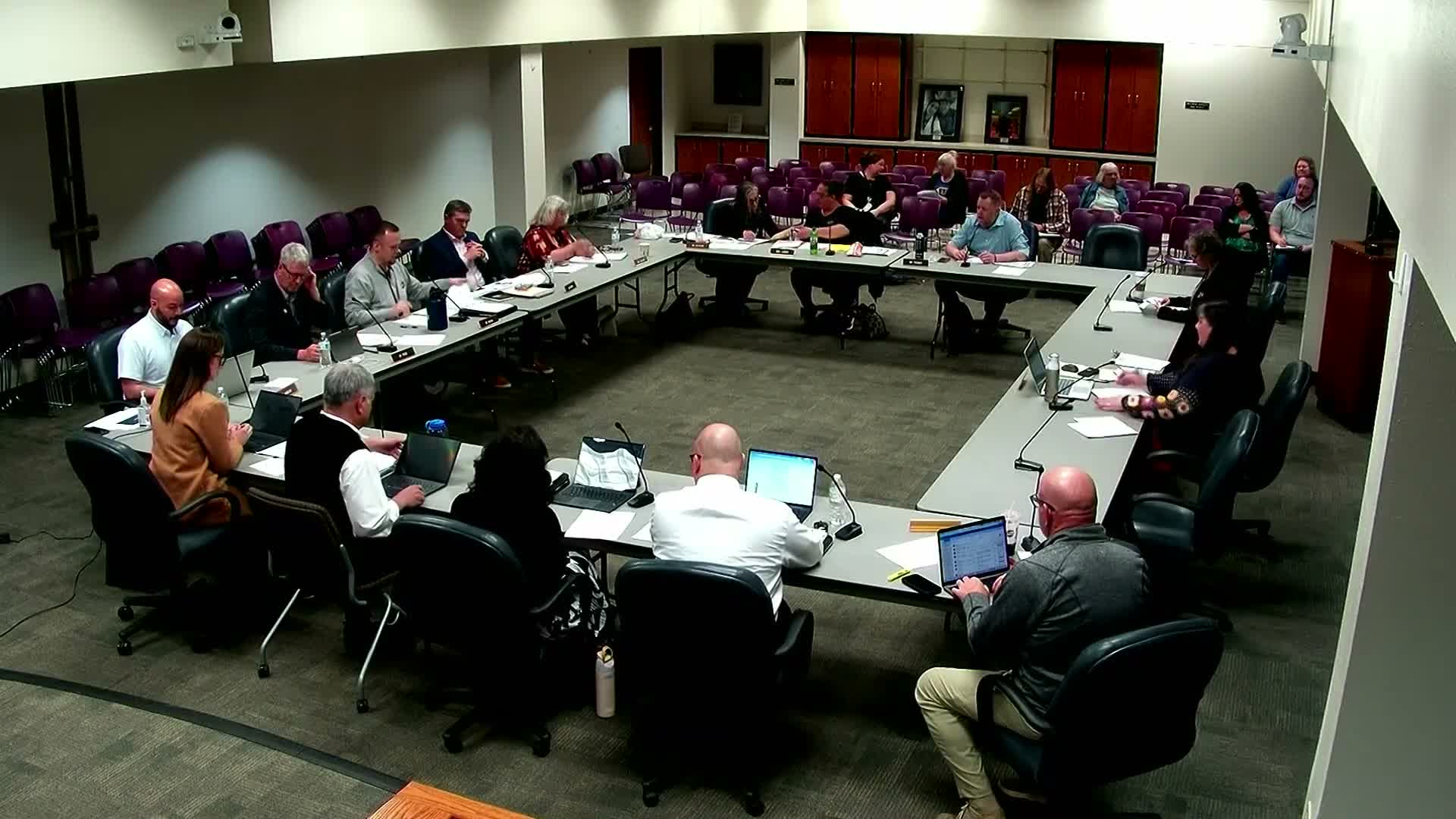
The Kenosha School District Board voted to rescind its April 28 approval of a pre-65 retiree separate underwriting option after public comment and a staff presentation detailing financial trade-offs.
Dr. Weiss and benefits staff walked the board through a packet and actuarial tables prepared for the board. Staff said the district has 247 retirees and about 1,774 active enrollees and that rescinding the separate underwriting option would reduce the active-enrollee premium baseline the board had been considering but would forgo roughly $550,000 in near-term operating savings. Dr. Weiss summarized the modeling and said Milliman will be on hand for a deeper dive at the May 26 meeting.
Public commenters urged reversal. Scott Farnsworth, retired president of the Kenosha Education Association, told the board, “I think it’s ill advised” and that the proposal “simply shifts costs.” Kathy Andresiak Montemaro said the change "shifts significant costs on to retirees" and called separating pre-65 retirees from blended rates "deeply unfair." Another commenter, Karen Kepinen, tied the item to broader trust and transparency concerns in board decision-making.
Board members debated the trade-offs, with several saying the modest district savings did not justify increasing costs for retirees. Staff clarified plan rows and group contributions — for example, some groups (ESPs) currently show 0% retiree contribution under the packet — and explained the actuarial assumptions used to project long-term OPEB liability.
The board took a voice vote; several members said “aye,” the chair announced an abstention, and the motion to rescind carried. The rescind motion was moved and seconded during the meeting and recorded as carried with the chair abstaining.
Why it matters: the change reverses a short-term shift that district staff projected would save roughly half a million dollars to operations while changing how health costs are shared between actives and pre-65 retirees. Staff emphasized the long-term nature of OPEB liabilities: an actuarial table in the packet showed a single-year liability of about $77.9 million as of June 30, 2025, which actuarial projections stretch to a higher figure over 20 years under trend assumptions.
Next steps: staff asked board members to compile specific questions for Milliman; the actuary will present in person at the May 26 meeting for a deeper review of methodology and assumptions.
Dr. Weiss and benefits staff walked the board through a packet and actuarial tables prepared for the board. Staff said the district has 247 retirees and about 1,774 active enrollees and that rescinding the separate underwriting option would reduce the active-enrollee premium baseline the board had been considering but would forgo roughly $550,000 in near-term operating savings. Dr. Weiss summarized the modeling and said Milliman will be on hand for a deeper dive at the May 26 meeting.
Public commenters urged reversal. Scott Farnsworth, retired president of the Kenosha Education Association, told the board, “I think it’s ill advised” and that the proposal “simply shifts costs.” Kathy Andresiak Montemaro said the change "shifts significant costs on to retirees" and called separating pre-65 retirees from blended rates "deeply unfair." Another commenter, Karen Kepinen, tied the item to broader trust and transparency concerns in board decision-making.
Board members debated the trade-offs, with several saying the modest district savings did not justify increasing costs for retirees. Staff clarified plan rows and group contributions — for example, some groups (ESPs) currently show 0% retiree contribution under the packet — and explained the actuarial assumptions used to project long-term OPEB liability.
The board took a voice vote; several members said “aye,” the chair announced an abstention, and the motion to rescind carried. The rescind motion was moved and seconded during the meeting and recorded as carried with the chair abstaining.
Why it matters: the change reverses a short-term shift that district staff projected would save roughly half a million dollars to operations while changing how health costs are shared between actives and pre-65 retirees. Staff emphasized the long-term nature of OPEB liabilities: an actuarial table in the packet showed a single-year liability of about $77.9 million as of June 30, 2025, which actuarial projections stretch to a higher figure over 20 years under trend assumptions.
Next steps: staff asked board members to compile specific questions for Milliman; the actuary will present in person at the May 26 meeting for a deeper review of methodology and assumptions.
View the Full Meeting & All Its Details
This article offers just a summary. Unlock complete video, transcripts, and insights as a Founder Member.
✓
Watch full, unedited meeting videos
✓
Search every word spoken in unlimited transcripts
✓
AI summaries & real-time alerts (all government levels)
✓
Permanent access to expanding government content
30-day money-back guarantee
