Pocatello parks directors urge 25% seasonal pay bump as hiring crisis hampers spring maintenance
May 15, 2026 | Pocatello City, Bannock County, Idaho
This article was created by AI summarizing key points discussed. AI makes mistakes, so for full details and context, please refer to the video of the full meeting. Please report any errors so we can fix them. Report an error »
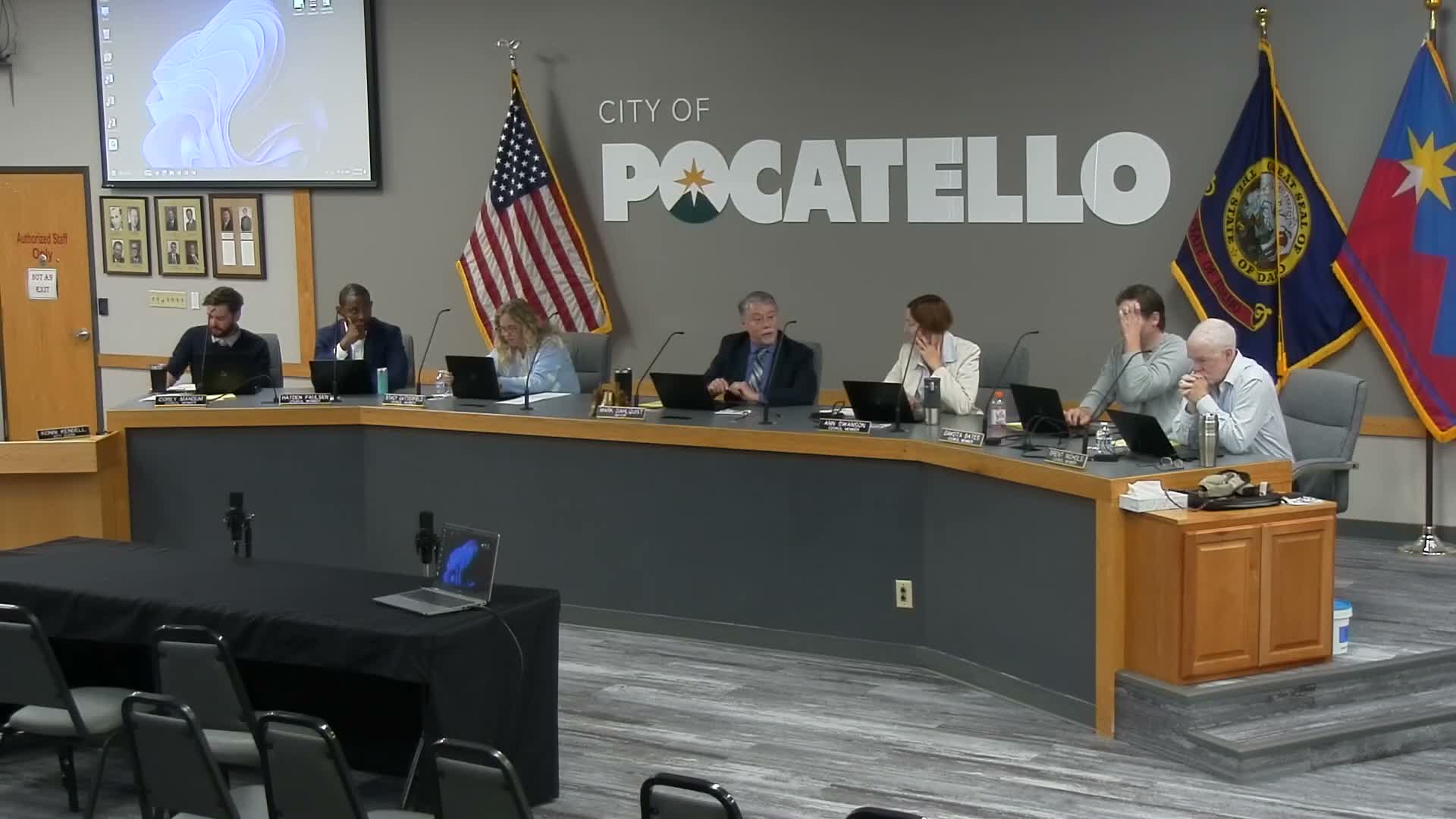
Pocatello City Parks and Recreation leaders asked the City Council to consider a significant increase in seasonal wages, saying current pay and federal rules are contributing to a shortage of seasonal workers that left many parks and public spaces behind schedule this spring.
"I'm at wit's end except for pay at this stage," the Parks and Recreation director said, describing shortfalls in mowing, trimming and restroom preparation that left the city reacting to special events rather than maintaining routine schedules. Human Resources representative Jay Sedol explained constraints created by retirement and health‑insurance rules that limit how long seasonal workers can be employed without triggering benefit requirements.
The presentation laid out three pressures: a growing park footprint the city must maintain, a seasonal pay structure that offers no benefits and therefore competes poorly with year‑round or indoor employers, and conflicting rules from PERSI and the Affordable Care Act that effectively shorten the feasible seasonal work window. The director said the department has stepped starting wages to try to help, but that incremental raises (10–12%) have not solved recruitment or retention problems.
Council members and staff discussed several options. Staff recommended exploring a 25% increase to the seasonal wage buckets that fund parks and cemetery labor, while also seeking RFQs for targeted outsourcing (for example, chemical applications or mowing) and expanding hybrid or part‑time year‑round positions where feasible. Jay Sedol said hybrid positions that shift seasonal workers between departments have helped in the past and could be expanded, though that approach carries tradeoffs for other departments’ budgets and operations.
Several council members urged a mixed approach: increase wages where needed to attract candidates for hard‑to‑fill labor positions while soliciting bids from contractors for volumes of mowing and other routine tasks to ensure service levels. Staff also proposed a longer inventory and valuation of small, city‑owned parcels to determine whether sales or repurposing could fund longer‑term staffing solutions.
The council asked staff to return with budget options and cost estimates, including an RFQ cost comparison and a report on the fiscal impact of a 25% wage increase on pools, lifeguards and other seasonal programs. Staff said any changes to take effect would be for FY27 and that short‑term fixes are limited without supplemental appropriations.
"I'm at wit's end except for pay at this stage," the Parks and Recreation director said, describing shortfalls in mowing, trimming and restroom preparation that left the city reacting to special events rather than maintaining routine schedules. Human Resources representative Jay Sedol explained constraints created by retirement and health‑insurance rules that limit how long seasonal workers can be employed without triggering benefit requirements.
The presentation laid out three pressures: a growing park footprint the city must maintain, a seasonal pay structure that offers no benefits and therefore competes poorly with year‑round or indoor employers, and conflicting rules from PERSI and the Affordable Care Act that effectively shorten the feasible seasonal work window. The director said the department has stepped starting wages to try to help, but that incremental raises (10–12%) have not solved recruitment or retention problems.
Council members and staff discussed several options. Staff recommended exploring a 25% increase to the seasonal wage buckets that fund parks and cemetery labor, while also seeking RFQs for targeted outsourcing (for example, chemical applications or mowing) and expanding hybrid or part‑time year‑round positions where feasible. Jay Sedol said hybrid positions that shift seasonal workers between departments have helped in the past and could be expanded, though that approach carries tradeoffs for other departments’ budgets and operations.
Several council members urged a mixed approach: increase wages where needed to attract candidates for hard‑to‑fill labor positions while soliciting bids from contractors for volumes of mowing and other routine tasks to ensure service levels. Staff also proposed a longer inventory and valuation of small, city‑owned parcels to determine whether sales or repurposing could fund longer‑term staffing solutions.
The council asked staff to return with budget options and cost estimates, including an RFQ cost comparison and a report on the fiscal impact of a 25% wage increase on pools, lifeguards and other seasonal programs. Staff said any changes to take effect would be for FY27 and that short‑term fixes are limited without supplemental appropriations.
View the Full Meeting & All Its Details
This article offers just a summary. Unlock complete video, transcripts, and insights as a Founder Member.
✓
Watch full, unedited meeting videos
✓
Search every word spoken in unlimited transcripts
✓
AI summaries & real-time alerts (all government levels)
✓
Permanent access to expanding government content
30-day money-back guarantee
