Pocatello proposes year‑round pet licensing, enforcement shift and online vendor to boost 8% compliance
May 15, 2026 | Pocatello City, Bannock County, Idaho
This article was created by AI summarizing key points discussed. AI makes mistakes, so for full details and context, please refer to the video of the full meeting. Please report any errors so we can fix them. Report an error »
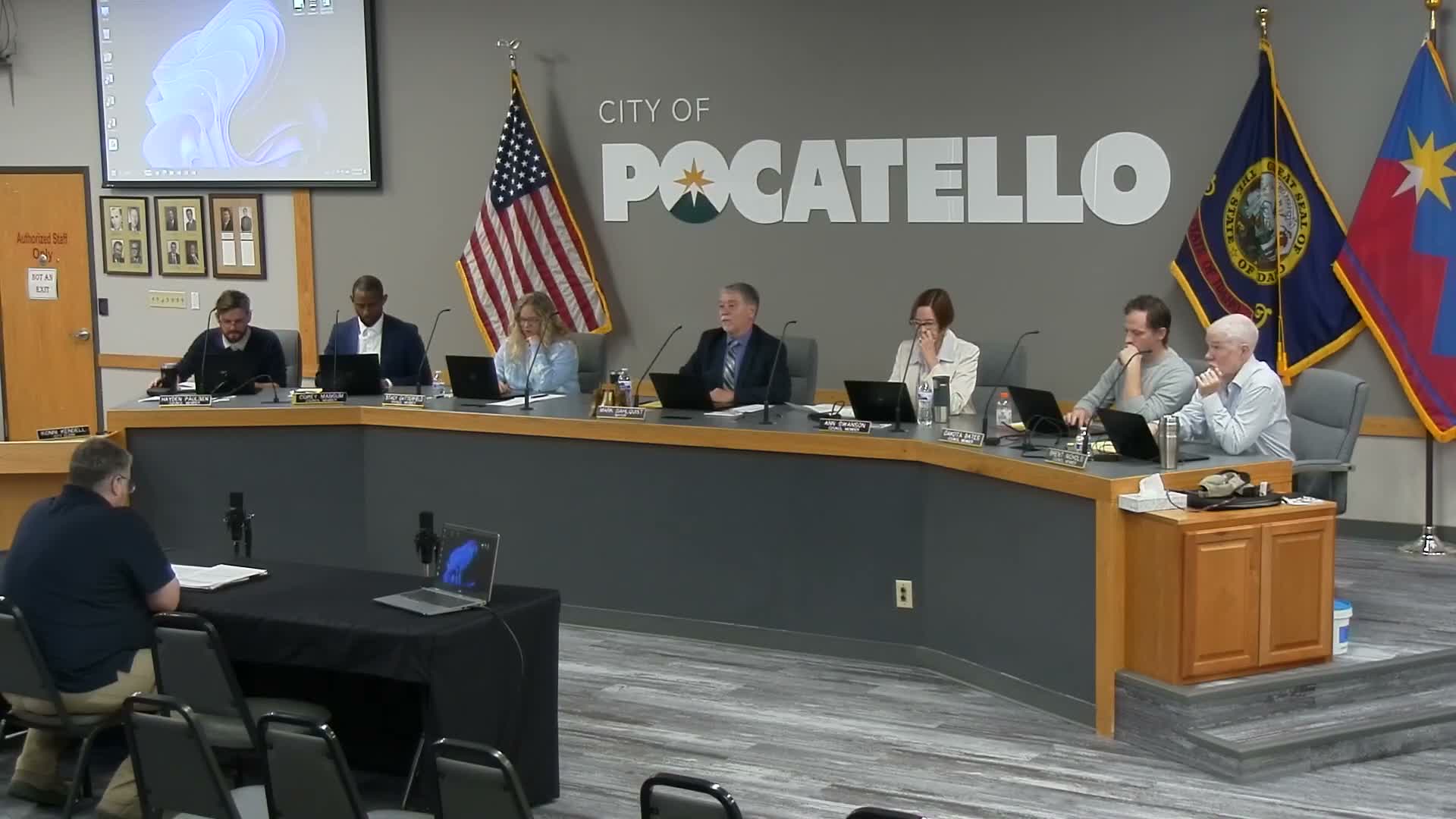
Animal Services Manager Liam Hughes asked council to approve three changes to the city’s animal licensing code: year‑round licensing tied to an owner’s anniversary month, moving enforcement authority into the field with a tiered civil/misdemeanor structure, and creating an animal welfare fund from licensing revenue to pay for microchip and vaccine clinics.
"Currently, dog licensing in the city of Pocatello compliance is about 8%," Hughes said, citing an internal estimate that compares estimated dog populations with licenses sold. He told council staff hope the combination of enforcement options and visible benefits—microchip and vaccination clinics funded by license revenue—will increase compliance.
Hughes also presented DocuPAT as an online licensing option that manufactures laser‑etched tags, maintains a database that can link to microchip numbers, and sends reminders via text or mail. "They will basically create the tags with our logo on it," he said, and staff noted DocuPAT waives setup fees and can handle tag fulfillment and reminders, while the city would retain in‑person payment options for residents without digital access.
Council and enforcement staff discussed current enforcement practices (a $72 civil infraction is available) and the role of ordinance officers in issuing citations in the field, with education and progressive enforcement emphasized. Staff said turning licensing into a perceived community benefit—funding clinics and better tagging—could improve compliance over time; the manager set a modest short‑term target (15% compliance) and said higher targets would take years of outreach.
Council signaled support for forwarding the ordinance changes to the regular council agenda and asked staff to provide implementation costs, expected revenue for an animal welfare fund, and specifics about how DocuPAT would integrate with city payment and enforcement procedures.
"Currently, dog licensing in the city of Pocatello compliance is about 8%," Hughes said, citing an internal estimate that compares estimated dog populations with licenses sold. He told council staff hope the combination of enforcement options and visible benefits—microchip and vaccination clinics funded by license revenue—will increase compliance.
Hughes also presented DocuPAT as an online licensing option that manufactures laser‑etched tags, maintains a database that can link to microchip numbers, and sends reminders via text or mail. "They will basically create the tags with our logo on it," he said, and staff noted DocuPAT waives setup fees and can handle tag fulfillment and reminders, while the city would retain in‑person payment options for residents without digital access.
Council and enforcement staff discussed current enforcement practices (a $72 civil infraction is available) and the role of ordinance officers in issuing citations in the field, with education and progressive enforcement emphasized. Staff said turning licensing into a perceived community benefit—funding clinics and better tagging—could improve compliance over time; the manager set a modest short‑term target (15% compliance) and said higher targets would take years of outreach.
Council signaled support for forwarding the ordinance changes to the regular council agenda and asked staff to provide implementation costs, expected revenue for an animal welfare fund, and specifics about how DocuPAT would integrate with city payment and enforcement procedures.
Don't Miss a Word: See the Full Meeting!
Go beyond summaries. Unlock every video, transcript, and key insight with a Founder Membership.
✓
Get instant access to full meeting videos
✓
Search and clip any phrase from complete transcripts
✓
Receive AI-powered summaries & custom alerts
✓
Enjoy lifetime, unrestricted access to government data
30-day money-back guarantee
