Buellton Council adopts floodplain ordinance update to match new FEMA maps
May 15, 2026 | Buellton City, Santa Barbara County, California
This article was created by AI summarizing key points discussed. AI makes mistakes, so for full details and context, please refer to the video of the full meeting. Please report any errors so we can fix them. Report an error »
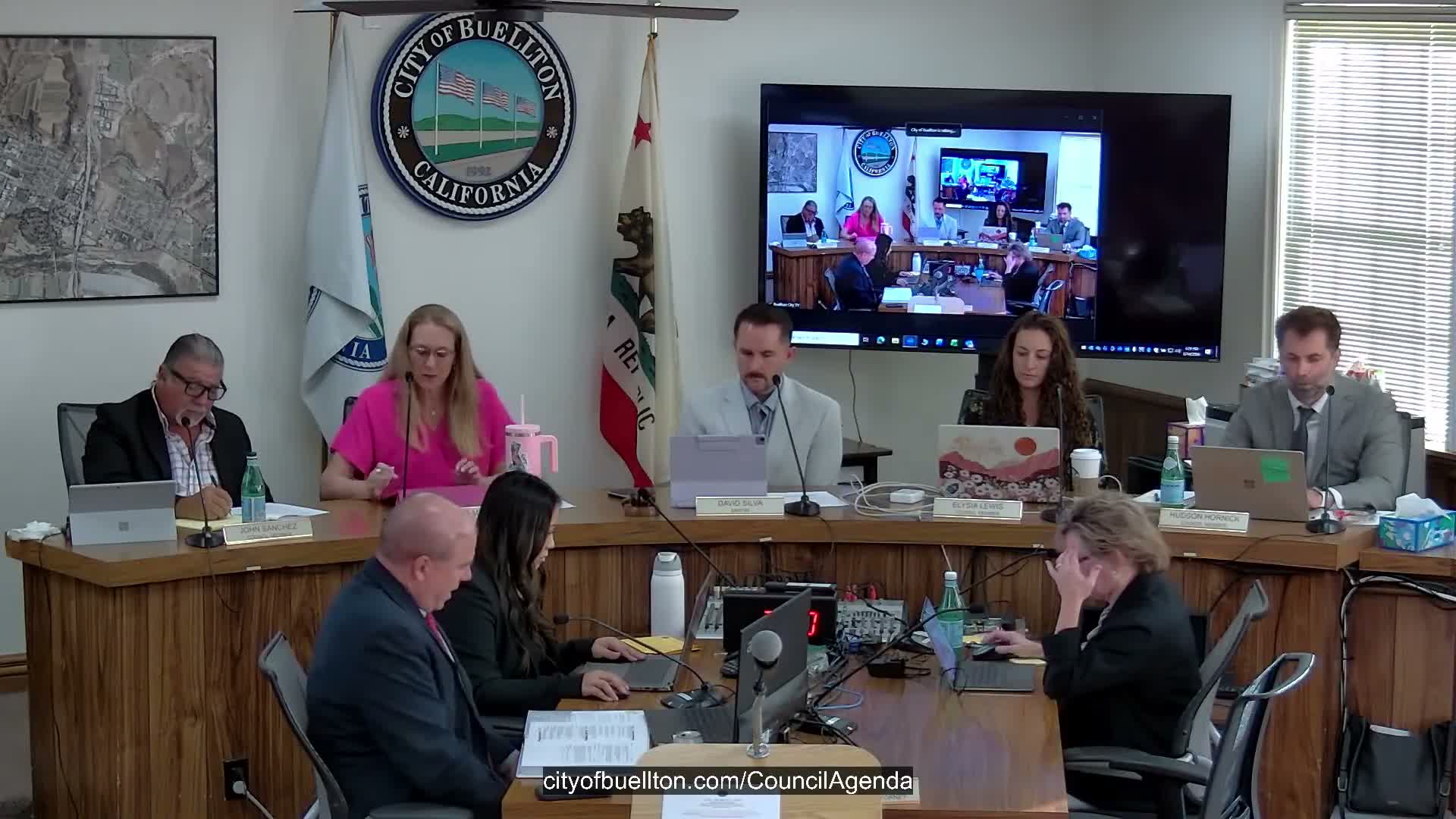
The Buellton City Council on May 14 approved introduction and first reading of Ordinance No. 26-04, a revision to chapter 17.06 of the municipal code that updates the city's floodplain management rules to align with FEMA's new flood insurance studies and maps scheduled to take effect June 1, 2026.
Rose Hess, Buellton's public works director, told the council FEMA and the Department of Water Resources recommended two minor changes: update the ordinance to cite the current map dates and require submission of technical data within six months if a project changes local flood elevations. Hess said the ordinance has been reviewed by the city attorney and the state's floodplain specialist and is now compliant with FEMA requirements.
During public comment, John Dorwin warned the council about the "high probability of a super El Nino event" and urged a more integrated drainage plan for Zaca Creek. He said existing maintenance easements are a "patchwork" and that the city had not enforced stormwater provisions after the 2023 flooding. Dorwin told the council he had emailed documents and a government code warning about a known dangerous condition.
Council members questioned whether the ordinance addressed floodplain management or stormwater maintenance. Staff and the city attorney clarified that chapter 17 governs floodplain management for new development and FEMA compliance, while Title 15 covers stormwater and property maintenance enforcement and that the Santa Barbara County Flood Control District holds and administers many maintenance easements. Hess said the city can refer projects to county flood control when specialized assistance is needed.
To preserve local flexibility, council amended subsection (e) so that projects "may, at the discretion of the city's floodplain administrator, be referred" to county flood control rather than being mandatorily referred. Council member Sanchez moved to adopt the ordinance with that amendment; the motion passed unanimously (5-0).
The ordinance was presented as a first reading. Officials said it is not retroactive and is intended to ensure new development complies with updated base flood elevation determinations and FEMA expectations going forward.
Rose Hess, Buellton's public works director, told the council FEMA and the Department of Water Resources recommended two minor changes: update the ordinance to cite the current map dates and require submission of technical data within six months if a project changes local flood elevations. Hess said the ordinance has been reviewed by the city attorney and the state's floodplain specialist and is now compliant with FEMA requirements.
During public comment, John Dorwin warned the council about the "high probability of a super El Nino event" and urged a more integrated drainage plan for Zaca Creek. He said existing maintenance easements are a "patchwork" and that the city had not enforced stormwater provisions after the 2023 flooding. Dorwin told the council he had emailed documents and a government code warning about a known dangerous condition.
Council members questioned whether the ordinance addressed floodplain management or stormwater maintenance. Staff and the city attorney clarified that chapter 17 governs floodplain management for new development and FEMA compliance, while Title 15 covers stormwater and property maintenance enforcement and that the Santa Barbara County Flood Control District holds and administers many maintenance easements. Hess said the city can refer projects to county flood control when specialized assistance is needed.
To preserve local flexibility, council amended subsection (e) so that projects "may, at the discretion of the city's floodplain administrator, be referred" to county flood control rather than being mandatorily referred. Council member Sanchez moved to adopt the ordinance with that amendment; the motion passed unanimously (5-0).
The ordinance was presented as a first reading. Officials said it is not retroactive and is intended to ensure new development complies with updated base flood elevation determinations and FEMA expectations going forward.
Don't Miss a Word: See the Full Meeting!
Go beyond summaries. Unlock every video, transcript, and key insight with a Founder Membership.
✓
Get instant access to full meeting videos
✓
Search and clip any phrase from complete transcripts
✓
Receive AI-powered summaries & custom alerts
✓
Enjoy lifetime, unrestricted access to government data
30-day money-back guarantee
