Hilliard planning commissioners receive refresher on public records, open meetings and ethics
May 15, 2026 | Hilliard, Franklin County, Ohio
This article was created by AI summarizing key points discussed. AI makes mistakes, so for full details and context, please refer to the video of the full meeting. Please report any errors so we can fix them. Report an error »
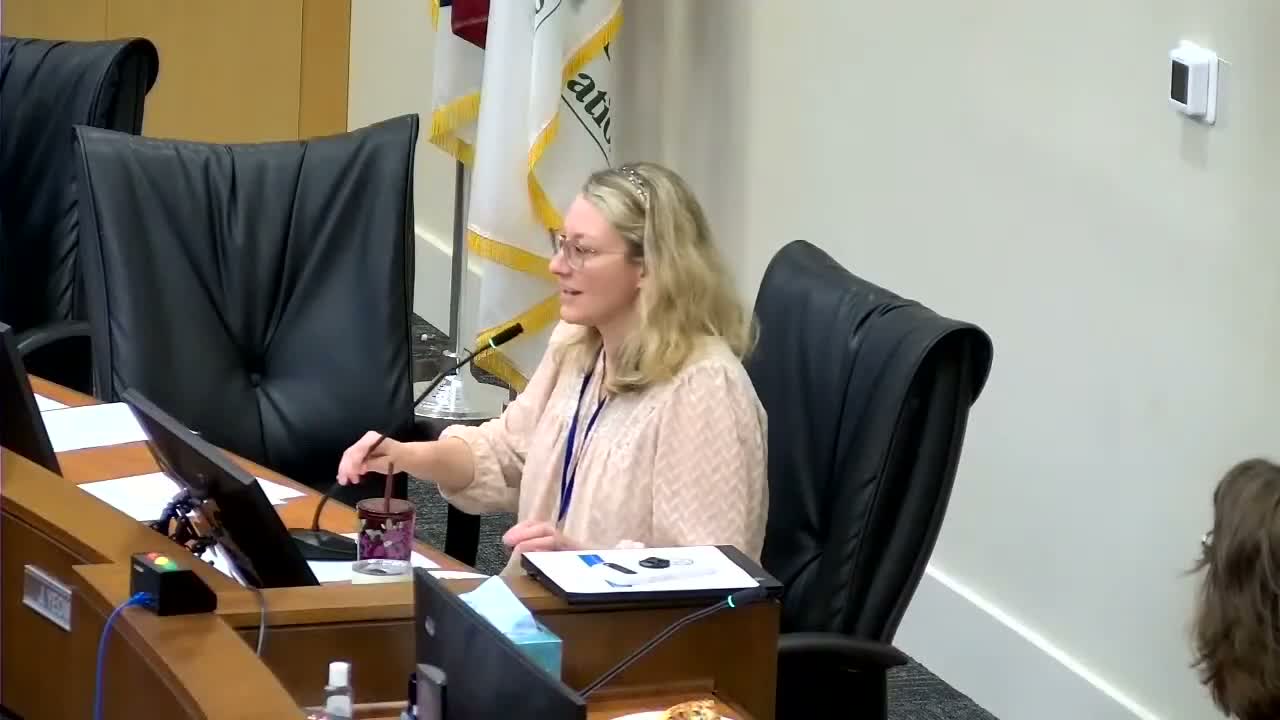
The Hilliard Planning and Zoning Commission held a special training session on May 14 led by attorney Anthony Severn of FBT Gibbons that reviewed public-records rules, open-meetings requirements, the commission's limited zoning powers and Ohio ethics laws governing conflicts of interest.
Severn, a senior associate at FBT Gibbons, told commissioners that recent changes to Ohio law affect how personal notes are treated. "Any personal notes that are kept just for you, that aren't used for anybody else's purposes and are meant only for your own recording, are not public records," he said, but he cautioned that once such notes are shared or used for other purposes "there's a strong argument that they become public records." He urged commissioners to consult the law department when in doubt and advised: "If you wouldn't feel comfortable saying it in a public meeting, maybe don't write it either." (Anthony Severn)
On open-meeting rules, Severn said a "meeting" generally exists when a majority of a public body engages in a prearranged discussion of public business. He warned commissioners to avoid serial meetings through message threads and to keep deliberations to public sessions so the record supports any later appeal. The training emphasized that minutes and, where kept, full transcripts or video records play a key role in appeals under Ohio Revised Code Chapter 2506.
Severn reviewed the commission's authority under the zoning code, listing actions the body may take — zoning code amendments, conditional-use decisions, site-plan approvals, sign modifications, preliminary and final plats and lot splits — and stressed that decisions should be tied to the specific code criteria. "When you're looking at something from that perspective, your decision is going to have a logical through point," he said. (Anthony Severn)
The session included hypotheticals about inappropriate lines of questioning. In one example, commissioners agreed it would be improper to ask applicants about the expected racial makeup or income of future tenants because those questions go beyond the code's focus on physical harmony and objective criteria. One commissioner said such questioning is "inappropriate and beyond legal authority." (Commissioner)
Severn also reviewed ethics rules on conflicts of interest, telling the group that officials "cannot participate in matters if something of value will result for the public official or employee, his or her family, business associates, or others with whom the public servant has a close tie." He said the appropriate response to a conflict is to recuse: "If you have a conflict of interest, the simple answer is yes." The trainer recommended notifying the law department as soon as a potential conflict is identified and noted that while leaving the room is not always legally required it is the prudent practice for public perception.
A commissioner asked staff whether city council had completed a code change to return final decisions on conditional uses to the commission. Clerk responded that council held a first reading of the proposed change but the legislation was tabled and "is not being considered by city council at this point." (Clerk)
The special meeting concluded with a motion to adjourn that was seconded, the commission saying "aye," and the meeting adjourning. The training materials included additional hypotheticals and Severn encouraged commissioners to consult the law department or city staff with follow-up questions.
This briefing was presented as a refresher; no formal zoning decisions were taken at the session.
Severn, a senior associate at FBT Gibbons, told commissioners that recent changes to Ohio law affect how personal notes are treated. "Any personal notes that are kept just for you, that aren't used for anybody else's purposes and are meant only for your own recording, are not public records," he said, but he cautioned that once such notes are shared or used for other purposes "there's a strong argument that they become public records." He urged commissioners to consult the law department when in doubt and advised: "If you wouldn't feel comfortable saying it in a public meeting, maybe don't write it either." (Anthony Severn)
On open-meeting rules, Severn said a "meeting" generally exists when a majority of a public body engages in a prearranged discussion of public business. He warned commissioners to avoid serial meetings through message threads and to keep deliberations to public sessions so the record supports any later appeal. The training emphasized that minutes and, where kept, full transcripts or video records play a key role in appeals under Ohio Revised Code Chapter 2506.
Severn reviewed the commission's authority under the zoning code, listing actions the body may take — zoning code amendments, conditional-use decisions, site-plan approvals, sign modifications, preliminary and final plats and lot splits — and stressed that decisions should be tied to the specific code criteria. "When you're looking at something from that perspective, your decision is going to have a logical through point," he said. (Anthony Severn)
The session included hypotheticals about inappropriate lines of questioning. In one example, commissioners agreed it would be improper to ask applicants about the expected racial makeup or income of future tenants because those questions go beyond the code's focus on physical harmony and objective criteria. One commissioner said such questioning is "inappropriate and beyond legal authority." (Commissioner)
Severn also reviewed ethics rules on conflicts of interest, telling the group that officials "cannot participate in matters if something of value will result for the public official or employee, his or her family, business associates, or others with whom the public servant has a close tie." He said the appropriate response to a conflict is to recuse: "If you have a conflict of interest, the simple answer is yes." The trainer recommended notifying the law department as soon as a potential conflict is identified and noted that while leaving the room is not always legally required it is the prudent practice for public perception.
A commissioner asked staff whether city council had completed a code change to return final decisions on conditional uses to the commission. Clerk responded that council held a first reading of the proposed change but the legislation was tabled and "is not being considered by city council at this point." (Clerk)
The special meeting concluded with a motion to adjourn that was seconded, the commission saying "aye," and the meeting adjourning. The training materials included additional hypotheticals and Severn encouraged commissioners to consult the law department or city staff with follow-up questions.
This briefing was presented as a refresher; no formal zoning decisions were taken at the session.
View the Full Meeting & All Its Details
This article offers just a summary. Unlock complete video, transcripts, and insights as a Founder Member.
✓
Watch full, unedited meeting videos
✓
Search every word spoken in unlimited transcripts
✓
AI summaries & real-time alerts (all government levels)
✓
Permanent access to expanding government content
30-day money-back guarantee
