Charter revision commission advances drafting directives and approves multiple resolutions for attorney drafting
May 15, 2026 | Ithaca City, Tompkins County, New York
This article was created by AI summarizing key points discussed. AI makes mistakes, so for full details and context, please refer to the video of the full meeting. Please report any errors so we can fix them. Report an error »
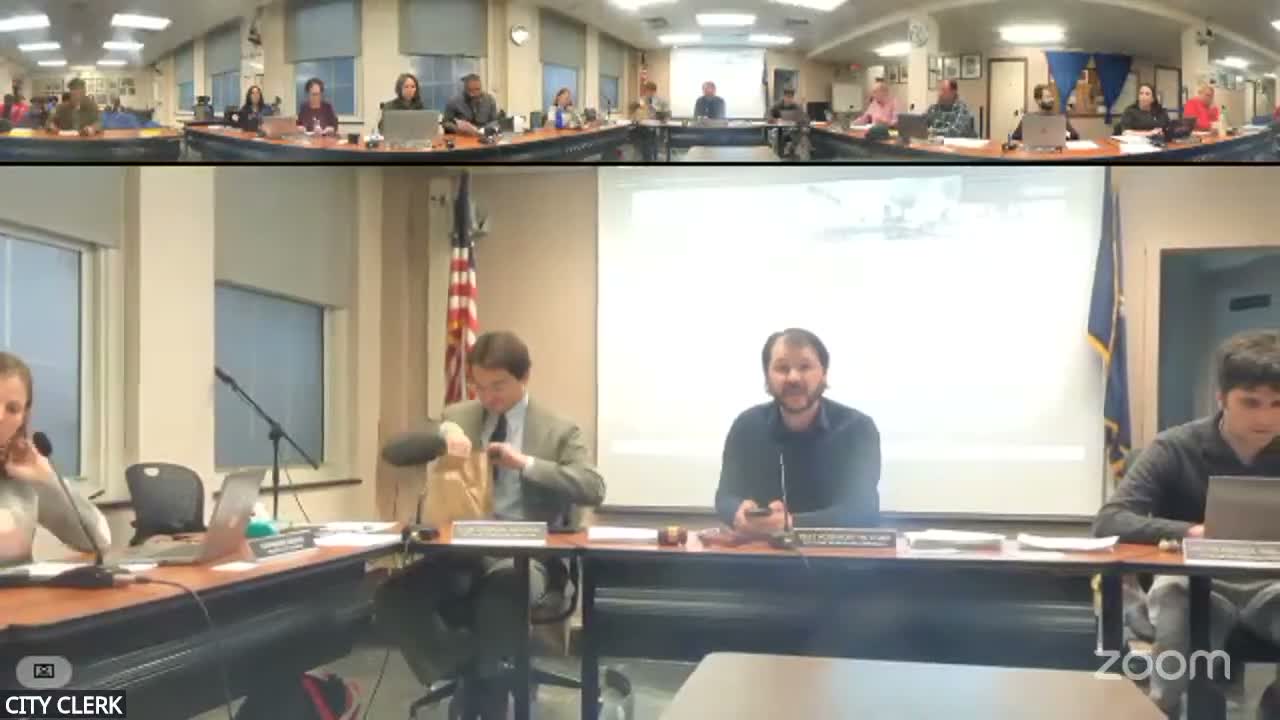
The Ithaca City Charter Revision Commission spent its meeting on procedural directives and a slate of resolutions directing the city attorney to draft or explain legal language for future action.
The commission approved a consent calendar of housekeeping drafting directives and then took up business calendar items. Resolutions adopted to move forward with drafting or to recommend changes included: listing existing city departments in the charter (resolution 15, adopted by roll call), establishing a standardized decennial redistricting process (16, adopted after amendment discussion), drafting language to shift council elections to even-numbered years (17), allowing alternates to serve on quasi‑judicial boards for conflicts or absence (18), and formalizing a process for board/commission discipline and due process (19). The commission also directed the attorney to update Article 4 taxation and assessment language (20) and to simplify deputy department‑head references (21).
Several budget-related directives moved ahead: the commission asked the city attorney to draft language clarifying council authority to recommend budget priorities and a recommended maximum levy for the city manager’s proposed budget and to explain legal limits (resolution 22). The commission also adopted a default-procedure directive that would make the city-manager-submitted budget effective if council fails to adopt a budget by the state timeline (resolution 24).
On fluoridation, the commission voted to remove the charter clause that bars council from considering fluoridation (resolution 23). City Attorney Catherine Muskin advised the commission that changing a provision that alters an elected official’s power can trigger a referendum under municipal home‑rule law. Muskin said, "Changing the power of an elected official is when a referendum can be triggered," and urged the group to expect legal review on that question.
All adopted directives were sent to the city attorney’s office for drafting or for written explanation of technical or legal obstacles. The chair said drafts would be circulated to commissioners for review, followed by public hearings in June and July and floor consideration in July.
The meeting closed with a lengthy scheduling and workload discussion; commissioners expressed concern about attorney bandwidth, meeting cadence, and public outreach timing. The chair committed to distributing a clarified timeline and a written follow‑up to commissioners.
The commission approved a consent calendar of housekeeping drafting directives and then took up business calendar items. Resolutions adopted to move forward with drafting or to recommend changes included: listing existing city departments in the charter (resolution 15, adopted by roll call), establishing a standardized decennial redistricting process (16, adopted after amendment discussion), drafting language to shift council elections to even-numbered years (17), allowing alternates to serve on quasi‑judicial boards for conflicts or absence (18), and formalizing a process for board/commission discipline and due process (19). The commission also directed the attorney to update Article 4 taxation and assessment language (20) and to simplify deputy department‑head references (21).
Several budget-related directives moved ahead: the commission asked the city attorney to draft language clarifying council authority to recommend budget priorities and a recommended maximum levy for the city manager’s proposed budget and to explain legal limits (resolution 22). The commission also adopted a default-procedure directive that would make the city-manager-submitted budget effective if council fails to adopt a budget by the state timeline (resolution 24).
On fluoridation, the commission voted to remove the charter clause that bars council from considering fluoridation (resolution 23). City Attorney Catherine Muskin advised the commission that changing a provision that alters an elected official’s power can trigger a referendum under municipal home‑rule law. Muskin said, "Changing the power of an elected official is when a referendum can be triggered," and urged the group to expect legal review on that question.
All adopted directives were sent to the city attorney’s office for drafting or for written explanation of technical or legal obstacles. The chair said drafts would be circulated to commissioners for review, followed by public hearings in June and July and floor consideration in July.
The meeting closed with a lengthy scheduling and workload discussion; commissioners expressed concern about attorney bandwidth, meeting cadence, and public outreach timing. The chair committed to distributing a clarified timeline and a written follow‑up to commissioners.
Don't Miss a Word: See the Full Meeting!
Go beyond summaries. Unlock every video, transcript, and key insight with a Founder Membership.
✓
Get instant access to full meeting videos
✓
Search and clip any phrase from complete transcripts
✓
Receive AI-powered summaries & custom alerts
✓
Enjoy lifetime, unrestricted access to government data
30-day money-back guarantee
