Mesa board votes to put $449 million bond on ballot after lengthy debate
May 15, 2026 | Mesa Unified District (4235), School Districts, Arizona
This article was created by AI summarizing key points discussed. AI makes mistakes, so for full details and context, please refer to the video of the full meeting. Please report any errors so we can fix them. Report an error »
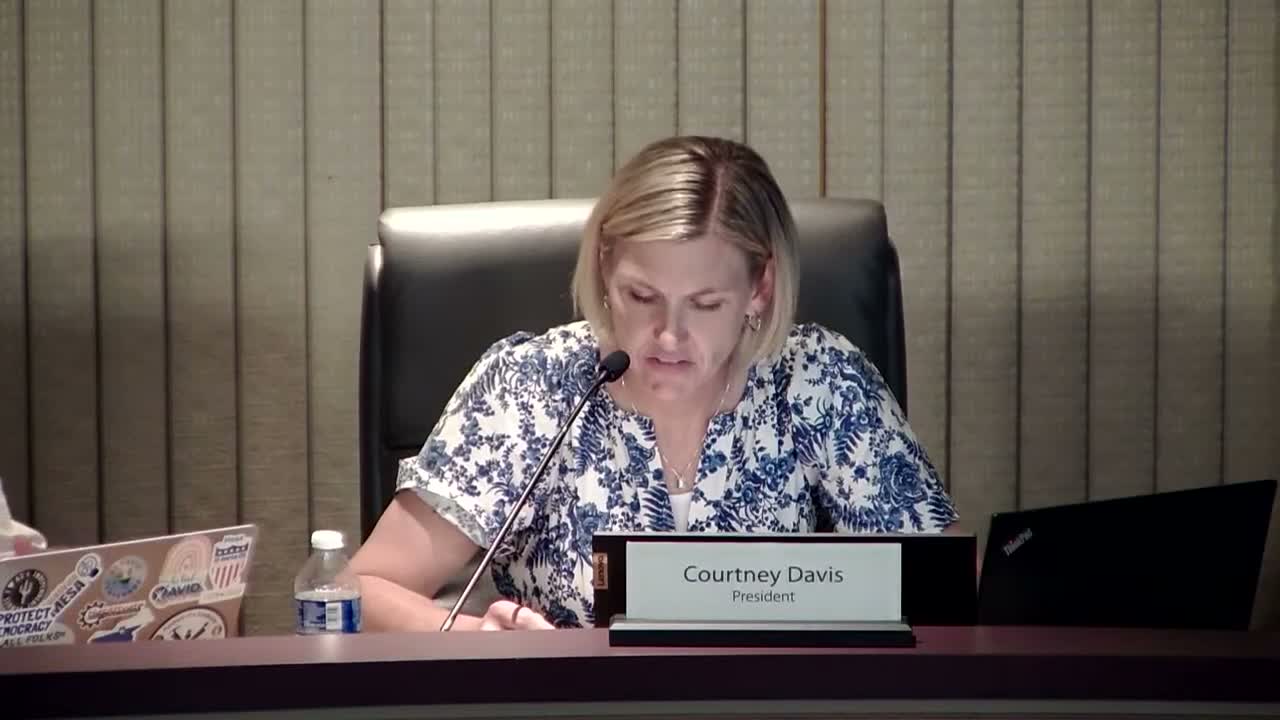
The Mesa Unified governing board voted 3–2 on Thursday to place a $449 million bond measure before voters, following more than two hours of public comment, financial presentations and board debate.
Board President Davis framed the vote as a choice about school safety and basic infrastructure after the district compiled a 13,000‑line facilities assessment that identified roughly $1.4 billion in needs. "Our students need safe spaces to teach and learn," Davis said in remarks urging the board to let voters decide.
Why it matters: District officials and parent advisers told the board the most urgent needs are working HVAC systems, plumbing and secure front offices at aging campuses. Financial advisers from Stifel presented a bonding plan that would seek to keep the district’s bond tax rate roughly level by timing sales over multiple years; they estimated the bond’s average tax impact at about $0.81 per $100 of assessed value, which Stifel said would amount to roughly $81 annually for a property with $100,000 in assessed value under the voter‑pamphlet assumptions.
What supporters said: Parent advisory committee member Katie Houston told the board the district’s sites average 40 years in age and urged transparent outreach if the bond goes to voters: "We want our classrooms air conditioned. We want our toilets to flush, and we want our school entrances safe," she said. Board member Chaffee said the draft plan reflects restraint — the district pared an original wish list down from $1.4 billion to the $449 million package now proposed — and said a bond is the state‑established tool for addressing capital shortfalls.
What opponents said: Board members Walden and Benson urged other options, including a capital override (which carries no interest cost) and sharper right‑sizing of district facilities in light of declining enrollment. Benson told colleagues the board must show voters better fiscal discipline before seeking a large new debt authorization.
Financial detail and timeline: Stifel advised the board that Mesa’s legal bonding capacity is well above the proposed authorization and sketched a multi‑year sale plan; the voter pamphlet will use a conservative 5% interest assumption to project tax impacts. Bond counsel advised the board it does not automatically require a recusal if family members of a board member volunteer for or chair a PAC, so long as district resources are not used.
Next steps: The resolution calling the special bond election passed, so the district will prepare required voter information and a transparent project dashboard listing proposed site investments. If voters approve, the board will return to the dais to authorize specific bond sales and project expenditures over the subsequent years.
Board President Davis framed the vote as a choice about school safety and basic infrastructure after the district compiled a 13,000‑line facilities assessment that identified roughly $1.4 billion in needs. "Our students need safe spaces to teach and learn," Davis said in remarks urging the board to let voters decide.
Why it matters: District officials and parent advisers told the board the most urgent needs are working HVAC systems, plumbing and secure front offices at aging campuses. Financial advisers from Stifel presented a bonding plan that would seek to keep the district’s bond tax rate roughly level by timing sales over multiple years; they estimated the bond’s average tax impact at about $0.81 per $100 of assessed value, which Stifel said would amount to roughly $81 annually for a property with $100,000 in assessed value under the voter‑pamphlet assumptions.
What supporters said: Parent advisory committee member Katie Houston told the board the district’s sites average 40 years in age and urged transparent outreach if the bond goes to voters: "We want our classrooms air conditioned. We want our toilets to flush, and we want our school entrances safe," she said. Board member Chaffee said the draft plan reflects restraint — the district pared an original wish list down from $1.4 billion to the $449 million package now proposed — and said a bond is the state‑established tool for addressing capital shortfalls.
What opponents said: Board members Walden and Benson urged other options, including a capital override (which carries no interest cost) and sharper right‑sizing of district facilities in light of declining enrollment. Benson told colleagues the board must show voters better fiscal discipline before seeking a large new debt authorization.
Financial detail and timeline: Stifel advised the board that Mesa’s legal bonding capacity is well above the proposed authorization and sketched a multi‑year sale plan; the voter pamphlet will use a conservative 5% interest assumption to project tax impacts. Bond counsel advised the board it does not automatically require a recusal if family members of a board member volunteer for or chair a PAC, so long as district resources are not used.
Next steps: The resolution calling the special bond election passed, so the district will prepare required voter information and a transparent project dashboard listing proposed site investments. If voters approve, the board will return to the dais to authorize specific bond sales and project expenditures over the subsequent years.
Don't Miss a Word: See the Full Meeting!
Go beyond summaries. Unlock every video, transcript, and key insight with a Founder Membership.
✓
Get instant access to full meeting videos
✓
Search and clip any phrase from complete transcripts
✓
Receive AI-powered summaries & custom alerts
✓
Enjoy lifetime, unrestricted access to government data
30-day money-back guarantee
