House Human Services reviews revised S193 draft, debates DOC role and competency criteria
May 15, 2026 | Human Services, HOUSE OF REPRESENTATIVES, Committees, Legislative , Vermont
This article was created by AI summarizing key points discussed. AI makes mistakes, so for full details and context, please refer to the video of the full meeting. Please report any errors so we can fix them. Report an error »
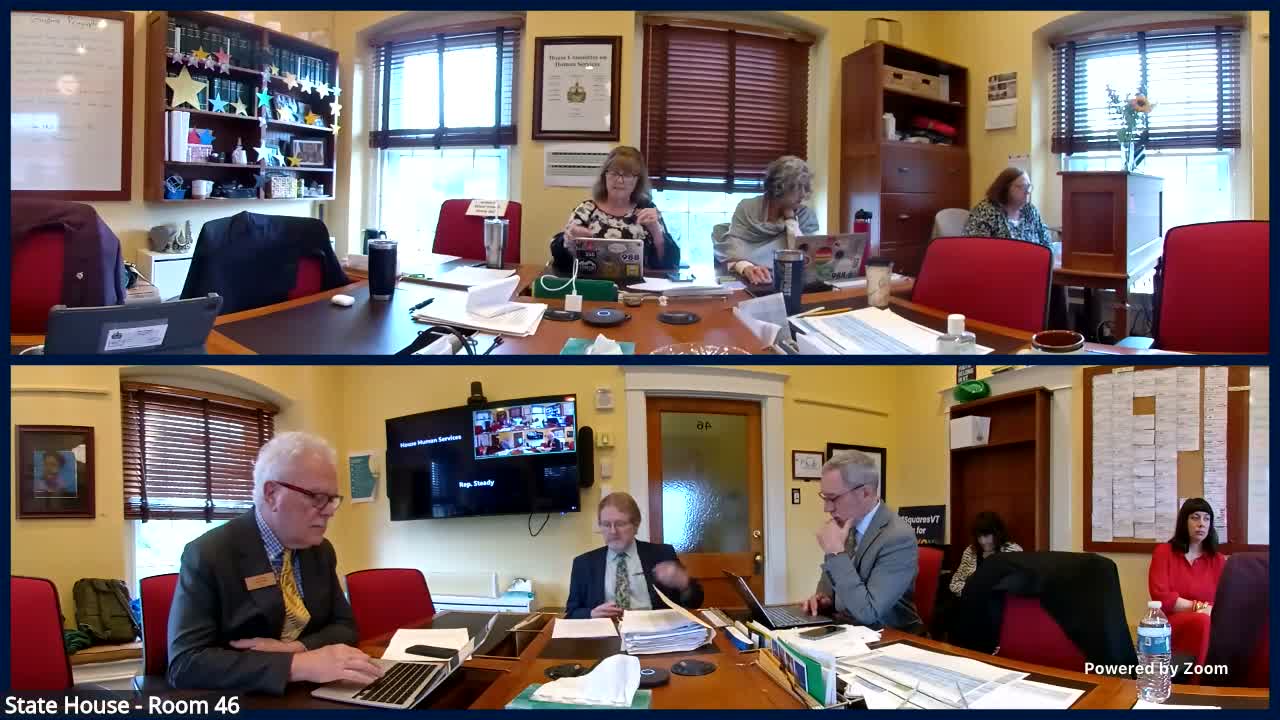
The House Human Services committee on Monday reviewed draft 7.1 of S193, focusing on who may be admitted to a proposed locked forensic competency restoration facility, how the Agency of Human Services and the Department of Corrections would divide responsibilities, and time limits for placements.
Eric Fitzpatrick, with the Office of Legislative Council, told the panel that the latest draft adds language allowing the Department of Corrections to “provide security services at the admitting area and around the outside” when a forensic facility is collocated on correctional grounds, but that the Agency of Human Services’ medical director would retain authority for clinical, forensic and competency-restoration services. Fitzpatrick said the change was intended to clarify operational roles between agencies.
The committee also scrutinized admissions criteria and a newly reinstated exception in subdivision B. Fitzpatrick explained that people found not competent to stand trial because of an intellectual disability who enter the Act 248 pathway are generally excluded from placement at the forensic facility; the draft’s "unless" clause would permit placement if a person charged with a life-maximum offense is being detained pending trial (commonly held without bail). The chair said she appreciated the change but raised questions about the reinstated subdivision B and indicated she might seek an amendment to remove it.
Members pressed for clearer language tying placement to an affirmative finding of risk. Representative Bishop said the measure must make plain that a person’s qualifying condition alone does not automatically make them dangerous, asking, “they are deemed to be dangerous by the fact that they have one of these qualifying conditions?” Committee members agreed the draft should show that the risk must be determined, not inferred solely from diagnosis.
The draft sets specific review and time-limit provisions for placements. Fitzpatrick summarized the off-ramp to Act 248: if a court finds by clear and convincing evidence that a nonrestorable person qualifies for Act 248 custody, the court may place the person in a designated program for up to one year; if a designated program is not yet available, the court may order continued treatment at the forensic facility and, for good cause shown, extend that period by up to six months, for a maximum of 18 months. Orders for continued treatment are reviewed every 90 days; individuals deemed dangerous have annual reviews or sooner if the medical director certifies they no longer appear dangerous.
Several members urged the committee to specify appropriate risk-assessment instruments. The chair asked for language recognizing that evidence-based risk assessments for people with developmental and intellectual disabilities differ from tools used for the general population or for mental-health diagnoses; she asked staff to propose wording that refers to “clinically appropriate” or population-appropriate assessments.
The draft requires feasibility plans for any facility to include options and cost estimates for providing competency restoration services while development is pending, with those interim provisions set to sunset when the forensic facility becomes operational (the draft assumes operations beginning in 2028). Committee members discussed temporary placement options — including using in-state, out-of-state or DOC facilities for short-term programs — and emphasized precision about what “restoration” means. As one member put it, “Restoration strictly pertains to whether or not the individual is able to now go and stand trial or not,” not to reversing intellectual disability.
A number of members warned against conflating criminogenic traits with clinical diagnoses. One member with the title Rabbi said they would oppose language that treated criminal risk as equivalent to diagnosis and urged clearer separation between criminogenic factors and mental-health or developmental conditions.
The committee also approved language expanding facility reporting requirements: facilities must implement a process for reporting deaths or serious bodily injuries to the Agency of Human Services medical director, rather than limiting notice to Department of Mental Health cases. That change was described as extending oversight and safeguards to all residents of the facility.
No formal motions or votes were recorded during the briefing. The chair closed the session by asking staff to draft amendment language addressing qualifying-condition wording, risk-assessment language appropriate to different populations, and how courts should weigh the availability of community services when considering discharge. The bill’s next steps were described as amendment drafting followed by floor action.
Eric Fitzpatrick, with the Office of Legislative Council, told the panel that the latest draft adds language allowing the Department of Corrections to “provide security services at the admitting area and around the outside” when a forensic facility is collocated on correctional grounds, but that the Agency of Human Services’ medical director would retain authority for clinical, forensic and competency-restoration services. Fitzpatrick said the change was intended to clarify operational roles between agencies.
The committee also scrutinized admissions criteria and a newly reinstated exception in subdivision B. Fitzpatrick explained that people found not competent to stand trial because of an intellectual disability who enter the Act 248 pathway are generally excluded from placement at the forensic facility; the draft’s "unless" clause would permit placement if a person charged with a life-maximum offense is being detained pending trial (commonly held without bail). The chair said she appreciated the change but raised questions about the reinstated subdivision B and indicated she might seek an amendment to remove it.
Members pressed for clearer language tying placement to an affirmative finding of risk. Representative Bishop said the measure must make plain that a person’s qualifying condition alone does not automatically make them dangerous, asking, “they are deemed to be dangerous by the fact that they have one of these qualifying conditions?” Committee members agreed the draft should show that the risk must be determined, not inferred solely from diagnosis.
The draft sets specific review and time-limit provisions for placements. Fitzpatrick summarized the off-ramp to Act 248: if a court finds by clear and convincing evidence that a nonrestorable person qualifies for Act 248 custody, the court may place the person in a designated program for up to one year; if a designated program is not yet available, the court may order continued treatment at the forensic facility and, for good cause shown, extend that period by up to six months, for a maximum of 18 months. Orders for continued treatment are reviewed every 90 days; individuals deemed dangerous have annual reviews or sooner if the medical director certifies they no longer appear dangerous.
Several members urged the committee to specify appropriate risk-assessment instruments. The chair asked for language recognizing that evidence-based risk assessments for people with developmental and intellectual disabilities differ from tools used for the general population or for mental-health diagnoses; she asked staff to propose wording that refers to “clinically appropriate” or population-appropriate assessments.
The draft requires feasibility plans for any facility to include options and cost estimates for providing competency restoration services while development is pending, with those interim provisions set to sunset when the forensic facility becomes operational (the draft assumes operations beginning in 2028). Committee members discussed temporary placement options — including using in-state, out-of-state or DOC facilities for short-term programs — and emphasized precision about what “restoration” means. As one member put it, “Restoration strictly pertains to whether or not the individual is able to now go and stand trial or not,” not to reversing intellectual disability.
A number of members warned against conflating criminogenic traits with clinical diagnoses. One member with the title Rabbi said they would oppose language that treated criminal risk as equivalent to diagnosis and urged clearer separation between criminogenic factors and mental-health or developmental conditions.
The committee also approved language expanding facility reporting requirements: facilities must implement a process for reporting deaths or serious bodily injuries to the Agency of Human Services medical director, rather than limiting notice to Department of Mental Health cases. That change was described as extending oversight and safeguards to all residents of the facility.
No formal motions or votes were recorded during the briefing. The chair closed the session by asking staff to draft amendment language addressing qualifying-condition wording, risk-assessment language appropriate to different populations, and how courts should weigh the availability of community services when considering discharge. The bill’s next steps were described as amendment drafting followed by floor action.
Don't Miss a Word: See the Full Meeting!
Go beyond summaries. Unlock every video, transcript, and key insight with a Founder Membership.
✓
Get instant access to full meeting videos
✓
Search and clip any phrase from complete transcripts
✓
Receive AI-powered summaries & custom alerts
✓
Enjoy lifetime, unrestricted access to government data
30-day money-back guarantee
