Lawmakers debate requiring boat insurance; agencies seek actuarial study and vessel data
May 15, 2026 | House of Representatives, House, Committees, Legislative, Puerto Rico, International
This article was created by AI summarizing key points discussed. AI makes mistakes, so for full details and context, please refer to the video of the full meeting. Please report any errors so we can fix them. Report an error »
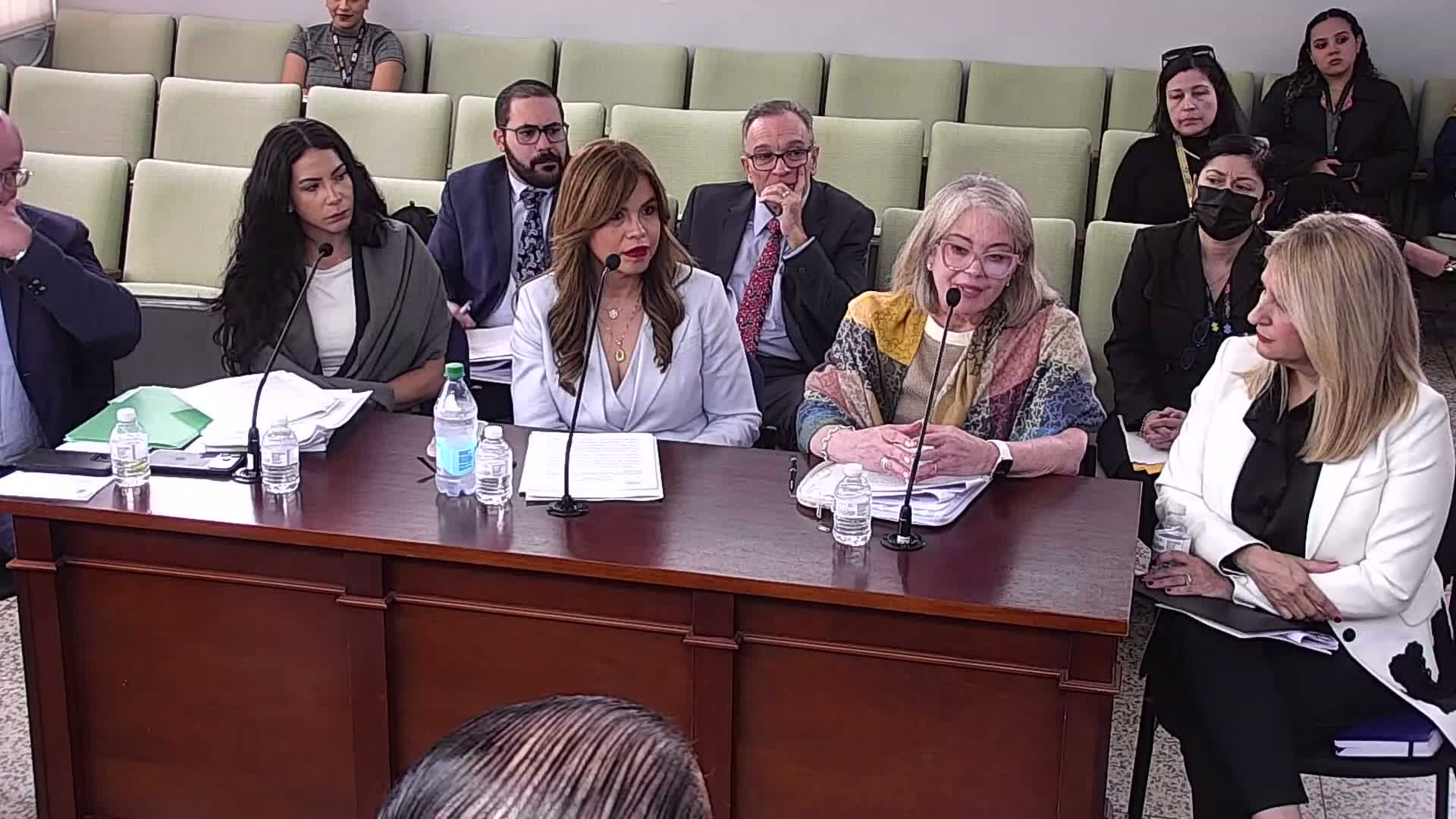
Legislators and agency officials debated proposed measures to require compulsory insurance for recreational boats, pressing for a formal actuarial analysis and clearer statutory language before adopting a mandate.
The hearing focused on two measures introduced as Proyecto 787 and Proyecto 1156. Witnesses from the Department of Natural Resources and insurance regulators described safety and data gaps that proponents say the bills would address; industry representatives warned the change could be premature and pose solvency and operational risks without detailed studies.
Why it matters: Testimony put the scale of the issue into perspective. Luis Antonio Márquez Ruiz, Commissioner of Navigation, said the registry (system Neptuno) shows roughly "90,000 embarcaciones registradas" and acknowledged many craft operate without a marbete. Committee members and witnesses said a poorly designed compulsory program could be costly for small operators and could strain insurers’ liquidity, especially for maritime claims that often include expensive environmental and removal costs.
Departmental recommendations and statutory alignment
Carla Marrero Bishop of the Department of Natural Resources told the committee the measures are "loables" for navigation safety but stressed they must adopt the precise statutory definition of "embarcación" in Law 430 and its implementing regulation to avoid ambiguity about which craft are covered. "Se debe establecer la definición precisa y sea conforme a las definiciones que establece la ley 4 30 y el reglamento," she said, urging language that distinguishes motorized from non-motorized vessels and clarifies whether small craft such as jet skis are included.
Industry, regulator and operational concerns
A representative of the Asociación de compañías de seguros cautioned that maritime risk differs from motor-vehicle risk and argued the bills are "prematuras en ausencia de una justificación documentada." Industry witnesses and the Asociación de Seguro Compulsorio (ASC) said implementing maritime compulsory coverage would require new adjusters, expertise and potentially significant capital and operational changes. An ASC representative said creating "una estructura distinta a lo que tenemos hoy" could carry added costs and affect the solvency of the existing compulsory-insurance framework.
Several witnesses and committee members emphasized the need for an actuarial and market study conducted under the Office of the Commissioner of Insurance and including data from all insurers that would participate. A witness familiar with such studies said the cost of a current-market actuarial analysis would likely start around $60,000 and could be higher when the work includes insurer loss histories and market-scope evaluation.
Data request and next steps
During the hearing a legislator moved for the navigation office to supply more precise registration and accident statistics. The committee set a 10-business-day deadline for that information and asked agencies to submit any proposed substitute text or technical amendments in the same window. "Nos damos 10 días," the presiding member said when the office agreed to provide counts and clarifications.
The committee did not vote on the measures at the hearing. Members repeatedly said they support the safety objectives but want the actuarial, market and implementation questions answered before advancing the bills further.
The hearing focused on two measures introduced as Proyecto 787 and Proyecto 1156. Witnesses from the Department of Natural Resources and insurance regulators described safety and data gaps that proponents say the bills would address; industry representatives warned the change could be premature and pose solvency and operational risks without detailed studies.
Why it matters: Testimony put the scale of the issue into perspective. Luis Antonio Márquez Ruiz, Commissioner of Navigation, said the registry (system Neptuno) shows roughly "90,000 embarcaciones registradas" and acknowledged many craft operate without a marbete. Committee members and witnesses said a poorly designed compulsory program could be costly for small operators and could strain insurers’ liquidity, especially for maritime claims that often include expensive environmental and removal costs.
Departmental recommendations and statutory alignment
Carla Marrero Bishop of the Department of Natural Resources told the committee the measures are "loables" for navigation safety but stressed they must adopt the precise statutory definition of "embarcación" in Law 430 and its implementing regulation to avoid ambiguity about which craft are covered. "Se debe establecer la definición precisa y sea conforme a las definiciones que establece la ley 4 30 y el reglamento," she said, urging language that distinguishes motorized from non-motorized vessels and clarifies whether small craft such as jet skis are included.
Industry, regulator and operational concerns
A representative of the Asociación de compañías de seguros cautioned that maritime risk differs from motor-vehicle risk and argued the bills are "prematuras en ausencia de una justificación documentada." Industry witnesses and the Asociación de Seguro Compulsorio (ASC) said implementing maritime compulsory coverage would require new adjusters, expertise and potentially significant capital and operational changes. An ASC representative said creating "una estructura distinta a lo que tenemos hoy" could carry added costs and affect the solvency of the existing compulsory-insurance framework.
Several witnesses and committee members emphasized the need for an actuarial and market study conducted under the Office of the Commissioner of Insurance and including data from all insurers that would participate. A witness familiar with such studies said the cost of a current-market actuarial analysis would likely start around $60,000 and could be higher when the work includes insurer loss histories and market-scope evaluation.
Data request and next steps
During the hearing a legislator moved for the navigation office to supply more precise registration and accident statistics. The committee set a 10-business-day deadline for that information and asked agencies to submit any proposed substitute text or technical amendments in the same window. "Nos damos 10 días," the presiding member said when the office agreed to provide counts and clarifications.
The committee did not vote on the measures at the hearing. Members repeatedly said they support the safety objectives but want the actuarial, market and implementation questions answered before advancing the bills further.
Don't Miss a Word: See the Full Meeting!
Go beyond summaries. Unlock every video, transcript, and key insight with a Founder Membership.
✓
Get instant access to full meeting videos
✓
Search and clip any phrase from complete transcripts
✓
Receive AI-powered summaries & custom alerts
✓
Enjoy lifetime, unrestricted access to government data
30-day money-back guarantee
