Sponsor tells House Finance panel HJR23 would bar using Budget Reserve as anticipated revenue
May 14, 2026 | 2026 Legislature Alaska, Alaska
This article was created by AI summarizing key points discussed. AI makes mistakes, so for full details and context, please refer to the video of the full meeting. Please report any errors so we can fix them. Report an error »
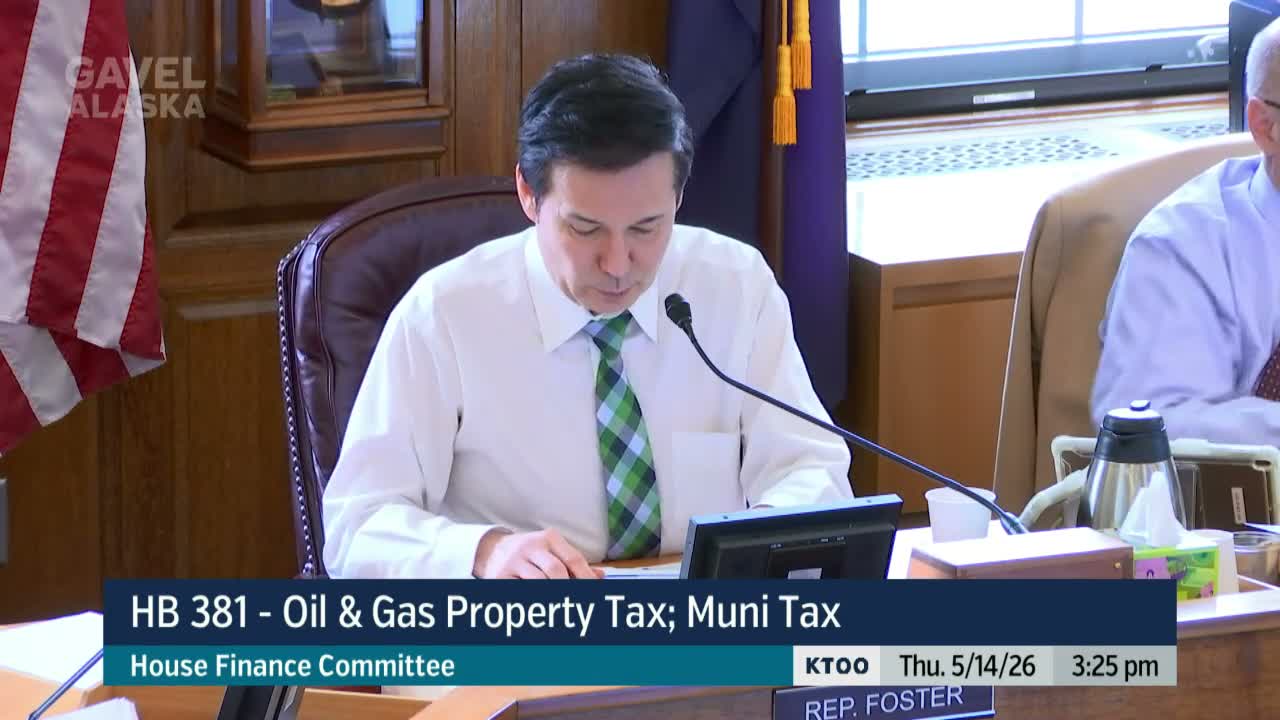
Representative Jubilee Underwood introduced House Joint Resolution 23 to the House Finance Committee and framed the proposal as a structural, constitutional question rather than a specific spending or revenue change.
Underwood’s staff, Buddy Witt, told the committee HJR 23 would add a subsection to Article IX, section 12 of the Alaska Constitution to require that when the executive branch submits an initial budget the proposed expenditures may not exceed anticipated revenue and that anticipated revenue may not include the balance of the budget reserve fund (commonly called the CBR). "The governor can use any fund available when submitting that budget," Witt said in explaining the drafting change, but the amendment is intended to prevent the executive from treating the CBR as a balancing fallback in the initial submission.
Why it matters: Supporters say the change would force the executive branch to begin the budget process with a plan that balances projected spending and revenues, rather than relying on the CBR as a presumed source to close gaps. Witt and legislative-legal staff emphasized the resolution does not eliminate the governor's authority to propose revenue bills or to use other statutory tools; it focuses narrowly on excluding the CBR from anticipated-revenue calculations in the initial submission.
Questions from committee members centered on process and scope. Members asked whether the amendment would bar other fund balances (for example, use of POMV formulas or the Higher Education Investment Fund); legislative legal clarified the current draft targets the CBR specifically and does not alter other statutory limits or requirements. Members also asked about timing: the draft sets an effective date of Jan. 1, 2027; legislative legal noted that could be clarified so the amendment clearly applies beginning with the December 2027 budget cycle, and one member suggested a July 1, 2027 effective date if the committee prefers that approach.
Procedural note: Buddy Witt and legislative legal staff explained that a constitutional amendment requires a two-thirds vote in each house separately and then approval by voters on the statewide ballot. The committee did not take final action on HJR 23 during this hearing; Underwood said she is available to work with members on clarifying language and effective-date options.
The committee recessed without vote and announced an amendment deadline for a separate bill (HB 104) for Saturday, May 16 at noon.
Underwood’s staff, Buddy Witt, told the committee HJR 23 would add a subsection to Article IX, section 12 of the Alaska Constitution to require that when the executive branch submits an initial budget the proposed expenditures may not exceed anticipated revenue and that anticipated revenue may not include the balance of the budget reserve fund (commonly called the CBR). "The governor can use any fund available when submitting that budget," Witt said in explaining the drafting change, but the amendment is intended to prevent the executive from treating the CBR as a balancing fallback in the initial submission.
Why it matters: Supporters say the change would force the executive branch to begin the budget process with a plan that balances projected spending and revenues, rather than relying on the CBR as a presumed source to close gaps. Witt and legislative-legal staff emphasized the resolution does not eliminate the governor's authority to propose revenue bills or to use other statutory tools; it focuses narrowly on excluding the CBR from anticipated-revenue calculations in the initial submission.
Questions from committee members centered on process and scope. Members asked whether the amendment would bar other fund balances (for example, use of POMV formulas or the Higher Education Investment Fund); legislative legal clarified the current draft targets the CBR specifically and does not alter other statutory limits or requirements. Members also asked about timing: the draft sets an effective date of Jan. 1, 2027; legislative legal noted that could be clarified so the amendment clearly applies beginning with the December 2027 budget cycle, and one member suggested a July 1, 2027 effective date if the committee prefers that approach.
Procedural note: Buddy Witt and legislative legal staff explained that a constitutional amendment requires a two-thirds vote in each house separately and then approval by voters on the statewide ballot. The committee did not take final action on HJR 23 during this hearing; Underwood said she is available to work with members on clarifying language and effective-date options.
The committee recessed without vote and announced an amendment deadline for a separate bill (HB 104) for Saturday, May 16 at noon.
View the Full Meeting & All Its Details
This article offers just a summary. Unlock complete video, transcripts, and insights as a Founder Member.
✓
Watch full, unedited meeting videos
✓
Search every word spoken in unlimited transcripts
✓
AI summaries & real-time alerts (all government levels)
✓
Permanent access to expanding government content
30-day money-back guarantee
