Friends of Kalamazoo Historic Cemeteries asks commission to consider microgrant to restore 200+ fallen gravestones
May 14, 2026 | Kalamazoo City, Kalamazoo County, Michigan
This article was created by AI summarizing key points discussed. AI makes mistakes, so for full details and context, please refer to the video of the full meeting. Please report any errors so we can fix them. Report an error »
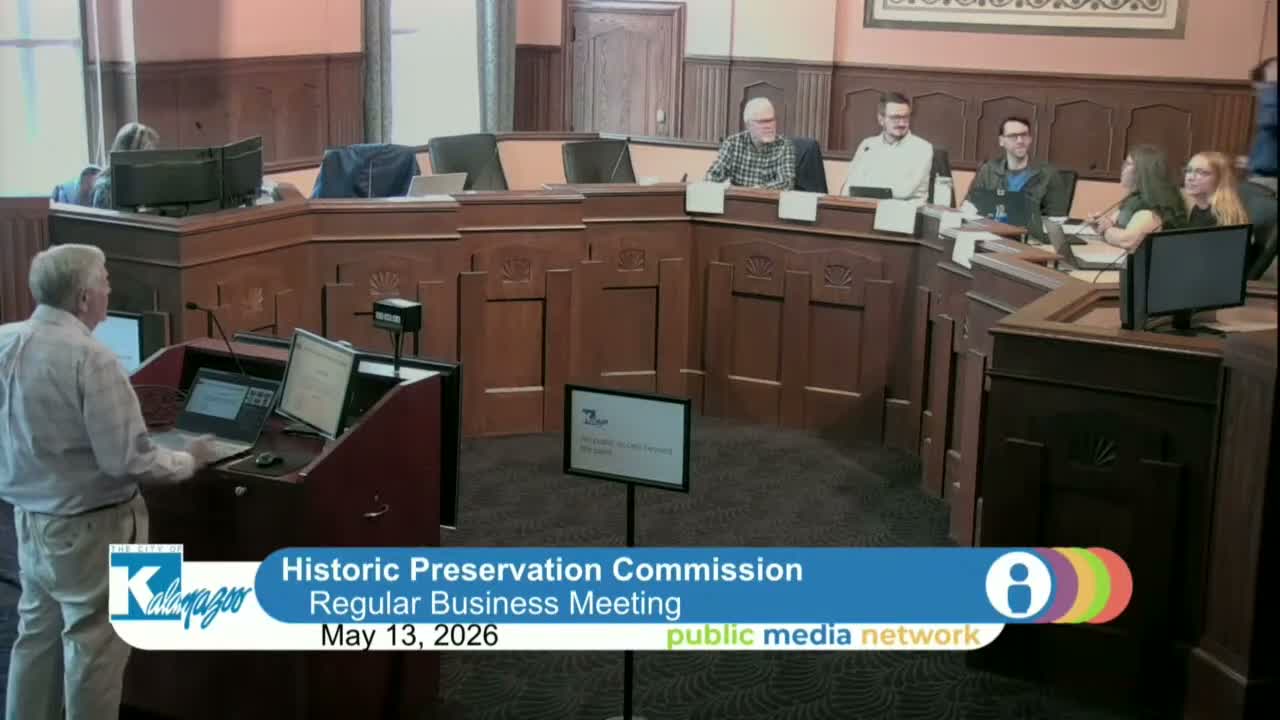
Gary Swain, representing the Friends of Kalamazoo Historic Cemeteries, asked the Historic Preservation Commission on Wednesday to consider a city "mini grant" to help clean, repair and reset more than 200 fallen gravestones in Riverside and Mountain Home cemeteries.
"Over the past two years we have identified and mapped 223 fallen stones in Riverside Cemetery," Swain said during a presentation to the commission, adding that many of those are early tablet stones that have toppled and begun to sink into the ground. He described the group's four-part mission — preservation, restoration, conservation and education — and said most work is done by volunteers, including collaborations with scouting groups and veteran organizations.
Swain outlined a multistep approach: dig out fallen stones, clean them, repair and record them, then reset them. He said the group plans to expand its "Second Saturday" cleaning events this summer and to begin restoration work in June, starting in Section A of Mountain Home Cemetery where he said 15 fallen stones would be addressed first.
Swain described switching primarily to a cleaning product called D/2 to speed work, estimating it could allow the volunteers to clean "probably somewhere 25 to 40 percent more stones" per event. He estimated materials needs of up to 50 gallons of D/2 at roughly $45 per gallon, plus adhesives, tools and occasional contracting for fabricated bases. As an example of restoration cost, he said a previous fabricated marble base had cost about $3,000 and that some fabricated bases could run about $300 each under a hired fabrication-and-reassembly approach.
The commission did not vote on funding at the meeting but agreed the item could be placed on the June agenda for formal consideration. The HP coordinator outlined the O'Connor Fund's gift ("mini grant") criteria and submission process, advising the applicants to focus the city request on cleaning materials rather than on excavation or hoisting heavy stones. "If I were you I would stay away from any mention of fixing, digging, hoisting stones in this request," the coordinator said, explaining city gifts are more straightforward to approve for cleaning activities that match Secretary of the Interior standards for cleaning.
The coordinator read the procedural requirements commissioners must confirm before a gift is considered: a nonprofit applicant, project work inside the city of Kalamazoo, evidence the proposal does not qualify for the competitive grant program, a written proposal demonstrating how the project advances public understanding of preservation and (if applicable) meets Secretary of the Interior standards, evidence of community impact, and a high likelihood the work will be completed within 12 months of gift receipt. He told the group he would need materials by June 5 to include the packet for the commission's next regular meeting on June 10.
Commissioners indicated willingness to sponsor the application. A commissioner addressed by name in the meeting and then speaking up said, "I am interested in doing that," signaling sponsorship support; the commission also advised careful costing and clear timelines if the Friends seek the $5,000 maximum allowed under the mini-grant rules.
Swain described prior fundraising that would supplement any city gift: a living history tour, program ads and about $1,500 in donations. He said restoration is likely to be multiyear and that the immediate request would cover initial costs and the first two years of work.
Next steps: the Friends of Kalamazoo Historic Cemeteries will prepare a written proposal that follows the O'Connor Fund's six criteria and submit it to the HP coordinator in time to be included in the June 10 meeting packet; the commission indicated it will consider the gift at that meeting rather than vote on funding at the current session.
"Over the past two years we have identified and mapped 223 fallen stones in Riverside Cemetery," Swain said during a presentation to the commission, adding that many of those are early tablet stones that have toppled and begun to sink into the ground. He described the group's four-part mission — preservation, restoration, conservation and education — and said most work is done by volunteers, including collaborations with scouting groups and veteran organizations.
Swain outlined a multistep approach: dig out fallen stones, clean them, repair and record them, then reset them. He said the group plans to expand its "Second Saturday" cleaning events this summer and to begin restoration work in June, starting in Section A of Mountain Home Cemetery where he said 15 fallen stones would be addressed first.
Swain described switching primarily to a cleaning product called D/2 to speed work, estimating it could allow the volunteers to clean "probably somewhere 25 to 40 percent more stones" per event. He estimated materials needs of up to 50 gallons of D/2 at roughly $45 per gallon, plus adhesives, tools and occasional contracting for fabricated bases. As an example of restoration cost, he said a previous fabricated marble base had cost about $3,000 and that some fabricated bases could run about $300 each under a hired fabrication-and-reassembly approach.
The commission did not vote on funding at the meeting but agreed the item could be placed on the June agenda for formal consideration. The HP coordinator outlined the O'Connor Fund's gift ("mini grant") criteria and submission process, advising the applicants to focus the city request on cleaning materials rather than on excavation or hoisting heavy stones. "If I were you I would stay away from any mention of fixing, digging, hoisting stones in this request," the coordinator said, explaining city gifts are more straightforward to approve for cleaning activities that match Secretary of the Interior standards for cleaning.
The coordinator read the procedural requirements commissioners must confirm before a gift is considered: a nonprofit applicant, project work inside the city of Kalamazoo, evidence the proposal does not qualify for the competitive grant program, a written proposal demonstrating how the project advances public understanding of preservation and (if applicable) meets Secretary of the Interior standards, evidence of community impact, and a high likelihood the work will be completed within 12 months of gift receipt. He told the group he would need materials by June 5 to include the packet for the commission's next regular meeting on June 10.
Commissioners indicated willingness to sponsor the application. A commissioner addressed by name in the meeting and then speaking up said, "I am interested in doing that," signaling sponsorship support; the commission also advised careful costing and clear timelines if the Friends seek the $5,000 maximum allowed under the mini-grant rules.
Swain described prior fundraising that would supplement any city gift: a living history tour, program ads and about $1,500 in donations. He said restoration is likely to be multiyear and that the immediate request would cover initial costs and the first two years of work.
Next steps: the Friends of Kalamazoo Historic Cemeteries will prepare a written proposal that follows the O'Connor Fund's six criteria and submit it to the HP coordinator in time to be included in the June 10 meeting packet; the commission indicated it will consider the gift at that meeting rather than vote on funding at the current session.
View the Full Meeting & All Its Details
This article offers just a summary. Unlock complete video, transcripts, and insights as a Founder Member.
✓
Watch full, unedited meeting videos
✓
Search every word spoken in unlimited transcripts
✓
AI summaries & real-time alerts (all government levels)
✓
Permanent access to expanding government content
30-day money-back guarantee
