Rye Brook planning board adopts SEQRA finding and approves amended site plan for 900 King Street; applicants to formalize school easement and safety measures
May 15, 2026 | Rye Brook, Westchester County, New York
This article was created by AI summarizing key points discussed. AI makes mistakes, so for full details and context, please refer to the video of the full meeting. Please report any errors so we can fix them. Report an error »
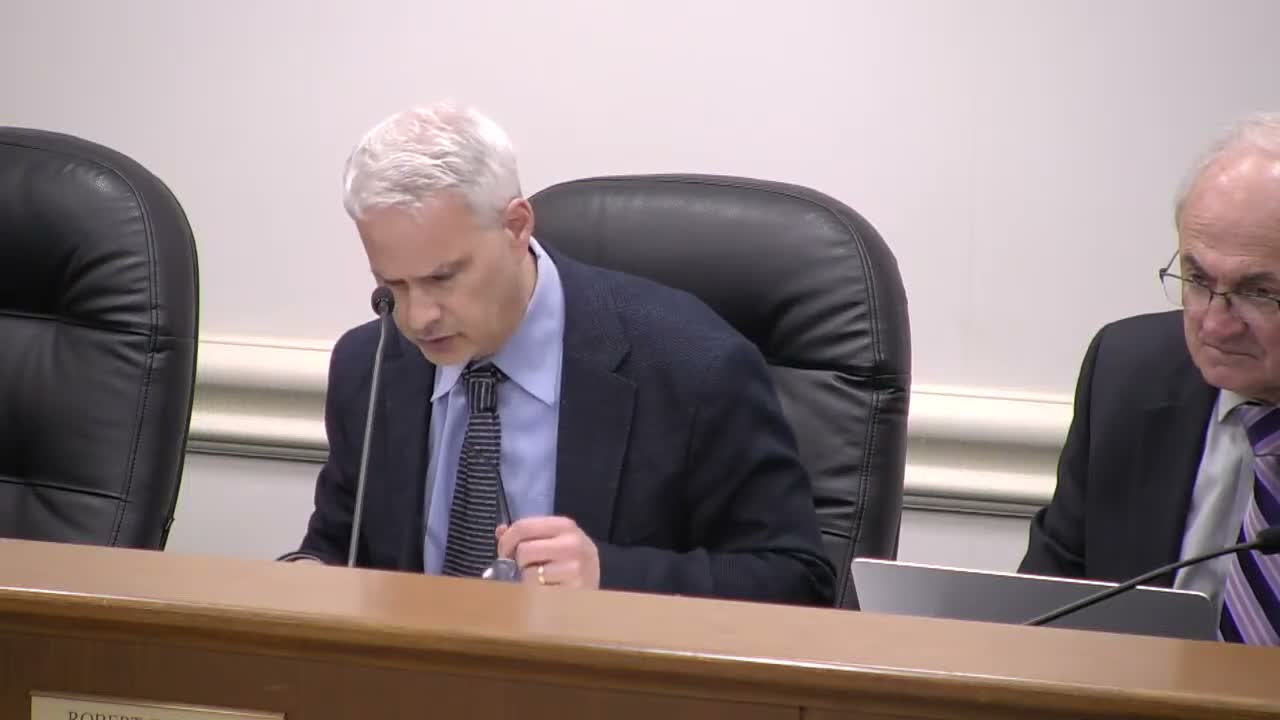
The Rye Brook Planning Board voted May 14 to adopt a second-amended involved-agency finding under the State Environmental Quality Review Act and to approve an amended planned unit development (PUD) site plan for 900 King Street, clearing the way for an age-restricted residential community to proceed with revisions to townhouse footprints and the site circulation.
The board’s planner told members the finding statement relies on the project’s DEIS and FEIS and concluded the second-amended, further‑reduced alternative minimizes environmental impacts “to the maximum extent practicable,” citing 6 NYCRR Part 617. Applicant counsel said the amendments do not change the number of units or bedrooms previously approved.
Why it matters: approving the involved-agency finding is a procedural step that allows the planning board to treat the village board’s SEQRA findings as the basis for project approval and to impose site-specific conditions. With the board’s vote the applicant can complete remaining reviews and begin building‑permit applications, subject to conditions imposed by the board and other village bodies.
Board members pressed the applicant and its engineers on an easement that benefits the local school district and traverses Arbor Drive and part of the project site. Board member Scott Mendelson said he had been surprised the school’s easement was not explicitly referenced in the resolution or site-plan materials. Applicant counsel and the engineer responded that the school district easement is shown on the plans and that the proposal does not intend to interfere with it.
“We’re gonna rerecord the easement,” the applicant’s attorney said, adding that the rerecorded document will make clear the pedestrian pathway is within the easement and that it is limited to pedestrian use, not motorized vehicles. The applicant also committed to repair portions of the existing path, to stripe and sign a crosswalk to Harkness Park, and to coordinate with the school district on the final easement language.
Applicant engineer Anthony Nestor described construction work that will occur near the path and confirmed temporary relocation or protection measures would be included in the construction management plan. The board required that the site be fenced to the building inspector’s satisfaction during construction, that pedestrian routes be secured and signed, and that the applicant coordinate with the school district prior to demolition and construction.
The board took a roll-call vote and adopted the finding statement and the amended site plan resolution. The planner’s summary and the resolution reiterate prior mitigation measures from the DEIS/FEIS and impose conditions as part of the approval.
Next steps: the applicant said it will return to the Architectural Review Board as required, finalize the construction management plan and complete the building‑permit application. The board flagged coordination with the building department and ARB as prerequisites to issuance of the building permit.
The board’s planner told members the finding statement relies on the project’s DEIS and FEIS and concluded the second-amended, further‑reduced alternative minimizes environmental impacts “to the maximum extent practicable,” citing 6 NYCRR Part 617. Applicant counsel said the amendments do not change the number of units or bedrooms previously approved.
Why it matters: approving the involved-agency finding is a procedural step that allows the planning board to treat the village board’s SEQRA findings as the basis for project approval and to impose site-specific conditions. With the board’s vote the applicant can complete remaining reviews and begin building‑permit applications, subject to conditions imposed by the board and other village bodies.
Board members pressed the applicant and its engineers on an easement that benefits the local school district and traverses Arbor Drive and part of the project site. Board member Scott Mendelson said he had been surprised the school’s easement was not explicitly referenced in the resolution or site-plan materials. Applicant counsel and the engineer responded that the school district easement is shown on the plans and that the proposal does not intend to interfere with it.
“We’re gonna rerecord the easement,” the applicant’s attorney said, adding that the rerecorded document will make clear the pedestrian pathway is within the easement and that it is limited to pedestrian use, not motorized vehicles. The applicant also committed to repair portions of the existing path, to stripe and sign a crosswalk to Harkness Park, and to coordinate with the school district on the final easement language.
Applicant engineer Anthony Nestor described construction work that will occur near the path and confirmed temporary relocation or protection measures would be included in the construction management plan. The board required that the site be fenced to the building inspector’s satisfaction during construction, that pedestrian routes be secured and signed, and that the applicant coordinate with the school district prior to demolition and construction.
The board took a roll-call vote and adopted the finding statement and the amended site plan resolution. The planner’s summary and the resolution reiterate prior mitigation measures from the DEIS/FEIS and impose conditions as part of the approval.
Next steps: the applicant said it will return to the Architectural Review Board as required, finalize the construction management plan and complete the building‑permit application. The board flagged coordination with the building department and ARB as prerequisites to issuance of the building permit.
View the Full Meeting & All Its Details
This article offers just a summary. Unlock complete video, transcripts, and insights as a Founder Member.
✓
Watch full, unedited meeting videos
✓
Search every word spoken in unlimited transcripts
✓
AI summaries & real-time alerts (all government levels)
✓
Permanent access to expanding government content
30-day money-back guarantee
