Senate Finance Committee hears bill to double bulk fuel loan cap; no vote taken
May 14, 2026 | 2026 Legislature Alaska, Alaska
This article was created by AI summarizing key points discussed. AI makes mistakes, so for full details and context, please refer to the video of the full meeting. Please report any errors so we can fix them. Report an error »
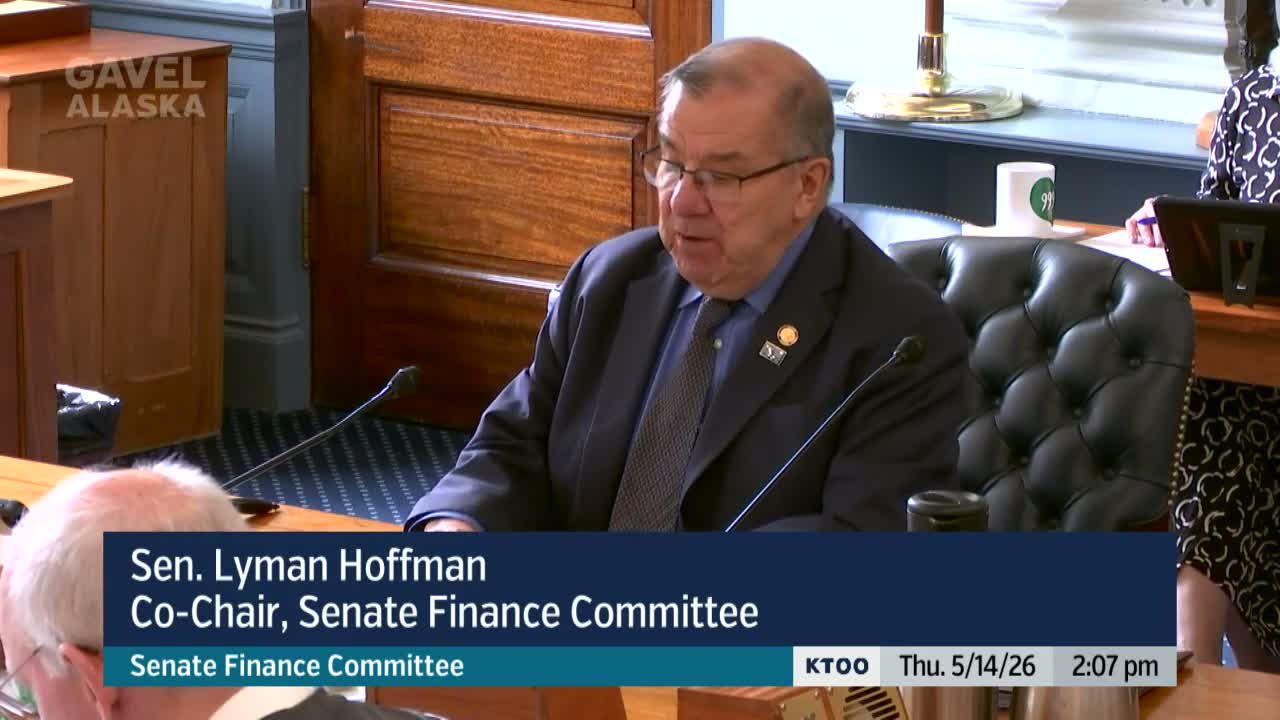
The Senate Finance Committee met May 14 in the Senate Finance Room at the State Capitol for the first hearing on House Bill 388, a proposal to raise the per-borrower limit in the state’s Bulk Fuel Loan Program from $750,000 to $1,500,000.
Paul LeBeau, staff to Representative Foster, told the committee, “House Bill 388 doubles the loan cap on the bulk fuel loan program,” and said the change would also eliminate the alternative minimum cap that limits pooled loans. LeBeau said the Alaska Municipal League supported measures to encourage pooling so communities can secure lower prices through larger-volume orders.
LeBeau explained the program’s mechanics: communities borrow in May, use the loan to purchase fuel that is barged in, sell that fuel during the year and use the proceeds to pay off the loan so the fund can revolve. He said the proposed cap increase responds to higher fuel prices and market changes and noted an amendment in House Finance would allow the program to borrow against unspecified state funds and repay them from loan proceeds.
Committee members pressed staff and agency witnesses for details. Senator Stedman asked when the $750,000 cap was originally set; staff estimated it was established about 16 years ago and said the committee would obtain the exact year at a later meeting. Senator Kiel asked about the fund’s balance and lending capacity; Sandra Mueller reported the bulk fuel fund balance is approximately $20,000,000, that the program typically lends between $18 million and $20 million a year, that the program has at times had as many as 78 borrowers (about 50 borrowers in recent years), and that the fund’s recent low balance was about $5 million.
On financing costs, Senator Kaufman asked about interest rates and the fund’s investments. Mueller said loan rates range from 0% to 4% depending on borrower credit history. She said the fund was previously invested with the Department of Revenue and in the past two years has been transferred to the Permanent Fund Corporation.
Senator Kiel reviewed two fiscal notes attached to HB 388: the Division of Community and Regional Affairs assigned a zero fiscal impact, and a second fiscal note prepared by the House Finance Committee’s fund transfers section also showed no net fiscal impact while noting a potential fund transfer to capitalize the revolving loan fund if needed. LeBeau added that a supplemental appropriation line on the fiscal note is indeterminate for FY26 because the necessary capitalization level is not yet known.
Senator Kaufman asked that interest-rate assumptions be made explicit in the fiscal notes because those assumptions affect capital costs; the chair asked staff to take that request under advisement. The committee did not take action on the bill at the hearing and the chair set HB 388 aside for future consideration.
The committee is scheduled to meet the following morning at 9 a.m.; no vote on HB 388 occurred at this session.
Paul LeBeau, staff to Representative Foster, told the committee, “House Bill 388 doubles the loan cap on the bulk fuel loan program,” and said the change would also eliminate the alternative minimum cap that limits pooled loans. LeBeau said the Alaska Municipal League supported measures to encourage pooling so communities can secure lower prices through larger-volume orders.
LeBeau explained the program’s mechanics: communities borrow in May, use the loan to purchase fuel that is barged in, sell that fuel during the year and use the proceeds to pay off the loan so the fund can revolve. He said the proposed cap increase responds to higher fuel prices and market changes and noted an amendment in House Finance would allow the program to borrow against unspecified state funds and repay them from loan proceeds.
Committee members pressed staff and agency witnesses for details. Senator Stedman asked when the $750,000 cap was originally set; staff estimated it was established about 16 years ago and said the committee would obtain the exact year at a later meeting. Senator Kiel asked about the fund’s balance and lending capacity; Sandra Mueller reported the bulk fuel fund balance is approximately $20,000,000, that the program typically lends between $18 million and $20 million a year, that the program has at times had as many as 78 borrowers (about 50 borrowers in recent years), and that the fund’s recent low balance was about $5 million.
On financing costs, Senator Kaufman asked about interest rates and the fund’s investments. Mueller said loan rates range from 0% to 4% depending on borrower credit history. She said the fund was previously invested with the Department of Revenue and in the past two years has been transferred to the Permanent Fund Corporation.
Senator Kiel reviewed two fiscal notes attached to HB 388: the Division of Community and Regional Affairs assigned a zero fiscal impact, and a second fiscal note prepared by the House Finance Committee’s fund transfers section also showed no net fiscal impact while noting a potential fund transfer to capitalize the revolving loan fund if needed. LeBeau added that a supplemental appropriation line on the fiscal note is indeterminate for FY26 because the necessary capitalization level is not yet known.
Senator Kaufman asked that interest-rate assumptions be made explicit in the fiscal notes because those assumptions affect capital costs; the chair asked staff to take that request under advisement. The committee did not take action on the bill at the hearing and the chair set HB 388 aside for future consideration.
The committee is scheduled to meet the following morning at 9 a.m.; no vote on HB 388 occurred at this session.
View the Full Meeting & All Its Details
This article offers just a summary. Unlock complete video, transcripts, and insights as a Founder Member.
✓
Watch full, unedited meeting videos
✓
Search every word spoken in unlimited transcripts
✓
AI summaries & real-time alerts (all government levels)
✓
Permanent access to expanding government content
30-day money-back guarantee
