Counterterrorism subcommittee advances seven bipartisan bills to reshape DHS intelligence office
May 15, 2026 | Homeland Security Committee Events, Homeland Security: House Committee, Standing Committees - House & Senate, Congressional Hearings Compilation, Legislative, Federal
This article was created by AI summarizing key points discussed. AI makes mistakes, so for full details and context, please refer to the video of the full meeting. Please report any errors so we can fix them. Report an error »
Ranking Member Magaziner, who sponsored the Department of Homeland Security Intelligence and Analysis Training Act, said the bill would require a standardized entry-level training curriculum that includes civil rights and civil liberties instruction. “A DHS Office of Inspector General report found that inadequate training of INA personnel contributed to DHS’s failure to disseminate threat information it possessed related to the 01/06/2021 US Capitol attack,” Magaziner said, urging adoption of the training measure.
The subcommittee considered bills that would: reorient INA’s mission toward field-deployed personnel and state, local, tribal and territorial (SLTT) partners (HR 7443); transfer the National Threat Evaluation and Reporting Program to an office with a state-and-local focus (HR 7764); realign the Engagement Liaison and Outreach Office to centralize outreach (HR 7574); require standardized INA training (HR 7436); modernize the National Terrorism Advisory System (HR 7448); provide vetting assistance for foreign visitors to state and local governments via the Safe Visits Act (HR 7427); and move the Special Events Program into the Office of Situational Awareness (HR 8142).
Rep. Evans of Colorado, sponsor or cosponsor of several measures, described the practical aims of the package: improving information flows to local law enforcement, centralizing event and outreach functions, and ensuring federal intelligence products are tailored to frontline operational needs. He said the National Threat Evaluation and Reporting Program and the Engagement Liaison and Outreach Office both serve roles that would be better aligned under offices focused on state and local partnerships or situational awareness.
Members repeatedly framed the bills as bipartisan responses to evolving threats and the upcoming calendar of major events. Rep. Poe of New Jersey, sponsor of the NTAS modernization bill, urged action so that alerts and bulletins reach the public, law enforcement and private-sector partners in a timely way ahead of large gatherings such as World Cup matches hosted in parts of the United States.
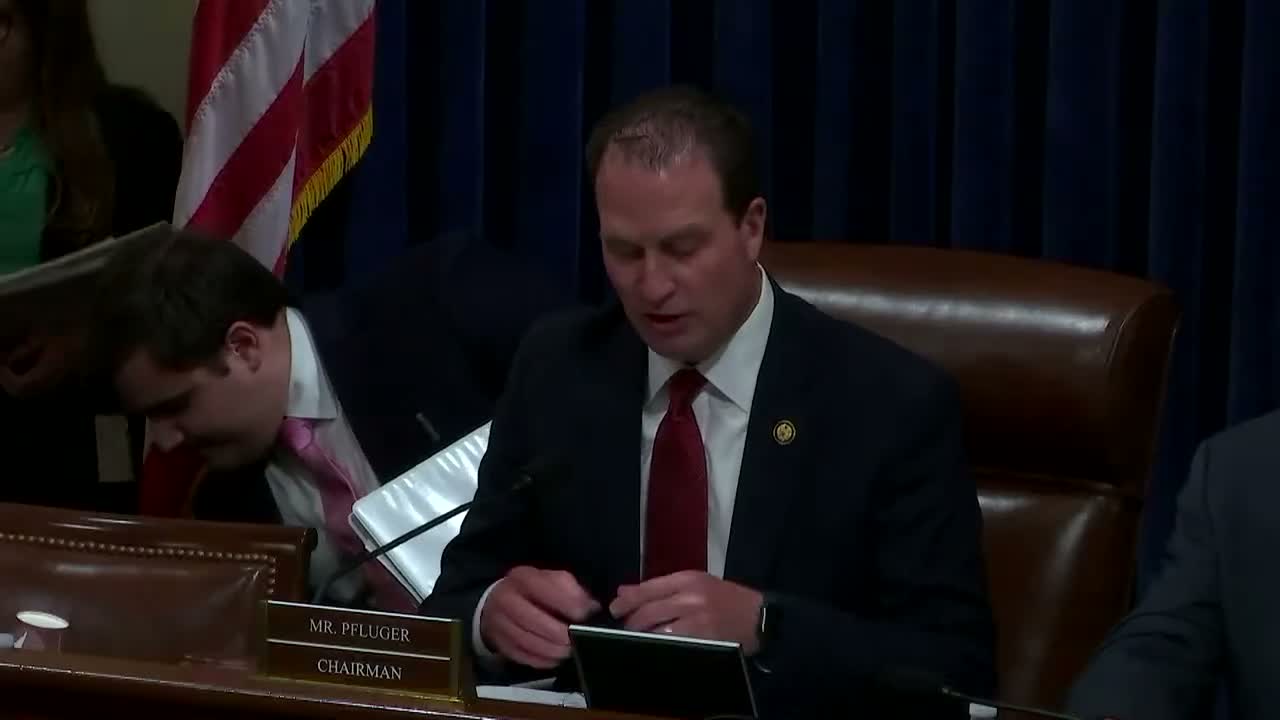
Each bill was presented, discussed briefly, and—when no amendments were offered—reported to the full committee with a favorable recommendation by voice vote. The clerk formally designated each bill when called, and the chair directed staff to make technical or conforming changes to reflect the committee’s actions.
The subcommittee did not record roll-call tallies in the hearing transcript; each measure was advanced by the chair’s voice votes with the chair announcing “the ayes have it.” The subcommittee authorized two additional calendar days for members to file supplemental views with the clerk. The committee adjourned after brief closing remarks from the ranking member and the chair.
What’s next: All seven measures were reported to the full committee and are expected to proceed through the House committee process; the transcript does not specify dates for full committee consideration.
Don't Miss a Word: See the Full Meeting!
Go beyond summaries. Unlock every video, transcript, and key insight with a Founder Membership.
30-day money-back guarantee
