Upper Dublin policy committee advances AI policy to second reading after adding annual review and age-appropriateness language
May 14, 2026 | Upper Dublin SD, School Districts, Pennsylvania
This article was created by AI summarizing key points discussed. AI makes mistakes, so for full details and context, please refer to the video of the full meeting. Please report any errors so we can fix them. Report an error »
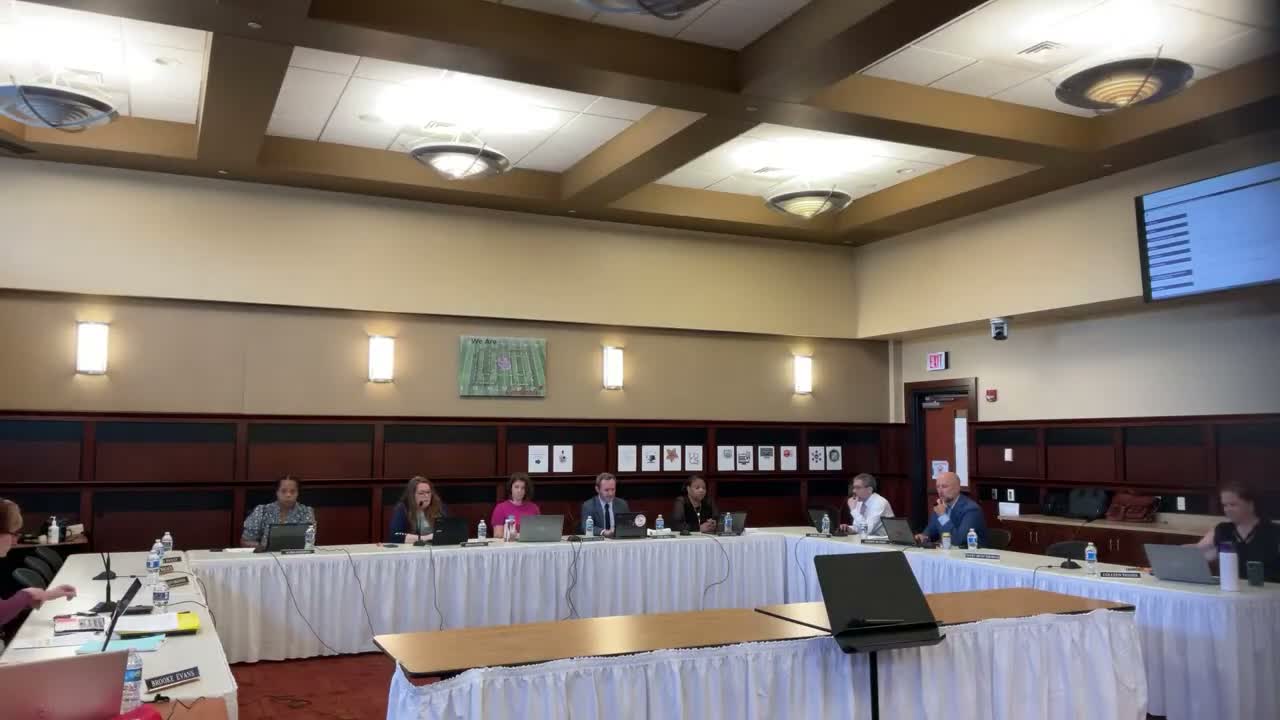
The Upper Dublin School District policy committee voted on May 2026 to advance a proposed AI policy to second reading after weeks of review and discussion about implementation details.
Miss Evans, chair of the policy committee, opened the meeting by framing the central decision: whether to send the draft policy forward as a second reading at the May legislative meeting or to refile it for another first reading so more substantive edits could be made. Dr. Smith, the district superintendent, told the committee the administration had drafted an administrative regulation (AR) to accompany the policy that includes a tool-request form, evaluation rubric, and guidance on professional development and citation practices.
The committee adopted several clarifying additions to the draft policy during discussion. Dr. Smith said he revised section 4.6 so "the board will annually review this policy," and proposed language directing administration to provide an annual update to the Education Committee as well as a direction to "consider developmental and age appropriateness when evaluating AI tools." Those changes were framed by multiple board members as non-substantive policy housekeeping intended to ensure regular oversight while leaving operational vetting to the AR.
Board members and administrators emphasized the distinction between policy and AR. Mr. Sirota and others said a single policy governing AI with two ARs — one for student-facing uses and one for non-student-facing uses — would let the board set broad guardrails while the administration handles the more technical, rapidly changing details. "The AR does and will cover a lot of what we were concerned about," Dr. Smith said, describing the AR as the place to specify vetting criteria and the administrative workflow.
Technical implementation and timing were central to the discussion. Ms. Yenser, the district’s director of technology, said she and instructional technology staff are building an inventory of current applications and identifying which include AI components; that inventory will support the vetting process, configuration controls and content-filter reconfiguration. Administration recommended aiming for the start of the next school year as a realistic target to implement approved lists and configuration changes rather than an immediate systemwide lockdown.
The committee also pressed administrators on professional development. Dr. Smith said Teaching and Learning is developing a multiyear plan and envisions required, role-appropriate PD with staff signatures acknowledging training on ethical and responsible AI use.
After discussion and suggested edits, the chair polled the committee and recorded four members in favor of moving the policy forward to second reading next week. "We accomplished our mission," Miss Evans said after the poll. The committee asked administration to continue developing AR language, produce the application/vetting rubric and inventory, and return with implementation recommendations.
Public participation that followed reinforced both support for guardrails and concern about student-facing uses. Speakers urged the board to prioritize age-appropriate safeguards and to make the district’s default an empty "approved" list until tools are vetted; administrators reiterated that the draft policy already specifies that only district-endorsed generative AI tools may be used on district devices and that teachers may further limit uses for specific assignments.
Next steps: the item will appear for second reading at the upcoming legislative meeting. Administration said it will continue work on the ARs, the tool inventory and professional development so the district can publish an endorsed tool list and configuration plan in time for the next school year.
Miss Evans, chair of the policy committee, opened the meeting by framing the central decision: whether to send the draft policy forward as a second reading at the May legislative meeting or to refile it for another first reading so more substantive edits could be made. Dr. Smith, the district superintendent, told the committee the administration had drafted an administrative regulation (AR) to accompany the policy that includes a tool-request form, evaluation rubric, and guidance on professional development and citation practices.
The committee adopted several clarifying additions to the draft policy during discussion. Dr. Smith said he revised section 4.6 so "the board will annually review this policy," and proposed language directing administration to provide an annual update to the Education Committee as well as a direction to "consider developmental and age appropriateness when evaluating AI tools." Those changes were framed by multiple board members as non-substantive policy housekeeping intended to ensure regular oversight while leaving operational vetting to the AR.
Board members and administrators emphasized the distinction between policy and AR. Mr. Sirota and others said a single policy governing AI with two ARs — one for student-facing uses and one for non-student-facing uses — would let the board set broad guardrails while the administration handles the more technical, rapidly changing details. "The AR does and will cover a lot of what we were concerned about," Dr. Smith said, describing the AR as the place to specify vetting criteria and the administrative workflow.
Technical implementation and timing were central to the discussion. Ms. Yenser, the district’s director of technology, said she and instructional technology staff are building an inventory of current applications and identifying which include AI components; that inventory will support the vetting process, configuration controls and content-filter reconfiguration. Administration recommended aiming for the start of the next school year as a realistic target to implement approved lists and configuration changes rather than an immediate systemwide lockdown.
The committee also pressed administrators on professional development. Dr. Smith said Teaching and Learning is developing a multiyear plan and envisions required, role-appropriate PD with staff signatures acknowledging training on ethical and responsible AI use.
After discussion and suggested edits, the chair polled the committee and recorded four members in favor of moving the policy forward to second reading next week. "We accomplished our mission," Miss Evans said after the poll. The committee asked administration to continue developing AR language, produce the application/vetting rubric and inventory, and return with implementation recommendations.
Public participation that followed reinforced both support for guardrails and concern about student-facing uses. Speakers urged the board to prioritize age-appropriate safeguards and to make the district’s default an empty "approved" list until tools are vetted; administrators reiterated that the draft policy already specifies that only district-endorsed generative AI tools may be used on district devices and that teachers may further limit uses for specific assignments.
Next steps: the item will appear for second reading at the upcoming legislative meeting. Administration said it will continue work on the ARs, the tool inventory and professional development so the district can publish an endorsed tool list and configuration plan in time for the next school year.
View the Full Meeting & All Its Details
This article offers just a summary. Unlock complete video, transcripts, and insights as a Founder Member.
✓
Watch full, unedited meeting videos
✓
Search every word spoken in unlimited transcripts
✓
AI summaries & real-time alerts (all government levels)
✓
Permanent access to expanding government content
30-day money-back guarantee
