Parents and educators urge Upper Dublin to limit student-facing AI, cite learning and mental-health concerns
May 14, 2026 | Upper Dublin SD, School Districts, Pennsylvania
This article was created by AI summarizing key points discussed. AI makes mistakes, so for full details and context, please refer to the video of the full meeting. Please report any errors so we can fix them. Report an error »
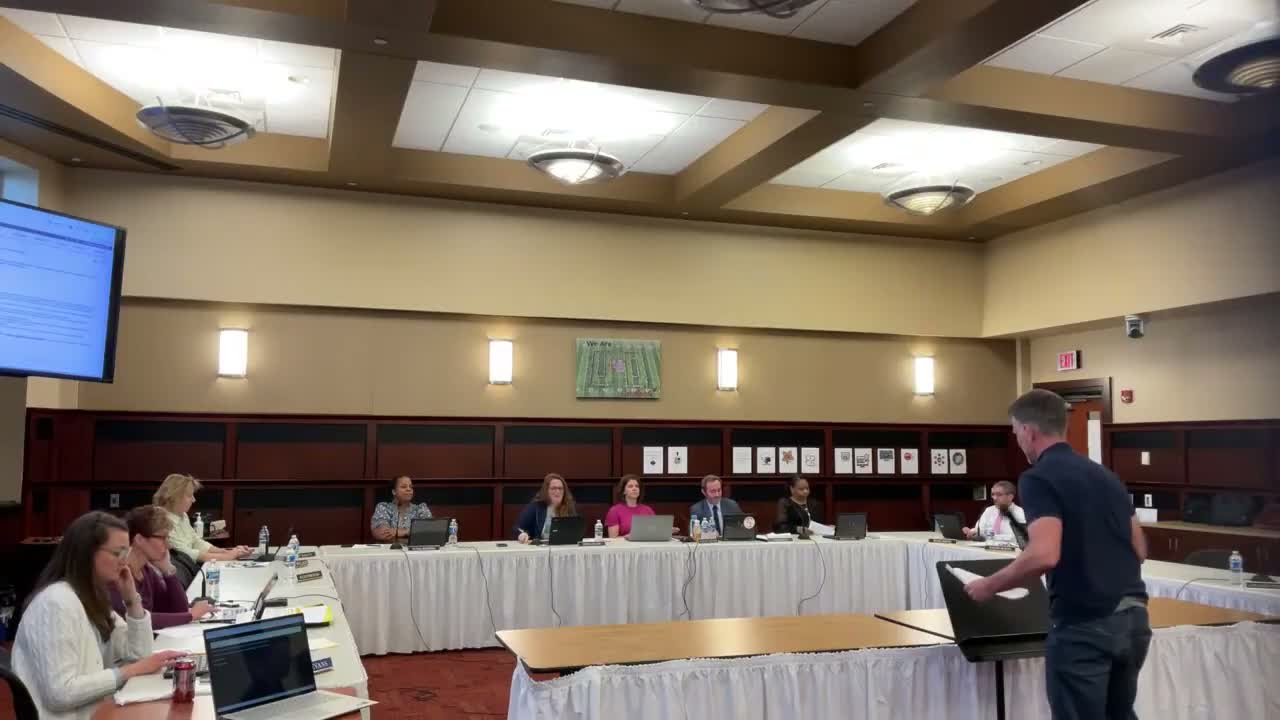
Multiple public commenters at the Upper Dublin policy committee meeting urged the district to take a cautious approach to student-facing generative AI and to bake developmental evidence into the approval process.
Keith McConnell, a parent, educator and member of a community AI working group, told the committee that AI policy should distinguish three categories: AI literacy (instruction about how AI works), AI-assisted problem solving (carefully structured examples) and AI tutoring. "A student who has developed those capacities is using AI as a tool," he said, adding that the capacity to ‘‘monitor your own thinking and evaluate an outside source’’ often does not mature until mid-to-late adolescence, making about age 16 a principled threshold for self-directed AI use.
Tim McConnell, another community participant, argued the committee’s draft relies on an older PSBA model and does not include an explicit policy-level "gate" requiring evidence of harms and benefits before authorizing generative AI for students. He told the committee, "The administrative regulation cannot require what the policy does not instruct," and urged the board to consider whether generative AI should be used in classrooms at all before delegating decisions to administration.
Other speakers stressed similar concerns. Rachel Shanock recommended that any embedded AI in vendor tools (for example, features added inside learning platforms) be vetted in the same way as new products and suggested the district maintain an empty approved list until submitted tools meet the rubric. Stephanie Feldman, who teaches writing, warned that while AI can speed production, it "lacks depth and substance" and may undermine the critical thinking and stamina teachers build in students. Teresa McNally pressed for grade-by-grade clarity and more transparent reporting about device and application usage, saying the AR as drafted felt "ambiguous and not robust or explicit enough" for parents of younger children.
Board members and administration acknowledged the public concern and pointed to two policy provisions (the draft’s 3.14 and 3.3.0.1) that already limit district use to "district-endorsed" generative AI tools and give teachers discretion to restrict use for specific assignments. Mr. Sirota said the intention is to keep the district-endorsed list empty until the administration’s vetting process is ready: "That’s the list I was talking about that I would hope would be empty until it’s really ready to not be empty."
Speakers on both sides asked for evidence-based review criteria: public commenters cited recent research and advisories on cognitive effects and mental health; administrators said AR criteria can and should include research on learning impact, privacy and equity. The committee agreed to incorporate age-appropriateness language into policy and to have administration consider cognitive development and research in AR review criteria.
The public comment session underscored community demand for explicit, transparent criteria and a cautious implementation timeline as the board advances the policy to second reading.
Keith McConnell, a parent, educator and member of a community AI working group, told the committee that AI policy should distinguish three categories: AI literacy (instruction about how AI works), AI-assisted problem solving (carefully structured examples) and AI tutoring. "A student who has developed those capacities is using AI as a tool," he said, adding that the capacity to ‘‘monitor your own thinking and evaluate an outside source’’ often does not mature until mid-to-late adolescence, making about age 16 a principled threshold for self-directed AI use.
Tim McConnell, another community participant, argued the committee’s draft relies on an older PSBA model and does not include an explicit policy-level "gate" requiring evidence of harms and benefits before authorizing generative AI for students. He told the committee, "The administrative regulation cannot require what the policy does not instruct," and urged the board to consider whether generative AI should be used in classrooms at all before delegating decisions to administration.
Other speakers stressed similar concerns. Rachel Shanock recommended that any embedded AI in vendor tools (for example, features added inside learning platforms) be vetted in the same way as new products and suggested the district maintain an empty approved list until submitted tools meet the rubric. Stephanie Feldman, who teaches writing, warned that while AI can speed production, it "lacks depth and substance" and may undermine the critical thinking and stamina teachers build in students. Teresa McNally pressed for grade-by-grade clarity and more transparent reporting about device and application usage, saying the AR as drafted felt "ambiguous and not robust or explicit enough" for parents of younger children.
Board members and administration acknowledged the public concern and pointed to two policy provisions (the draft’s 3.14 and 3.3.0.1) that already limit district use to "district-endorsed" generative AI tools and give teachers discretion to restrict use for specific assignments. Mr. Sirota said the intention is to keep the district-endorsed list empty until the administration’s vetting process is ready: "That’s the list I was talking about that I would hope would be empty until it’s really ready to not be empty."
Speakers on both sides asked for evidence-based review criteria: public commenters cited recent research and advisories on cognitive effects and mental health; administrators said AR criteria can and should include research on learning impact, privacy and equity. The committee agreed to incorporate age-appropriateness language into policy and to have administration consider cognitive development and research in AR review criteria.
The public comment session underscored community demand for explicit, transparent criteria and a cautious implementation timeline as the board advances the policy to second reading.
View the Full Meeting & All Its Details
This article offers just a summary. Unlock complete video, transcripts, and insights as a Founder Member.
✓
Watch full, unedited meeting videos
✓
Search every word spoken in unlimited transcripts
✓
AI summaries & real-time alerts (all government levels)
✓
Permanent access to expanding government content
30-day money-back guarantee
