CESA 10 presents facilities audit: board hears multi‑million repair estimates and options for middle/high school
May 14, 2026 | Merrill Area School District, School Districts, Wisconsin
This article was created by AI summarizing key points discussed. AI makes mistakes, so for full details and context, please refer to the video of the full meeting. Please report any errors so we can fix them. Report an error »
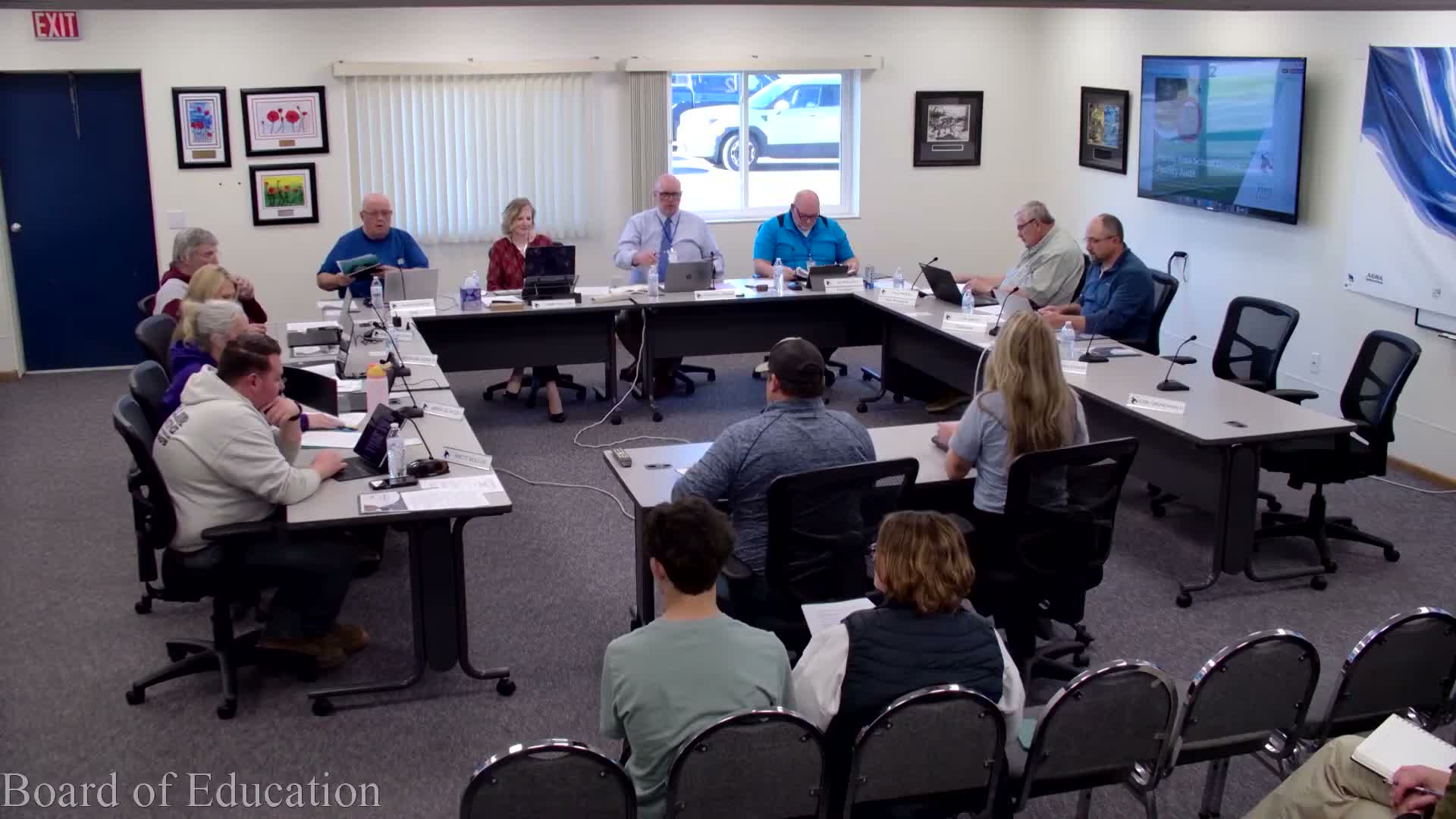
CESA 10 representatives presented a facilities audit to the Merrill Area Public Schools Board of Education that the presenters described as a comprehensive, impartial review of district facilities and recommended next steps for planning.
Lindsay Shriner, facility advisor for CESA 10, said a five-person team spent two full days on-site, took thousands of photos and produced a report grouping needs into 1–2 year, 3–5 year and 6–10 year Facility Improvement Measures. She said the audit is a planning tool to help the district prioritize work and does not itself fund projects.
“Your maintenance crew does a phenomenal job at taking care of this facility,” Shriner said, while warning board members they should expect “a little bit of sticker shock.” Lead project manager Brian Atchuck described the assessment process and emphasized that cost estimates are rough orders of magnitude intended for budgeting, not final construction bids.
The figures presented to the board: approximately $4,400,000 for 1–2 year needs, about $16.6 million for 3–5 year needs and roughly $1.729 million for 6–10 year items. Presenters added that the audit did not include environmental testing or architect/engineer fees and estimated an additional roughly $800,000 could be needed for environmental testing and abatement if hazardous materials are found.
Specific items called out in the report included corroded basement plumbing (cast iron pipe replacement), entrance-canopy and door finish repairs, asphalt maintenance to extend pavement life, restroom ventilation upgrades, window-sill repairs, terrazzo floor repairs and phased roof replacement. Presenters recommended phasing large projects and pairing complementary work (for example, combining lighting and ceiling tile replacement) to reduce overall cost and disruption.
Board members thanked CESA 10 for the audit’s detail and discussed next steps: placing the item on the HR Finance committee agenda, convening a special facilities meeting, and potentially commissioning a separate study on whether to reconfigure grade levels (for example, a 6–12 or 7–12 model) to better use building space. Members cautioned that such changes are long‑term community-level choices and would require broader planning and public engagement.
Next steps: staff suggested convening further committee review over the summer, considering a dedicated facilities study session, and returning to the board with options and cost analysis for prioritization.
Lindsay Shriner, facility advisor for CESA 10, said a five-person team spent two full days on-site, took thousands of photos and produced a report grouping needs into 1–2 year, 3–5 year and 6–10 year Facility Improvement Measures. She said the audit is a planning tool to help the district prioritize work and does not itself fund projects.
“Your maintenance crew does a phenomenal job at taking care of this facility,” Shriner said, while warning board members they should expect “a little bit of sticker shock.” Lead project manager Brian Atchuck described the assessment process and emphasized that cost estimates are rough orders of magnitude intended for budgeting, not final construction bids.
The figures presented to the board: approximately $4,400,000 for 1–2 year needs, about $16.6 million for 3–5 year needs and roughly $1.729 million for 6–10 year items. Presenters added that the audit did not include environmental testing or architect/engineer fees and estimated an additional roughly $800,000 could be needed for environmental testing and abatement if hazardous materials are found.
Specific items called out in the report included corroded basement plumbing (cast iron pipe replacement), entrance-canopy and door finish repairs, asphalt maintenance to extend pavement life, restroom ventilation upgrades, window-sill repairs, terrazzo floor repairs and phased roof replacement. Presenters recommended phasing large projects and pairing complementary work (for example, combining lighting and ceiling tile replacement) to reduce overall cost and disruption.
Board members thanked CESA 10 for the audit’s detail and discussed next steps: placing the item on the HR Finance committee agenda, convening a special facilities meeting, and potentially commissioning a separate study on whether to reconfigure grade levels (for example, a 6–12 or 7–12 model) to better use building space. Members cautioned that such changes are long‑term community-level choices and would require broader planning and public engagement.
Next steps: staff suggested convening further committee review over the summer, considering a dedicated facilities study session, and returning to the board with options and cost analysis for prioritization.
View the Full Meeting & All Its Details
This article offers just a summary. Unlock complete video, transcripts, and insights as a Founder Member.
✓
Watch full, unedited meeting videos
✓
Search every word spoken in unlimited transcripts
✓
AI summaries & real-time alerts (all government levels)
✓
Permanent access to expanding government content
30-day money-back guarantee
