Neighbors urge pause as Petaluma board approves $3.1M GMP for Mary Collins classroom project
May 14, 2026 | Petaluma City Elementary, School Districts, California
This article was created by AI summarizing key points discussed. AI makes mistakes, so for full details and context, please refer to the video of the full meeting. Please report any errors so we can fix them. Report an error »
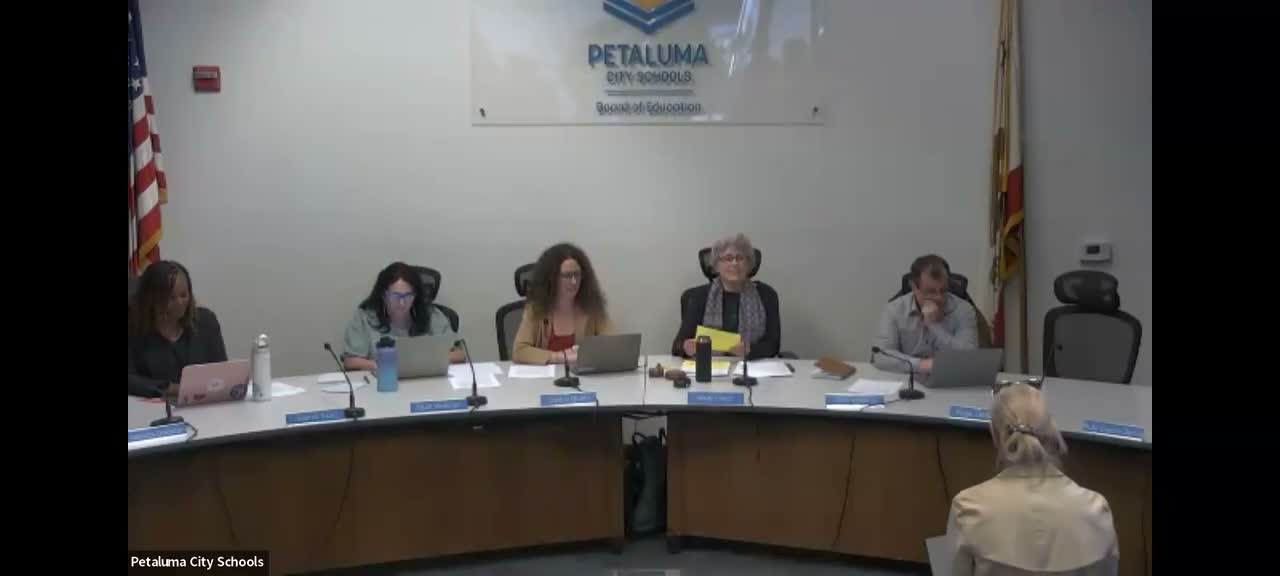
Petaluma — The Petaluma City Schools Board of Education voted May 12 to approve a guaranteed maximum price (GMP) of approximately $3,100,000 for the first increment of the Mary Collins Cherry Valley classroom building while dozens of neighbors and tree advocates urged the board to pause the project and review tree‑protection and environmental analyses.
Why it matters: The project requires removal of trees and vegetation in the area where the new two‑story classroom building will sit, and speakers said the district’s outreach and documentation left the neighborhood feeling excluded. Speakers pressed the board for an arborist report, asked whether the district had completed the environmental review required under California Environmental Quality Act (CEQA), and emphasized long‑term climate and shade benefits of mature trees.
Public testimony and community claims: During the public comment period, Taryn Obeyed, a member of Petaluma’s Tree Advisory Committee, urged the district to treat trees “as visible climate resilience infrastructure” and invited the district to coordinate with the committee on planning and mitigation. “Petaluma’s tree canopy currently covers just 13% of our city. Our goal is 30%,” Obeyed said.
Neighbors described surprise and frustration at how designs reached their current stage. Joy Rankin, who said she can see Cherry Valley Park from her home, said neighbors were not informed in time and asked the board to pause the project so the neighborhood and the tree committee could review plans: “We were deceived and purposely left out of the loop,” Rankin said, citing concerns that large native live oaks and sycamores would be removed and that an environmental review was not completed.
District response and staff clarifications: District staff and the bond team told the board that the figure of 29 trees includes stumps, shrubs and previously cut stumps, and that the largest front trees would be protected. A district representative said the area slated for removal is where the building must be placed and that additional trees and landscaping will be incorporated into the final design. Staff also said the project previously completed community meetings and CEQA paperwork; no formal challenge to the district’s CEQA determination had been filed during the public review window.
The vote and next steps: Trustees moved and seconded amendments and a GMP resolution tied to DSA increment 1, which covers site work and early procurement. The board approved the GMP and the related GMP authorizations and instructed staff to continue design and DSA submittals. Staff said final GMP amendments for later increments will return to the board once DSA approvals are received.
What’s unresolved: Commenters repeatedly asked for an arborist report and fuller notice to neighbors; the district said it would distribute renderings, a written project update and continue community outreach. The board did not rescind the GMP or pause the project during the meeting; neighbors said they will pursue additional public records and follow up with the board.
The board is scheduled to continue bond implementation decisions in future meetings; construction phasing and final landscaping plans will be shared as the project proceeds.
Why it matters: The project requires removal of trees and vegetation in the area where the new two‑story classroom building will sit, and speakers said the district’s outreach and documentation left the neighborhood feeling excluded. Speakers pressed the board for an arborist report, asked whether the district had completed the environmental review required under California Environmental Quality Act (CEQA), and emphasized long‑term climate and shade benefits of mature trees.
Public testimony and community claims: During the public comment period, Taryn Obeyed, a member of Petaluma’s Tree Advisory Committee, urged the district to treat trees “as visible climate resilience infrastructure” and invited the district to coordinate with the committee on planning and mitigation. “Petaluma’s tree canopy currently covers just 13% of our city. Our goal is 30%,” Obeyed said.
Neighbors described surprise and frustration at how designs reached their current stage. Joy Rankin, who said she can see Cherry Valley Park from her home, said neighbors were not informed in time and asked the board to pause the project so the neighborhood and the tree committee could review plans: “We were deceived and purposely left out of the loop,” Rankin said, citing concerns that large native live oaks and sycamores would be removed and that an environmental review was not completed.
District response and staff clarifications: District staff and the bond team told the board that the figure of 29 trees includes stumps, shrubs and previously cut stumps, and that the largest front trees would be protected. A district representative said the area slated for removal is where the building must be placed and that additional trees and landscaping will be incorporated into the final design. Staff also said the project previously completed community meetings and CEQA paperwork; no formal challenge to the district’s CEQA determination had been filed during the public review window.
The vote and next steps: Trustees moved and seconded amendments and a GMP resolution tied to DSA increment 1, which covers site work and early procurement. The board approved the GMP and the related GMP authorizations and instructed staff to continue design and DSA submittals. Staff said final GMP amendments for later increments will return to the board once DSA approvals are received.
What’s unresolved: Commenters repeatedly asked for an arborist report and fuller notice to neighbors; the district said it would distribute renderings, a written project update and continue community outreach. The board did not rescind the GMP or pause the project during the meeting; neighbors said they will pursue additional public records and follow up with the board.
The board is scheduled to continue bond implementation decisions in future meetings; construction phasing and final landscaping plans will be shared as the project proceeds.
View the Full Meeting & All Its Details
This article offers just a summary. Unlock complete video, transcripts, and insights as a Founder Member.
✓
Watch full, unedited meeting videos
✓
Search every word spoken in unlimited transcripts
✓
AI summaries & real-time alerts (all government levels)
✓
Permanent access to expanding government content
30-day money-back guarantee
