State analysts present wildfire model showing rising suppression costs even as acres burned dip
May 14, 2026 | 2026 Legislature MT, Montana
This article was created by AI summarizing key points discussed. AI makes mistakes, so for full details and context, please refer to the video of the full meeting. Please report any errors so we can fix them. Report an error »
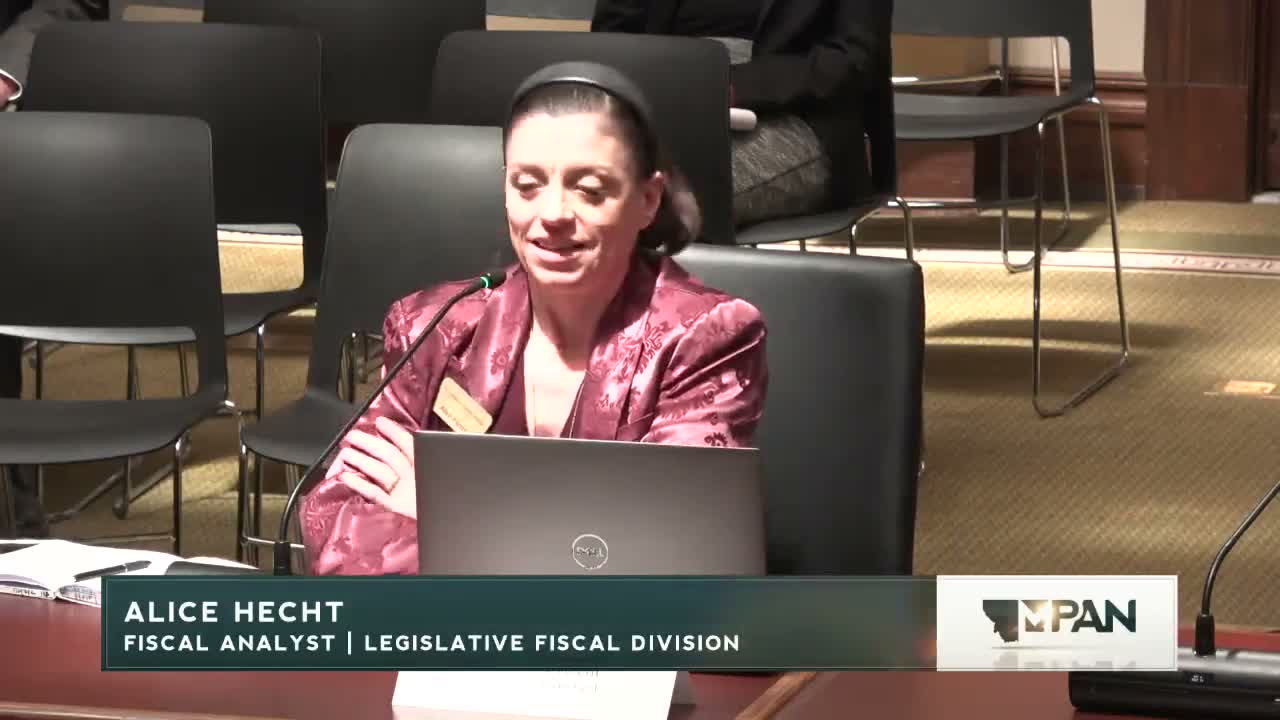
Legislative Fiscal Division analysts presented an updated wildfire model that overlays parcel‑level wildfire hazard potential with suppression cost data and mitigation project footprints. LFD’s Alice Hecht and staff summarized preliminary findings intended to inform budget pressures on the state fire suppression account.
Key observations from the model: over the last 20 years federal and state suppression spending totals roughly $2.3 billion (about three quarters federal and one quarter state); inflation‑adjusted suppression cost per acre has risen, driven by expensive incidents; acres burned in Montana show a slight downward trend since 2000 in the LFD dataset, but the most costly fires remain concentrated in very‑high hazard potential areas; mitigation projects to date are relatively small in acreage but often placed strategically at fire edges; and, in the past five years, more structures were lost in grass and shrub fires than in timber fires, reflecting fast‑moving incidents in eastern Montana.
LFD emphasized limitations and next steps: continued refinement, external validation with the U.S. Forest Service and university fire scientists, and efforts to test whether targeted mitigation projects measurably reduce suppression costs. Lawmakers pressed staff on how reimbursement flows (federal reimbursements and FEMA grants) affect the state suppression fund’s balance and asked for additional fiscal detail.
Key observations from the model: over the last 20 years federal and state suppression spending totals roughly $2.3 billion (about three quarters federal and one quarter state); inflation‑adjusted suppression cost per acre has risen, driven by expensive incidents; acres burned in Montana show a slight downward trend since 2000 in the LFD dataset, but the most costly fires remain concentrated in very‑high hazard potential areas; mitigation projects to date are relatively small in acreage but often placed strategically at fire edges; and, in the past five years, more structures were lost in grass and shrub fires than in timber fires, reflecting fast‑moving incidents in eastern Montana.
LFD emphasized limitations and next steps: continued refinement, external validation with the U.S. Forest Service and university fire scientists, and efforts to test whether targeted mitigation projects measurably reduce suppression costs. Lawmakers pressed staff on how reimbursement flows (federal reimbursements and FEMA grants) affect the state suppression fund’s balance and asked for additional fiscal detail.
View the Full Meeting & All Its Details
This article offers just a summary. Unlock complete video, transcripts, and insights as a Founder Member.
✓
Watch full, unedited meeting videos
✓
Search every word spoken in unlimited transcripts
✓
AI summaries & real-time alerts (all government levels)
✓
Permanent access to expanding government content
30-day money-back guarantee
