Pastor urges Meigs County to fix grant lease language after 3½ years of work
May 15, 2026 | Meigs County, Tennessee
This article was created by AI summarizing key points discussed. AI makes mistakes, so for full details and context, please refer to the video of the full meeting. Please report any errors so we can fix them. Report an error »
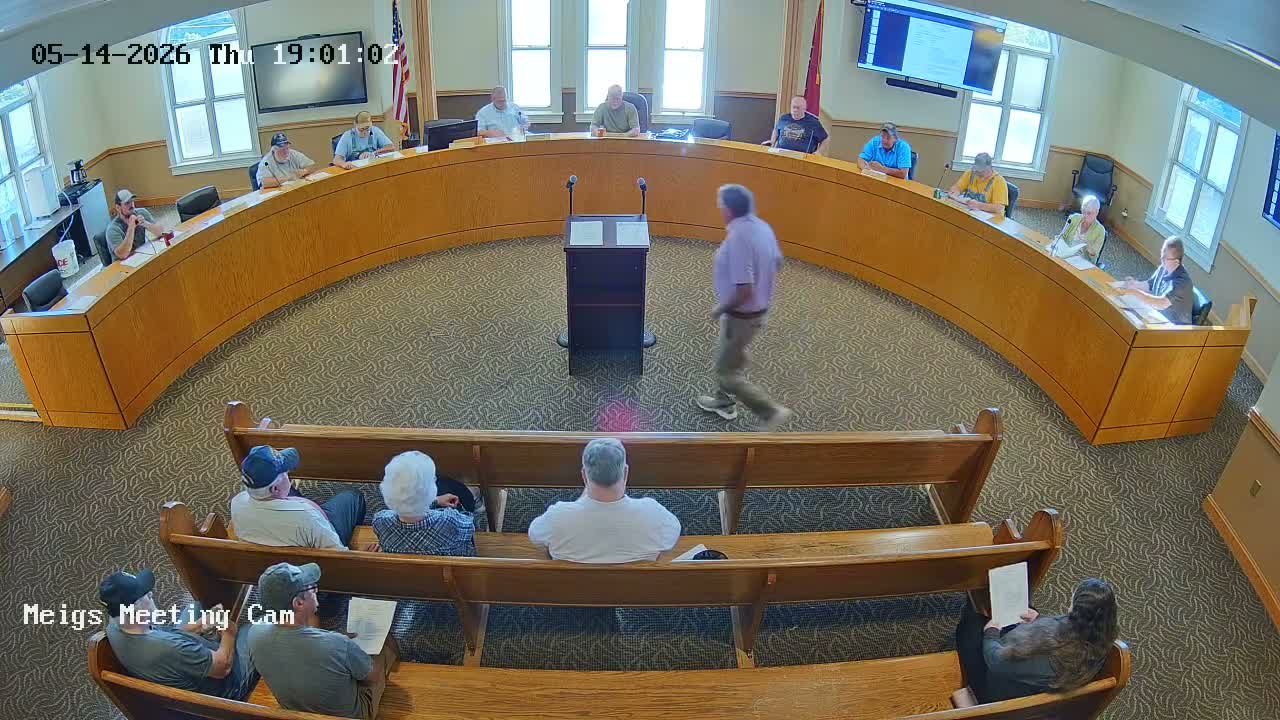
A pastor from the Gathering Church in Washington told the Meigs County Commission that his group has spent 3½ years carrying out a state-funded project and is now blocked from reimbursement because the state’s lease requires the equipment be placed under a county-controlled lease starting on the date the lease is signed.
“We've been working on the grant we have there for last 3 and a half years,” the pastor said, adding that the project—intended to supply a van and emergency-response equipment—has been ready for distribution but that the state will not reimburse the church unless the county signs the lease. He said he understood the original agreement should have started when the grant was approved and that the county’s paperwork appears to reset the start date.
The pastor said he was told the lease as drafted could run seven to 10 years from the date of signature and asked county staff whether a release date or other lien language could be added so the congregation’s prior 3½ years of work would be recognized. “If you put it on the lease agreement… it’s 7 years. That’s unacceptable for me,” he said.
County staff and a commissioner explained that the Southeast Development District issued the lease template and that the state typically sets the start date as the date the lessee signs the agreement. A county staff member said the 7-year period is tied to depreciation rules used by the state for equipment purchased with grant funds and that the state wants the lease to start on the signature date so depreciation schedules align with asset records.
The pastor said he asked his attorney to send the state a letter asking for an amendment or for the state to accept a June 30 processing date to avoid losing participation: “I asked our attorney to go ahead and send him a letter saying we can wait for June 30… if you want to participate in this grant.” The record did not show a formal county vote or directive; the statement reflected the pastor’s plan to seek an amendment.
What happened next: commissioners and staff did not vote on a change to the lease during the meeting. Staff noted the Southeast Development District controls the county’s lease template and said the county office would need to review the lease language and consult the county attorney. The county attorney’s role was discussed but no formal motion was recorded.
Why it matters: If the lease is interpreted to start on the signature date, equipment purchased now could remain encumbered under county/state terms for multiple additional years, affecting ownership and future use by the congregation. The pastor said timely processing by the state was a practical concern and that a May 15 processing window had been mentioned by state staff.
Next steps: The pastor said he intends to pursue a written amendment request through his attorney; county staff agreed to review the lease language and the county attorney’s office for options. The commission did not take formal action at the meeting.
“We've been working on the grant we have there for last 3 and a half years,” the pastor said, adding that the project—intended to supply a van and emergency-response equipment—has been ready for distribution but that the state will not reimburse the church unless the county signs the lease. He said he understood the original agreement should have started when the grant was approved and that the county’s paperwork appears to reset the start date.
The pastor said he was told the lease as drafted could run seven to 10 years from the date of signature and asked county staff whether a release date or other lien language could be added so the congregation’s prior 3½ years of work would be recognized. “If you put it on the lease agreement… it’s 7 years. That’s unacceptable for me,” he said.
County staff and a commissioner explained that the Southeast Development District issued the lease template and that the state typically sets the start date as the date the lessee signs the agreement. A county staff member said the 7-year period is tied to depreciation rules used by the state for equipment purchased with grant funds and that the state wants the lease to start on the signature date so depreciation schedules align with asset records.
The pastor said he asked his attorney to send the state a letter asking for an amendment or for the state to accept a June 30 processing date to avoid losing participation: “I asked our attorney to go ahead and send him a letter saying we can wait for June 30… if you want to participate in this grant.” The record did not show a formal county vote or directive; the statement reflected the pastor’s plan to seek an amendment.
What happened next: commissioners and staff did not vote on a change to the lease during the meeting. Staff noted the Southeast Development District controls the county’s lease template and said the county office would need to review the lease language and consult the county attorney. The county attorney’s role was discussed but no formal motion was recorded.
Why it matters: If the lease is interpreted to start on the signature date, equipment purchased now could remain encumbered under county/state terms for multiple additional years, affecting ownership and future use by the congregation. The pastor said timely processing by the state was a practical concern and that a May 15 processing window had been mentioned by state staff.
Next steps: The pastor said he intends to pursue a written amendment request through his attorney; county staff agreed to review the lease language and the county attorney’s office for options. The commission did not take formal action at the meeting.
Don't Miss a Word: See the Full Meeting!
Go beyond summaries. Unlock every video, transcript, and key insight with a Founder Membership.
✓
Get instant access to full meeting videos
✓
Search and clip any phrase from complete transcripts
✓
Receive AI-powered summaries & custom alerts
✓
Enjoy lifetime, unrestricted access to government data
30-day money-back guarantee
