House committee advances bill to create Human Services Modernization Fund, adds $15 million for OIG
May 14, 2026 | 2026 Legislature MN, Minnesota
This article was created by AI summarizing key points discussed. AI makes mistakes, so for full details and context, please refer to the video of the full meeting. Please report any errors so we can fix them. Report an error »
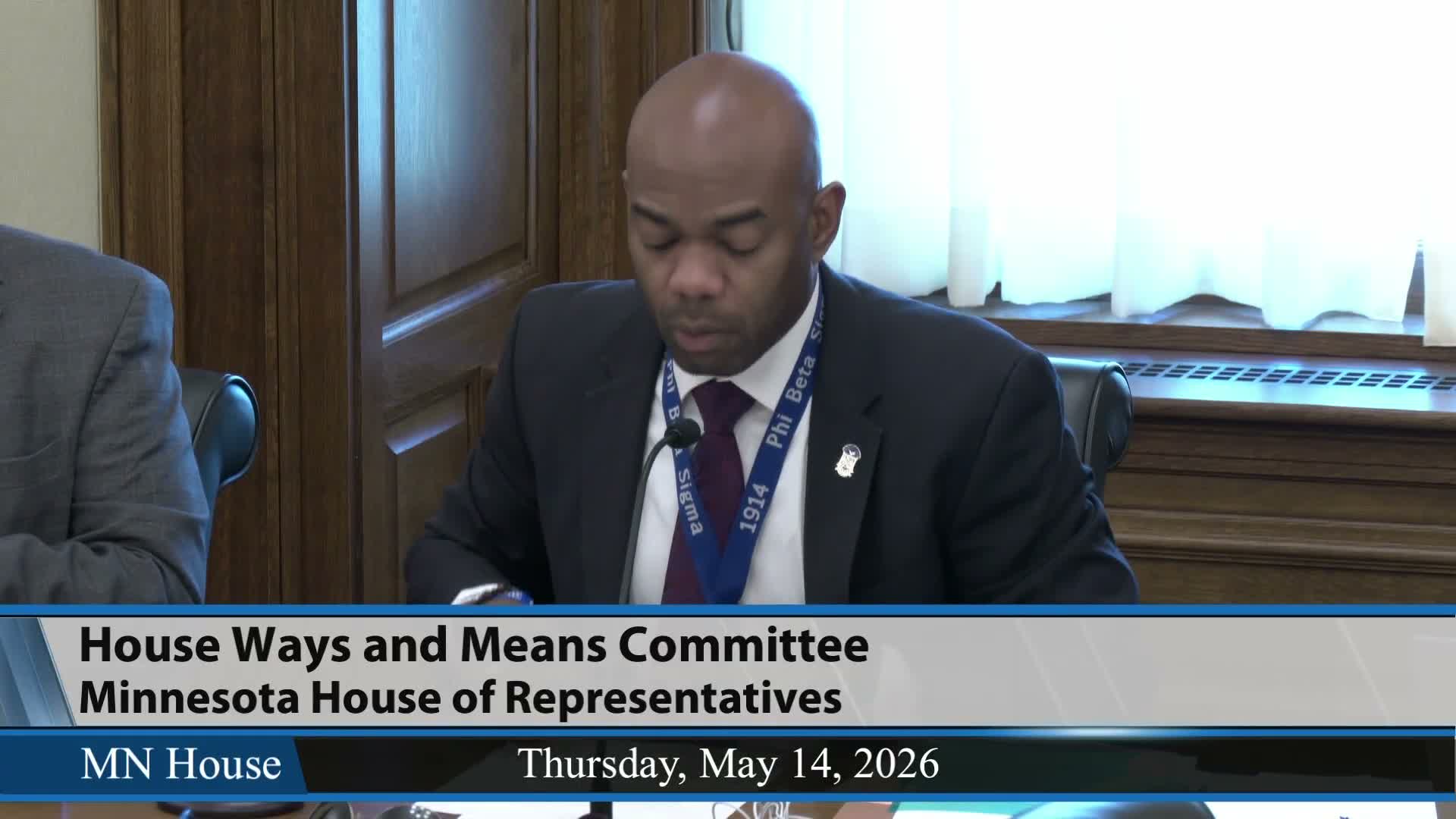
A Minnesota House committee on May advanced House File 4808, a bill that would create a Human Services Modernization Fund capped at $50,000,000, adopt an advisory structure that emphasizes county and tribal participation, and provide $15,000,000 for the Office of Inspector General’s technology needs.
The bill sponsor described the legislation as a multi‑year effort to replace antiquated systems and reduce burdens on county caseworkers who now rely on legacy "green screens." "The fund will have a $50,000,000 cap," the sponsor said, and money would flow through MNIT with advice from an interagency advisory council and a legislative commission to provide oversight and an annual report.
Why it matters: Committee members and county advocates said modernization is needed both to improve service delivery and to strengthen program integrity. The bill sets aside a $10,000,000 county‑focused grant pool distributed by MNIT, establishes a replenishment mechanism similar to a disaster relief replenishment to restore the fund up to the cap when statewide surpluses permit, and schedules base transfers of $8,500,000 in 2028 and $6,400,000 in 2029.
Matt Hilgart of the Association of Minnesota Counties, testifying on behalf of several county organizations, told the committee the legislation "has high short term impact" and urged prompt action so counties can begin work now. "We need to act now," he said, adding that the proposal combines near‑term steps and a long‑term vision with county and tribal consultation.
Members praised the bill’s collaborative approach and legislative oversight. One lawmaker urged auditing features be considered for future phases to increase transparency around the sizable appropriations. The sponsor also noted a $15,000,000 appropriation in the bill for the Office of Inspector General so the office can "hit the ground running" with needed technology.
Procedure and outcome: The committee adopted the D3 amendment by voice vote and then voted to recommend House File 4808, as amended, to be placed on the general register. The motion passed by voice vote with no recorded opposition. The committee then recessed to the call of the chair.
Next steps: Referral to the general register advances the bill procedurally; further floor action and any additional committee referrals will determine whether the bill becomes law.
The bill sponsor described the legislation as a multi‑year effort to replace antiquated systems and reduce burdens on county caseworkers who now rely on legacy "green screens." "The fund will have a $50,000,000 cap," the sponsor said, and money would flow through MNIT with advice from an interagency advisory council and a legislative commission to provide oversight and an annual report.
Why it matters: Committee members and county advocates said modernization is needed both to improve service delivery and to strengthen program integrity. The bill sets aside a $10,000,000 county‑focused grant pool distributed by MNIT, establishes a replenishment mechanism similar to a disaster relief replenishment to restore the fund up to the cap when statewide surpluses permit, and schedules base transfers of $8,500,000 in 2028 and $6,400,000 in 2029.
Matt Hilgart of the Association of Minnesota Counties, testifying on behalf of several county organizations, told the committee the legislation "has high short term impact" and urged prompt action so counties can begin work now. "We need to act now," he said, adding that the proposal combines near‑term steps and a long‑term vision with county and tribal consultation.
Members praised the bill’s collaborative approach and legislative oversight. One lawmaker urged auditing features be considered for future phases to increase transparency around the sizable appropriations. The sponsor also noted a $15,000,000 appropriation in the bill for the Office of Inspector General so the office can "hit the ground running" with needed technology.
Procedure and outcome: The committee adopted the D3 amendment by voice vote and then voted to recommend House File 4808, as amended, to be placed on the general register. The motion passed by voice vote with no recorded opposition. The committee then recessed to the call of the chair.
Next steps: Referral to the general register advances the bill procedurally; further floor action and any additional committee referrals will determine whether the bill becomes law.
Don't Miss a Word: See the Full Meeting!
Go beyond summaries. Unlock every video, transcript, and key insight with a Founder Membership.
✓
Get instant access to full meeting videos
✓
Search and clip any phrase from complete transcripts
✓
Receive AI-powered summaries & custom alerts
✓
Enjoy lifetime, unrestricted access to government data
30-day money-back guarantee
