Sweetwater County planners seek input on narrower short-term rental rules, propose growth-area limits and inspections
May 14, 2026 | Sweetwater County, Wyoming
This article was created by AI summarizing key points discussed. AI makes mistakes, so for full details and context, please refer to the video of the full meeting. Please report any errors so we can fix them. Report an error »
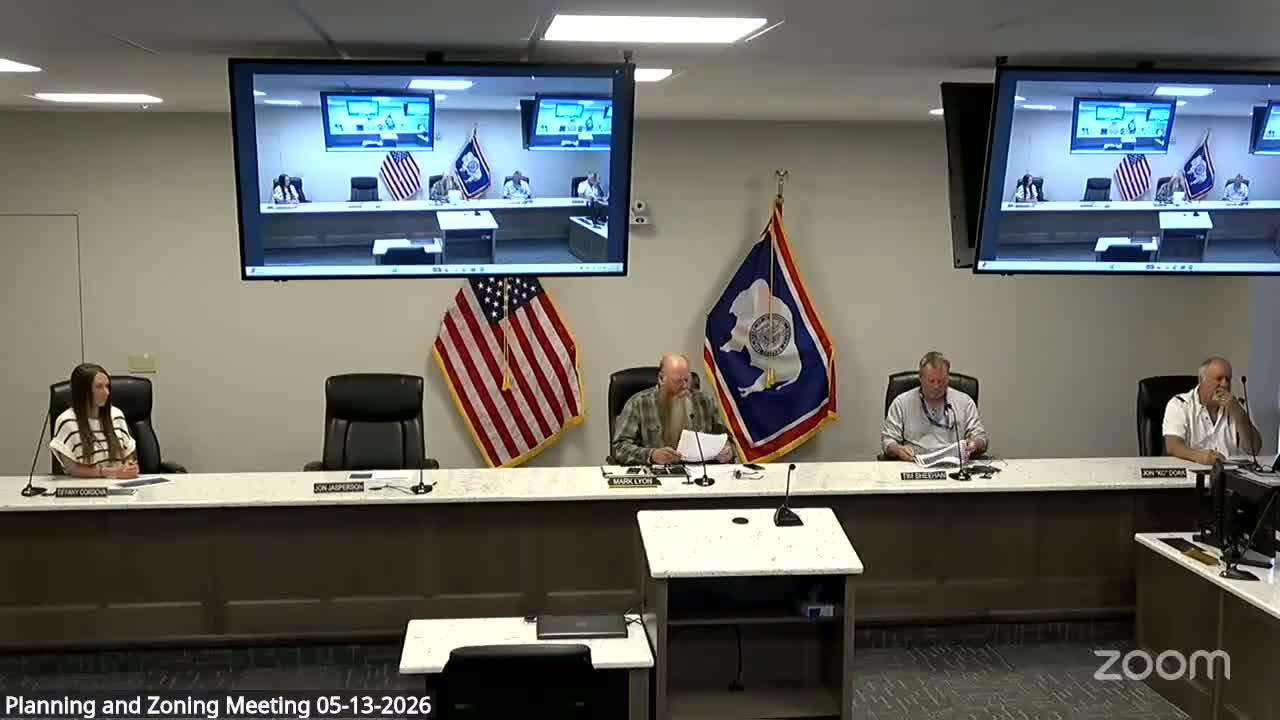
Planning staff for Sweetwater County presented revisions to proposed short-term rental regulations at a May 13 workshop and sought commissioner feedback on scope, permitting, enforcement and technical details.
Staff said the primary change narrows where short-term rentals would be permitted: "First, the short term rentals would only be permitted within the Growth Management area and the Farson Eden Fire District," staff said, citing infrastructure and emergency-response concerns that make more remote county areas harder to serve. Staff added the sheriff’s office had indicated an officer typically covers the Farson area and that allowing rentals there would not unduly burden response capability.
Key elements staff described included a required application, a 14-day public comment period with notice posted on the property and notice forms sent to adjacent owners, a safety check (fire alarms, exits, utilities) tied to permit approval, annual renewal with inspections, and the ability to suspend or revoke a permit after repeated complaints or failure to keep contact information current. Staff said a prior proposal requiring adjacent-owner consent had been removed as too restrictive, but neighbors would still have opportunity to raise concerns in hearings.
Commissioners and participants pressed staff on privacy and enforcement. One commissioner said owners should not be forced to "put a sign out there" that would reveal private business plans; another warned signs could mark vacant properties to vandals. Staff said the sign would be temporary (proposed 14 days) and is standard for zoning notice rather than a permanent posting.
Commissioners debated response times for a local property representative. Staff removed an initial one-hour requirement as too strict; commissioners discussed a three-hour response standard for county-notified nuisance complaints and possible revocation of the permit for failure to respond to county inquiries tied to law-enforcement or nuisance incidents.
Other technical points included removing a 1,000-foot school-proximity ban as too restrictive, switching from a per-block limit to a radius-based density control (research cited typical radii between 250 and 500 feet; staff suggested 500 feet to reduce density), applying minimum parking based on dwelling-unit requirements, and discussing maximum-vehicle limits tied to lot size. Staff also removed a ban on multifamily units hosting short-term rentals, saying multifamily occupants should have the same opportunity as single-family dwellings.
Commissioners suggested incentives for compliant owners—longer renewal intervals or reduced fees—and staff said they would explore options such as extended renewal intervals (for example, moving from annual to three years for owners with no complaints). Staff said they will revise the draft language and return to the commission for further review.
Next steps: staff will adjust the draft short-term rental provisions (posting, permit fee structure, response-time and renewal details, radius and parking language) and bring the updated draft back through public hearings as needed.
Staff said the primary change narrows where short-term rentals would be permitted: "First, the short term rentals would only be permitted within the Growth Management area and the Farson Eden Fire District," staff said, citing infrastructure and emergency-response concerns that make more remote county areas harder to serve. Staff added the sheriff’s office had indicated an officer typically covers the Farson area and that allowing rentals there would not unduly burden response capability.
Key elements staff described included a required application, a 14-day public comment period with notice posted on the property and notice forms sent to adjacent owners, a safety check (fire alarms, exits, utilities) tied to permit approval, annual renewal with inspections, and the ability to suspend or revoke a permit after repeated complaints or failure to keep contact information current. Staff said a prior proposal requiring adjacent-owner consent had been removed as too restrictive, but neighbors would still have opportunity to raise concerns in hearings.
Commissioners and participants pressed staff on privacy and enforcement. One commissioner said owners should not be forced to "put a sign out there" that would reveal private business plans; another warned signs could mark vacant properties to vandals. Staff said the sign would be temporary (proposed 14 days) and is standard for zoning notice rather than a permanent posting.
Commissioners debated response times for a local property representative. Staff removed an initial one-hour requirement as too strict; commissioners discussed a three-hour response standard for county-notified nuisance complaints and possible revocation of the permit for failure to respond to county inquiries tied to law-enforcement or nuisance incidents.
Other technical points included removing a 1,000-foot school-proximity ban as too restrictive, switching from a per-block limit to a radius-based density control (research cited typical radii between 250 and 500 feet; staff suggested 500 feet to reduce density), applying minimum parking based on dwelling-unit requirements, and discussing maximum-vehicle limits tied to lot size. Staff also removed a ban on multifamily units hosting short-term rentals, saying multifamily occupants should have the same opportunity as single-family dwellings.
Commissioners suggested incentives for compliant owners—longer renewal intervals or reduced fees—and staff said they would explore options such as extended renewal intervals (for example, moving from annual to three years for owners with no complaints). Staff said they will revise the draft language and return to the commission for further review.
Next steps: staff will adjust the draft short-term rental provisions (posting, permit fee structure, response-time and renewal details, radius and parking language) and bring the updated draft back through public hearings as needed.
View the Full Meeting & All Its Details
This article offers just a summary. Unlock complete video, transcripts, and insights as a Founder Member.
✓
Watch full, unedited meeting videos
✓
Search every word spoken in unlimited transcripts
✓
AI summaries & real-time alerts (all government levels)
✓
Permanent access to expanding government content
30-day money-back guarantee
