Stratham board votes to use bond contingency for windows, flooring and skylight at SMS
May 14, 2026 | Stratham School District, School Districts, New Hampshire
This article was created by AI summarizing key points discussed. AI makes mistakes, so for full details and context, please refer to the video of the full meeting. Please report any errors so we can fix them. Report an error »
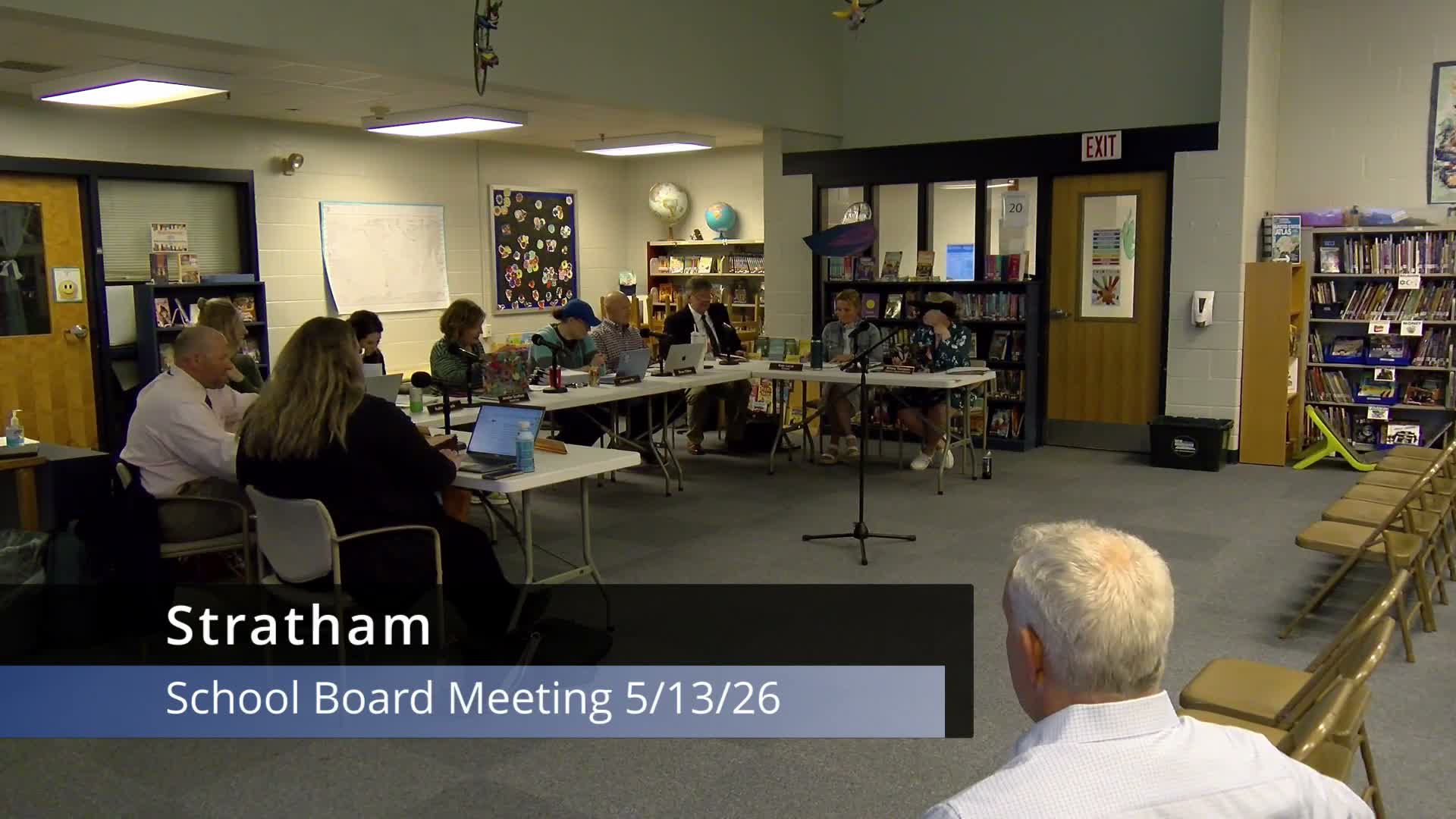
The Stratham School Board voted unanimously to move forward with three renovation projects at Stratham Memorial School — replacement windows, new classroom flooring and a skylight — using remaining contingency from the district’s recent bond.
Board members approved the action after hearing legal guidance from attorney Gordon Graham and recommendations from the owner’s project manager, Mark Joben. Graham told the board that leftover bond proceeds may be spent on renovations so long as the work fits the purpose described in the warrant article; interest earned on bond proceeds is treated as district revenue and is subject to separate rules.
Joben urged reinvesting savings into the project now, warning that material and labor prices can rise quickly and that lead times for items such as aluminum windows mean delays will likely increase total cost. He recommended ordering materials or otherwise locking in vendor pricing as soon as practicable to avoid escalation.
During public comment, residents and building committee members urged prioritizing windows and other safety‑ and comfort‑related items. Paul Perino of the Building Systems Committee cited earlier cost estimates for windows, noting two alternatives the committee had discussed — one with fiberglass framing (~$385,000) and one with aluminum framing (~$593,000) — and urged a careful cost analysis.
After discussion about whether to phase projects or lock in prices now, board member Shane (speaker 8) moved to proceed with the three projects recommended by the project manager. The motion, seconded by a fellow board member, passed on a 5–0–0 voice vote. The board requested that project managers confirm current vendor pricing and return with final costs as prices are locked and schedules are set.
Board counsel also warned the board to coordinate with bond counsel on federal arbitrage rules and timing for spending proceeds and interest so the district remains in compliance with tax‑exempt bond regulations.
The board’s next procedural step is to receive firm vendor quotes and cost breakdowns and to revisit contingency status after summer work is complete.
Board members approved the action after hearing legal guidance from attorney Gordon Graham and recommendations from the owner’s project manager, Mark Joben. Graham told the board that leftover bond proceeds may be spent on renovations so long as the work fits the purpose described in the warrant article; interest earned on bond proceeds is treated as district revenue and is subject to separate rules.
Joben urged reinvesting savings into the project now, warning that material and labor prices can rise quickly and that lead times for items such as aluminum windows mean delays will likely increase total cost. He recommended ordering materials or otherwise locking in vendor pricing as soon as practicable to avoid escalation.
During public comment, residents and building committee members urged prioritizing windows and other safety‑ and comfort‑related items. Paul Perino of the Building Systems Committee cited earlier cost estimates for windows, noting two alternatives the committee had discussed — one with fiberglass framing (~$385,000) and one with aluminum framing (~$593,000) — and urged a careful cost analysis.
After discussion about whether to phase projects or lock in prices now, board member Shane (speaker 8) moved to proceed with the three projects recommended by the project manager. The motion, seconded by a fellow board member, passed on a 5–0–0 voice vote. The board requested that project managers confirm current vendor pricing and return with final costs as prices are locked and schedules are set.
Board counsel also warned the board to coordinate with bond counsel on federal arbitrage rules and timing for spending proceeds and interest so the district remains in compliance with tax‑exempt bond regulations.
The board’s next procedural step is to receive firm vendor quotes and cost breakdowns and to revisit contingency status after summer work is complete.
View the Full Meeting & All Its Details
This article offers just a summary. Unlock complete video, transcripts, and insights as a Founder Member.
✓
Watch full, unedited meeting videos
✓
Search every word spoken in unlimited transcripts
✓
AI summaries & real-time alerts (all government levels)
✓
Permanent access to expanding government content
30-day money-back guarantee
