Darien curriculum committee reviews year‑one K–3 reading rollout, plans May 19 pilots for grades 4–5
May 14, 2026 | Darien School District, School Districts, Connecticut
This article was created by AI summarizing key points discussed. AI makes mistakes, so for full details and context, please refer to the video of the full meeting. Please report any errors so we can fix them. Report an error »
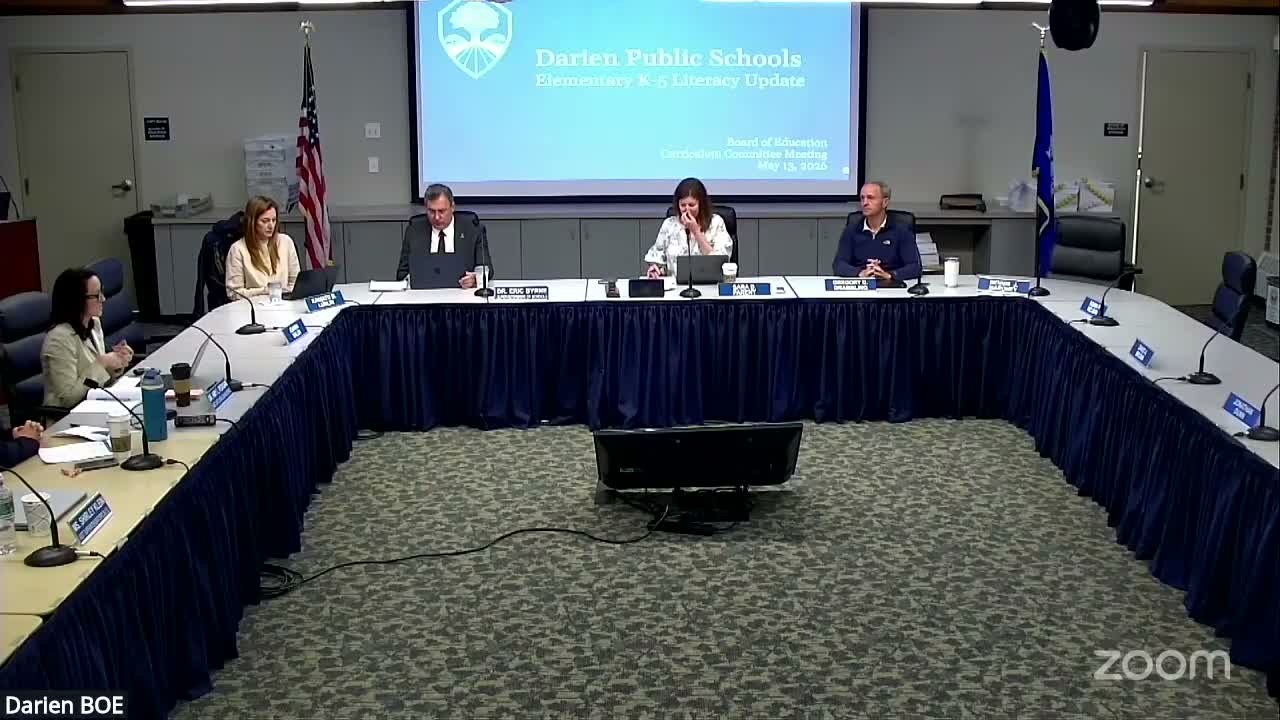
The Darien Board of Education curriculum committee heard an update May 13 on the district’s elementary literacy work and the design for a grades 4–5 pilot.
A district presenter said the district is nearly finished with the first year of implementing a new K–3 resource and is focused on creating a coherent PK–12 literacy program aligned with the K–3 Right to Read legislation. The presenter described advisory and steering groups that include classroom teachers, special educators and speech‑language pathologists and said the next major step is a May 19 core review day to evaluate two candidate resources for intermediate grades.
Dr. Falcone, who led the implementation overview, summarized teacher feedback collected during the year. She said teachers reported strengths in foundational phonics routines, expanded vocabulary and grammar instruction, engaging texts and a clear spiraling lesson design. “There’s an abundance of resources,” she said, while also acknowledging that navigating and selecting which resources to keep or adapt has been a continuing challenge.
Teachers and leaders flagged three consistent growth areas: writing instruction (teachers want more volume and stamina), pacing (teachers are learning how to stop and move on within a spiraling program), and assessment burden (the program provides many checks that the district is auditing to determine which are most meaningful). Dr. Falcone said the district added ‘‘week‑2’’ progress checks to help teachers pull standards‑level reports and inform instruction more precisely.
On May 19 the district will host a full‑day core review where two vendors — HMH and the updated Units of Study from Heinemann — will present. A district consultant from Columbia University will help the committee analyze each resource against the district’s instructional framework and pilot design goals. Dr. Falcone said the district plans to involve all five elementary schools in pilot work so teachers across buildings can experience both programs before a larger decision is made.
The presenters also described professional supports tied to pilot planning: coaching roles to be deployed next year, targeted professional learning on data literacy, and a consultant contract to help align small‑group instruction with program modules. The district said decisions about pilot classroom assignments and comparison design will be finalized after the May 19 review.
The committee’s discussion emphasized protecting instructional minutes for literacy while also preserving time for other subjects and pull‑out services. Board members pressed whether small‑group instruction would require added minutes; the district replied that the time already appears in the instructional framework and the primary work will be on refining implementation and schedules, not lengthening the school day.
The meeting closed with no public comments and a voice motion to adjourn.
A district presenter said the district is nearly finished with the first year of implementing a new K–3 resource and is focused on creating a coherent PK–12 literacy program aligned with the K–3 Right to Read legislation. The presenter described advisory and steering groups that include classroom teachers, special educators and speech‑language pathologists and said the next major step is a May 19 core review day to evaluate two candidate resources for intermediate grades.
Dr. Falcone, who led the implementation overview, summarized teacher feedback collected during the year. She said teachers reported strengths in foundational phonics routines, expanded vocabulary and grammar instruction, engaging texts and a clear spiraling lesson design. “There’s an abundance of resources,” she said, while also acknowledging that navigating and selecting which resources to keep or adapt has been a continuing challenge.
Teachers and leaders flagged three consistent growth areas: writing instruction (teachers want more volume and stamina), pacing (teachers are learning how to stop and move on within a spiraling program), and assessment burden (the program provides many checks that the district is auditing to determine which are most meaningful). Dr. Falcone said the district added ‘‘week‑2’’ progress checks to help teachers pull standards‑level reports and inform instruction more precisely.
On May 19 the district will host a full‑day core review where two vendors — HMH and the updated Units of Study from Heinemann — will present. A district consultant from Columbia University will help the committee analyze each resource against the district’s instructional framework and pilot design goals. Dr. Falcone said the district plans to involve all five elementary schools in pilot work so teachers across buildings can experience both programs before a larger decision is made.
The presenters also described professional supports tied to pilot planning: coaching roles to be deployed next year, targeted professional learning on data literacy, and a consultant contract to help align small‑group instruction with program modules. The district said decisions about pilot classroom assignments and comparison design will be finalized after the May 19 review.
The committee’s discussion emphasized protecting instructional minutes for literacy while also preserving time for other subjects and pull‑out services. Board members pressed whether small‑group instruction would require added minutes; the district replied that the time already appears in the instructional framework and the primary work will be on refining implementation and schedules, not lengthening the school day.
The meeting closed with no public comments and a voice motion to adjourn.
View the Full Meeting & All Its Details
This article offers just a summary. Unlock complete video, transcripts, and insights as a Founder Member.
✓
Watch full, unedited meeting videos
✓
Search every word spoken in unlimited transcripts
✓
AI summaries & real-time alerts (all government levels)
✓
Permanent access to expanding government content
30-day money-back guarantee
