Committee narrows DOC role in proposed forensic facility, asks AHS for interim restoration program
May 14, 2026 | Corrections & Institutions, HOUSE OF REPRESENTATIVES, Committees, Legislative , Vermont
This article was created by AI summarizing key points discussed. AI makes mistakes, so for full details and context, please refer to the video of the full meeting. Please report any errors so we can fix them. Report an error »
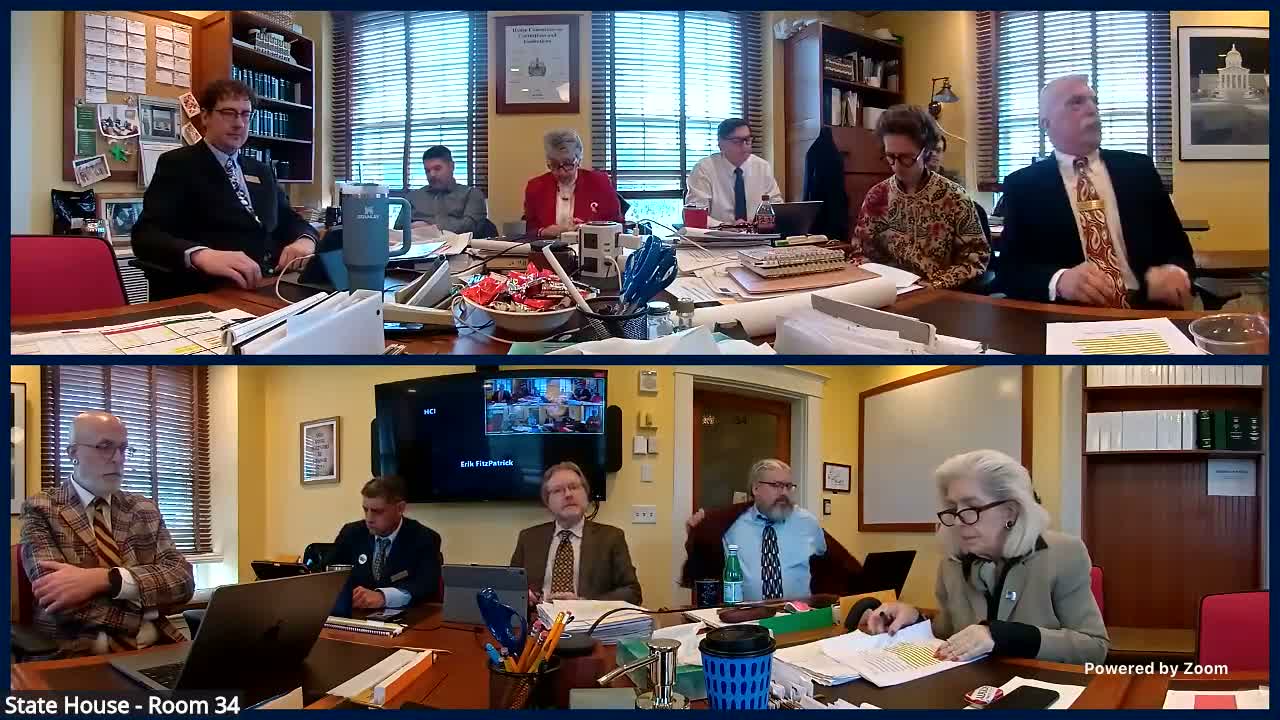
The House Corrections & Institutions Committee on May 14 refined drafting language for a bill that would create a forensic facility and an interim competency restoration program, clarifying that the Department of Corrections (DOC) should not operate or staff the facility but may provide security at the admitting area and around the outside perimeter if the facility sits on a correctional campus.
The chair said the bill should make "very clear that the department would not operate or staff the forensic facility," while still allowing DOC to "monitor the security of folks coming in" at the front entry. A staff member advising the panel recommended adding the phrase "except to provide security services at the admitting area and around the outside perimeter" to the internal-security exception so the draft matches the committee's intent.
Why it matters: lawmakers want to preserve a therapeutic, noncarceral program environment inside the proposed facility while addressing practical safety concerns when a forensic site is colocated on DOC grounds. Committee members also pressed the Agency of Human Services (AHS) to provide interim competency restoration services for people currently housed in DOC custody while the forensic facility feasibility work continues.
Committee debate and drafting choices
Members described a typical correctional entry sequence (lobby, sally port, locked doors) and said DOC staff should be present to screen and monitor ingress and egress at the admitting area but should not operate inside living units, therapy spaces, the dining hall, or the infirmary. A staff adviser suggested precise language tying the exception to the admitting area and the outside perimeter so that the term "internal security" does not inadvertently authorize DOC to control program or residential spaces.
The panel also discussed an interim competency restoration approach. Several members said they wanted restoration services provided by AHS or the Department of Mental Health, and explicitly excluded WellPath (the DOC medical contractor) and any entity under contract with DOC from delivering those interim services. The chair told members the goal was to get people currently held without restoration services connected with treatment while avoiding a permanent operational role for DOC in program delivery.
On the question of timing, members debated whether the interim authority should include an explicit sunset or instead be phrased to expire "before the forensic facility is accepting placements." One committee member noted a sunset could prevent the interim program from remaining in force indefinitely; another said tying the authority to the facility becoming operational would be clearer. A date mentioned during the discussion for a statutory sunset was 2028, with January 1 cited as the likely effective cutoff.
What the committee did next
Legislative staff agreed to draft revised language that: (1) inserts an admitting-area/perimeter exception after the internal-security clause, and (2) spells out that interim competency restoration services must be provided by an entity not under contract with DOC. Staff will circulate the revision to members and return recommended wording to House Judiciary and the conference process as needed.
The committee emphasized that the feasibility plan required from AHS must describe who will operate the forensic facility, program design, and cost estimates for construction and operations, and that there will be check-ins (Justice Oversight Committee reviews) while the feasibility work proceeds.
Quotes
"Weare very clear that the department would not operate or staff the forensic facility," the committee chair said, arguing the bill must preserve therapeutic and program spaces separate from DOC custody.
A staff adviser suggested the committee add language "except to provide security services at the admitting area and around the outside perimeter" to ensure the admitting-area monitoring role is preserved in the draft.
"We don't want WellPath to be providing these services," the chair said when committee members discussed interim providers, arguing the interim arrangement should not default to DOC's existing contractor.
Next steps
Staff (including legislative counsel) will produce a new draft incorporating the admitting-area exception and the interim-program language; committee members asked for the revision to be circulated to Katie and to staff, and signaled the item will return to House Judiciary and later to conference, where further negotiation is expected.
The chair said the bill should make "very clear that the department would not operate or staff the forensic facility," while still allowing DOC to "monitor the security of folks coming in" at the front entry. A staff member advising the panel recommended adding the phrase "except to provide security services at the admitting area and around the outside perimeter" to the internal-security exception so the draft matches the committee's intent.
Why it matters: lawmakers want to preserve a therapeutic, noncarceral program environment inside the proposed facility while addressing practical safety concerns when a forensic site is colocated on DOC grounds. Committee members also pressed the Agency of Human Services (AHS) to provide interim competency restoration services for people currently housed in DOC custody while the forensic facility feasibility work continues.
Committee debate and drafting choices
Members described a typical correctional entry sequence (lobby, sally port, locked doors) and said DOC staff should be present to screen and monitor ingress and egress at the admitting area but should not operate inside living units, therapy spaces, the dining hall, or the infirmary. A staff adviser suggested precise language tying the exception to the admitting area and the outside perimeter so that the term "internal security" does not inadvertently authorize DOC to control program or residential spaces.
The panel also discussed an interim competency restoration approach. Several members said they wanted restoration services provided by AHS or the Department of Mental Health, and explicitly excluded WellPath (the DOC medical contractor) and any entity under contract with DOC from delivering those interim services. The chair told members the goal was to get people currently held without restoration services connected with treatment while avoiding a permanent operational role for DOC in program delivery.
On the question of timing, members debated whether the interim authority should include an explicit sunset or instead be phrased to expire "before the forensic facility is accepting placements." One committee member noted a sunset could prevent the interim program from remaining in force indefinitely; another said tying the authority to the facility becoming operational would be clearer. A date mentioned during the discussion for a statutory sunset was 2028, with January 1 cited as the likely effective cutoff.
What the committee did next
Legislative staff agreed to draft revised language that: (1) inserts an admitting-area/perimeter exception after the internal-security clause, and (2) spells out that interim competency restoration services must be provided by an entity not under contract with DOC. Staff will circulate the revision to members and return recommended wording to House Judiciary and the conference process as needed.
The committee emphasized that the feasibility plan required from AHS must describe who will operate the forensic facility, program design, and cost estimates for construction and operations, and that there will be check-ins (Justice Oversight Committee reviews) while the feasibility work proceeds.
Quotes
"Weare very clear that the department would not operate or staff the forensic facility," the committee chair said, arguing the bill must preserve therapeutic and program spaces separate from DOC custody.
A staff adviser suggested the committee add language "except to provide security services at the admitting area and around the outside perimeter" to ensure the admitting-area monitoring role is preserved in the draft.
"We don't want WellPath to be providing these services," the chair said when committee members discussed interim providers, arguing the interim arrangement should not default to DOC's existing contractor.
Next steps
Staff (including legislative counsel) will produce a new draft incorporating the admitting-area exception and the interim-program language; committee members asked for the revision to be circulated to Katie and to staff, and signaled the item will return to House Judiciary and later to conference, where further negotiation is expected.
View the Full Meeting & All Its Details
This article offers just a summary. Unlock complete video, transcripts, and insights as a Founder Member.
✓
Watch full, unedited meeting videos
✓
Search every word spoken in unlimited transcripts
✓
AI summaries & real-time alerts (all government levels)
✓
Permanent access to expanding government content
30-day money-back guarantee
