Benton Harbor sees sharp income‑tax declines; commissioners press to fill compliance role
May 14, 2026 | Benton Harbor, Berrien County, Michigan
This article was created by AI summarizing key points discussed. AI makes mistakes, so for full details and context, please refer to the video of the full meeting. Please report any errors so we can fix them. Report an error »
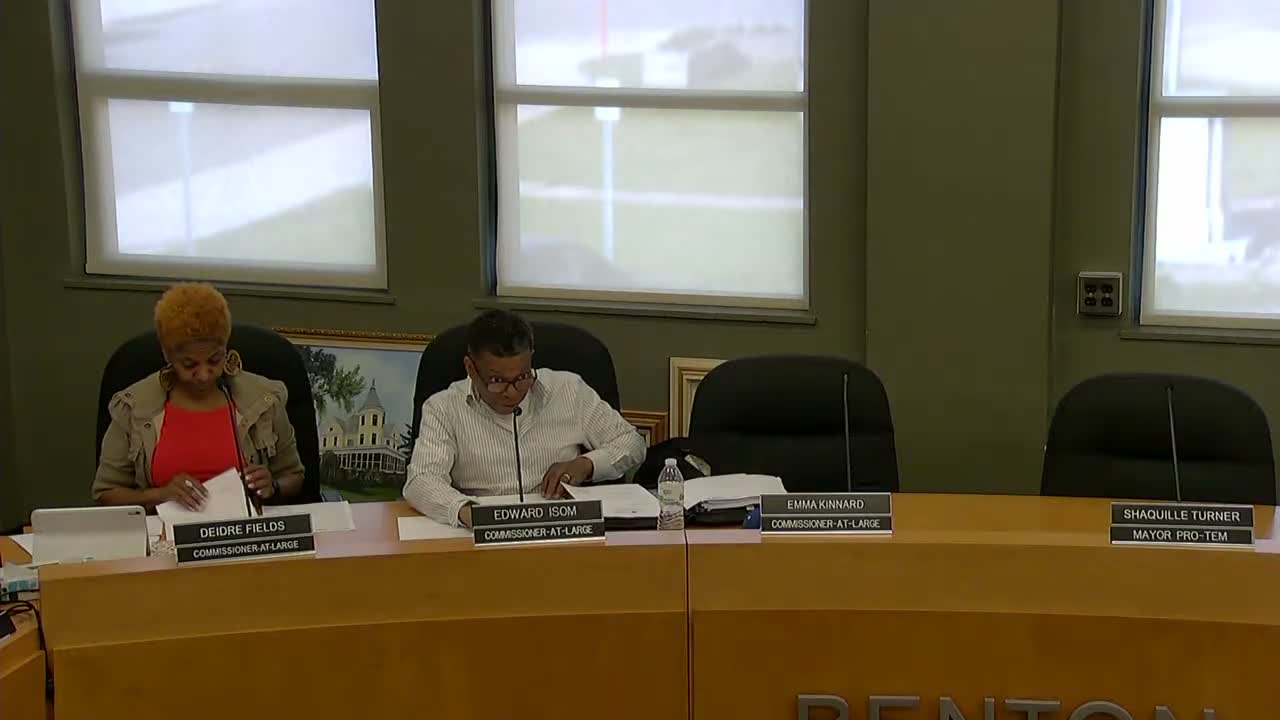
The committee heard a detailed status report on the city’s income‑tax processing and collections. The staff member who manages income‑tax returns told commissioners that for the year ending April, the city is seeing declines: individual returns down 19%, withholdings down 29%, total deposits down 26%, refunds up 29% and revenue down about 23% compared with the prior year.
Why it matters: The income tax is a significant local revenue source. Declining returns and understaffing in the collections and compliance function reduce the city’s ability to maximize receipts at a time when it is also fronting grant vendor payments and considering short‑term borrowing.
The income‑tax specialist said she was processing returns and that compliance work — the proactive casework to find unpaid taxpayers and nonfilers — was not being done because the department currently has only one person. She summarized year‑to‑year changes: "From April 2025 to April 2026, we're down, individual returns 19%... withholdings is down 29%... total deposits is down 26%... refunds are up 29%, and revenue is down 23%." Commissioners noted a previously budgeted compliance position (salary cited at approximately $40,000) had not been filled and urged resuming recruitment or hiring a part‑time or seasonal compliance worker during peak filing months.
Finance staff said there had been a budgeted $30,000 part‑time position in prior years intended to boost collections; the city also discussed using temporary hires in the March–June filing window to support processing and collections. Commissioners asked staff to circulate job descriptions and org charts, and to present an assessment of collection returns that could be generated by filling the compliance post.
Context and next steps: Staff will provide the job description(s), any previously budgeted recruitment materials and a clearer estimate of the incremental revenue a compliance hire might recover. Commissioners framed the hire as likely to pay for itself by bringing in uncollected income tax revenue.
Why it matters: The income tax is a significant local revenue source. Declining returns and understaffing in the collections and compliance function reduce the city’s ability to maximize receipts at a time when it is also fronting grant vendor payments and considering short‑term borrowing.
The income‑tax specialist said she was processing returns and that compliance work — the proactive casework to find unpaid taxpayers and nonfilers — was not being done because the department currently has only one person. She summarized year‑to‑year changes: "From April 2025 to April 2026, we're down, individual returns 19%... withholdings is down 29%... total deposits is down 26%... refunds are up 29%, and revenue is down 23%." Commissioners noted a previously budgeted compliance position (salary cited at approximately $40,000) had not been filled and urged resuming recruitment or hiring a part‑time or seasonal compliance worker during peak filing months.
Finance staff said there had been a budgeted $30,000 part‑time position in prior years intended to boost collections; the city also discussed using temporary hires in the March–June filing window to support processing and collections. Commissioners asked staff to circulate job descriptions and org charts, and to present an assessment of collection returns that could be generated by filling the compliance post.
Context and next steps: Staff will provide the job description(s), any previously budgeted recruitment materials and a clearer estimate of the incremental revenue a compliance hire might recover. Commissioners framed the hire as likely to pay for itself by bringing in uncollected income tax revenue.
View the Full Meeting & All Its Details
This article offers just a summary. Unlock complete video, transcripts, and insights as a Founder Member.
✓
Watch full, unedited meeting videos
✓
Search every word spoken in unlimited transcripts
✓
AI summaries & real-time alerts (all government levels)
✓
Permanent access to expanding government content
30-day money-back guarantee
