Committee requests conference with Senate after changes to opioid abatement spending bill
May 14, 2026 | Human Services, HOUSE OF REPRESENTATIVES, Committees, Legislative , Vermont
This article was created by AI summarizing key points discussed. AI makes mistakes, so for full details and context, please refer to the video of the full meeting. Please report any errors so we can fix them. Report an error »
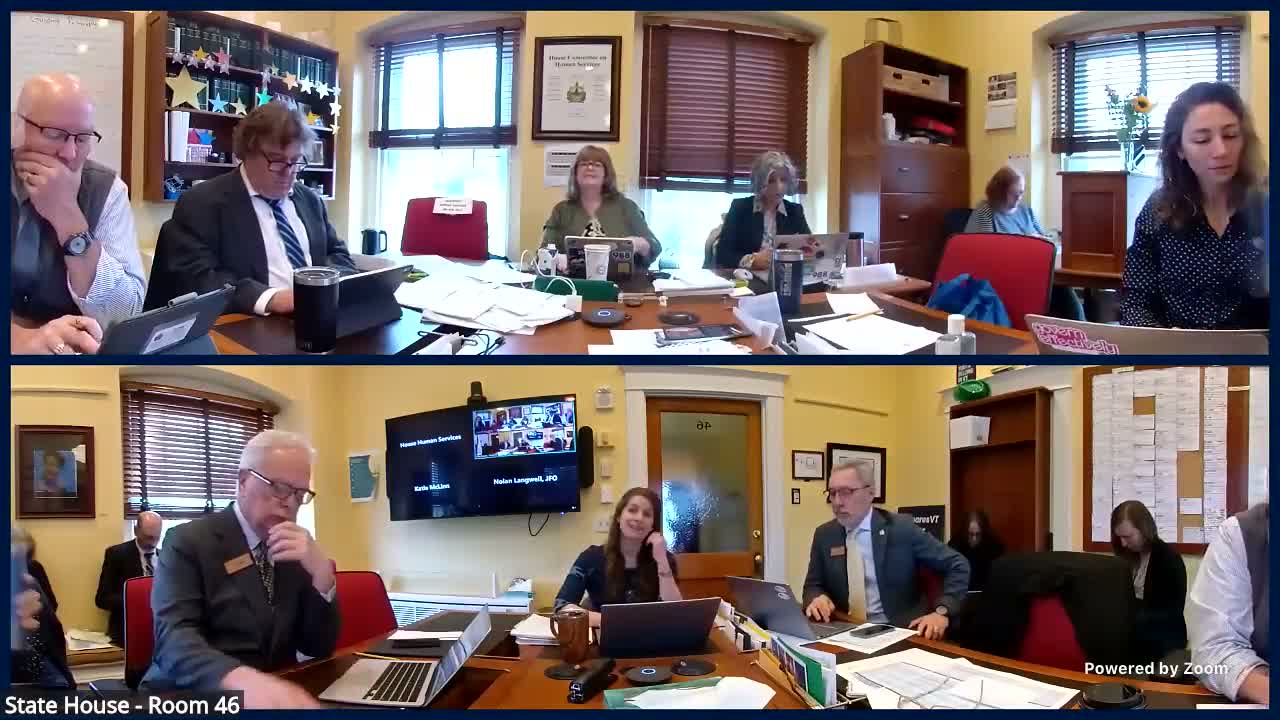
The Appropriations Committee on Thursday examined Senate changes to H660, the bill that governs spending from the opioid abatement special fund, and voted to request a committee of conference with the Senate to reconcile differences.
Katie McCarter of the Office of Universal State Council told members they were working from a highlighted draft because a final Senate "as-passed" version was not yet available. "We're looking at H660, the opioid abatement, special fund appropriations," she said, and walked the panel through Senate floor additions that the House draft does not reflect.
Among the Senate changes McCarter flagged: a split of dollars into different categories for recovery residential beds (Subdivision A and B), grants to recovery centers, and a $1.1 million appropriation to the Department of Health to support establishing an overdose prevention center (OPC) in Burlington — with a condition that the department "shall not distribute funding until a location for the overdose prevention center has been procured by lease or purchase." The Senate language also extended the committee's intent to appropriate annual OPC funding through fiscal 2028.
McCarter said the Senate added language requiring the opioid settlement advisory committee to develop its recommendations "in consultation with the office of the attorney general," and she noted separate Senate text allowing the health department to submit its own spending recommendations when it disagrees with the advisory committee. That change prompted questions from members about the AG's role.
"The Attorney General making substance use treatment decisions doesn't make a lot of sense," one member said, urging that any AG involvement be limited to legal review rather than programmatic direction. Agency staff said they were willing to consult with the Attorney General on legal issues but did not intend for the AG to make treatment choices.
The Senate also added a new reporting requirement: quarterly Department of Health reports identifying unobligated or unspent special-fund balances and explaining why funds had not been fully distributed. McCarter said the reports would be due on specified dates and posted on the department website; members said that requirement responds to uncertainty about the timing and size of opioid settlement payments.
A Senate floor amendment further directs the health department to deliver, by Dec. 15, 2026, a plan recommending one or more syringe recovery models statewide and requires syringe service providers to report the percentage of distributed syringes that are returned or otherwise collected.
After discussion, the committee's chair asked for a motion "to not concur with the Senate and to request a committee of conference." The panel conducted a straw poll and the chair announced the committee will request a committee of conference to reconcile H660's House and Senate changes.
The committee did not adopt final reconciled language at the meeting; staff said members would consider updated drafting and possible amendments when the committee meets with Senate conferees.
Katie McCarter of the Office of Universal State Council told members they were working from a highlighted draft because a final Senate "as-passed" version was not yet available. "We're looking at H660, the opioid abatement, special fund appropriations," she said, and walked the panel through Senate floor additions that the House draft does not reflect.
Among the Senate changes McCarter flagged: a split of dollars into different categories for recovery residential beds (Subdivision A and B), grants to recovery centers, and a $1.1 million appropriation to the Department of Health to support establishing an overdose prevention center (OPC) in Burlington — with a condition that the department "shall not distribute funding until a location for the overdose prevention center has been procured by lease or purchase." The Senate language also extended the committee's intent to appropriate annual OPC funding through fiscal 2028.
McCarter said the Senate added language requiring the opioid settlement advisory committee to develop its recommendations "in consultation with the office of the attorney general," and she noted separate Senate text allowing the health department to submit its own spending recommendations when it disagrees with the advisory committee. That change prompted questions from members about the AG's role.
"The Attorney General making substance use treatment decisions doesn't make a lot of sense," one member said, urging that any AG involvement be limited to legal review rather than programmatic direction. Agency staff said they were willing to consult with the Attorney General on legal issues but did not intend for the AG to make treatment choices.
The Senate also added a new reporting requirement: quarterly Department of Health reports identifying unobligated or unspent special-fund balances and explaining why funds had not been fully distributed. McCarter said the reports would be due on specified dates and posted on the department website; members said that requirement responds to uncertainty about the timing and size of opioid settlement payments.
A Senate floor amendment further directs the health department to deliver, by Dec. 15, 2026, a plan recommending one or more syringe recovery models statewide and requires syringe service providers to report the percentage of distributed syringes that are returned or otherwise collected.
After discussion, the committee's chair asked for a motion "to not concur with the Senate and to request a committee of conference." The panel conducted a straw poll and the chair announced the committee will request a committee of conference to reconcile H660's House and Senate changes.
The committee did not adopt final reconciled language at the meeting; staff said members would consider updated drafting and possible amendments when the committee meets with Senate conferees.
View the Full Meeting & All Its Details
This article offers just a summary. Unlock complete video, transcripts, and insights as a Founder Member.
✓
Watch full, unedited meeting videos
✓
Search every word spoken in unlimited transcripts
✓
AI summaries & real-time alerts (all government levels)
✓
Permanent access to expanding government content
30-day money-back guarantee
