Gwinnett school board delays high‑school cell‑phone policy, discusses phased facilities plan
May 14, 2026 | Gwinnett County, School Districts, Georgia
This article was created by AI summarizing key points discussed. AI makes mistakes, so for full details and context, please refer to the video of the full meeting. Please report any errors so we can fix them. Report an error »
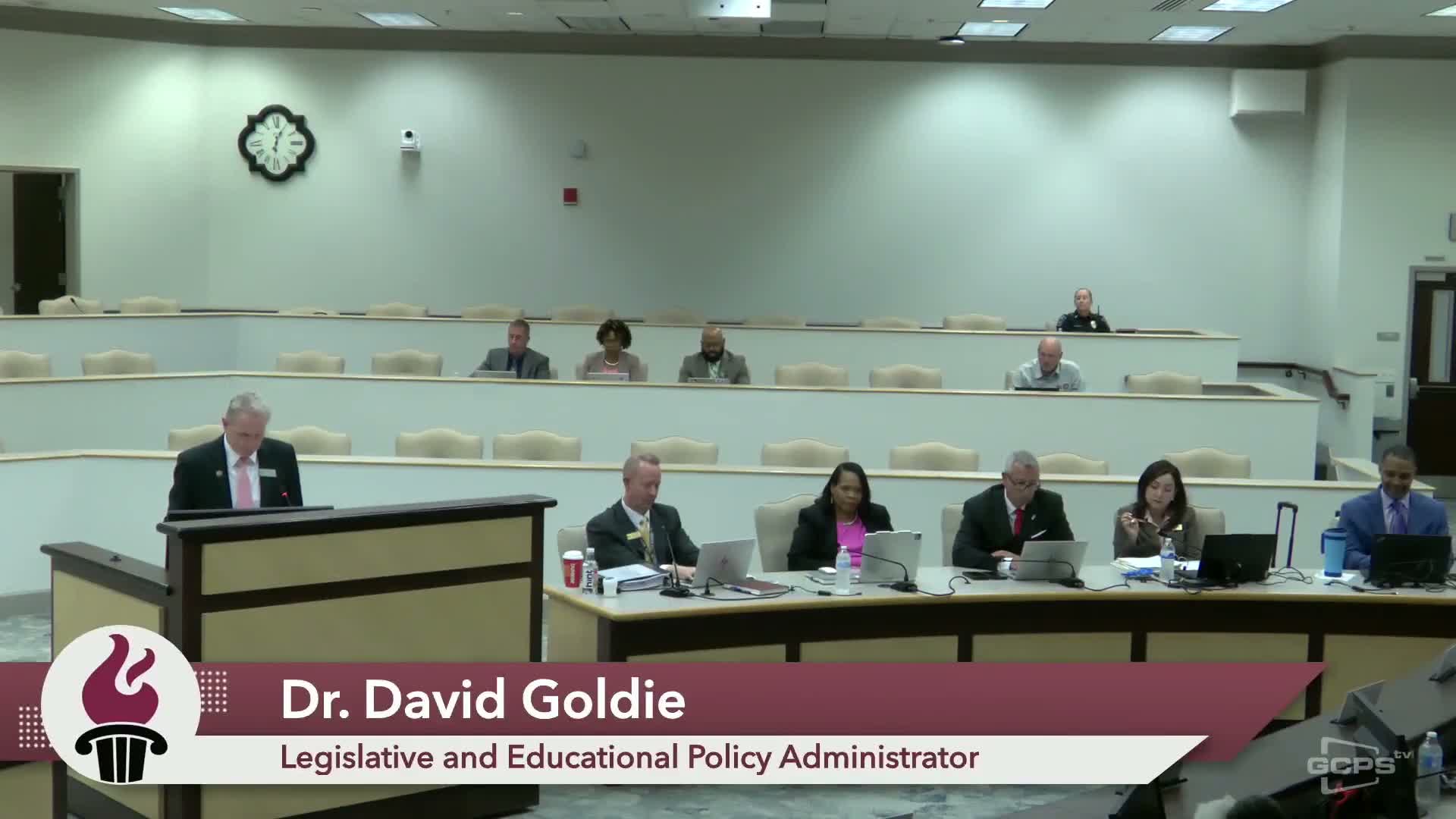
The Gwinnett County Board of Education on May 12 agreed to pause action on a proposed cell‑phone policy for high schools so incoming Superintendent Dr. Estrella can review the draft and advise the board.
Board members said they want more research, student and teacher input, and time for training before the policy would go into effect. “She wants to explore getting more information, data, and research around the impact of the policy and figuring out the implications and the impact to students,” one board member said, urging that the board give the incoming superintendent time to weigh in before the item is placed on the business‑meeting agenda.
Dr. David Goldie, the district’s legislative and policy administrator, reminded the board that the underlying law must be implemented no later than July 1, 2027, and that the board therefore has a year to finalize an approach. Goldie presented draft revisions to Policy FD (long‑term facilities planning) and said the item had previously been on the policy table for 30 days. He said the proposed FD language clarifies educational specifications, condition assessments and enrollment forecasting as components that feed a facility master plan tied to the district’s capital plan.
Patrick Burke, who presented the facilities elements, said the revision calls out a cadence for educational specifications and condition assessments and noted SPLOST funding is the primary capital source for facility work. “The whole idea is these elements all line up to a capital planning cycle,” Burke said, describing a roughly 24‑month timeline leading to a capital plan.
Several board members supported delaying any new policy votes until Dr. Estrella has reviewed them and recommended a phased approach that allows the district to gather more stakeholder feedback and to plan training for staff and students. One member said a phased rollout could help high‑school students and teachers adjust ahead of the statutory deadline.
The board did not vote on any policy changes at the work session. Instead staff said they will verify whether Dr. Estrella has provided feedback and will work with the policy committee on next steps, including community engagement while protecting student privacy laws such as FERPA.
Next steps: staff will confirm superintendent input and report back; Policy FD remains available for committee and board review and could be placed on a future agenda for a formal vote.
Board members said they want more research, student and teacher input, and time for training before the policy would go into effect. “She wants to explore getting more information, data, and research around the impact of the policy and figuring out the implications and the impact to students,” one board member said, urging that the board give the incoming superintendent time to weigh in before the item is placed on the business‑meeting agenda.
Dr. David Goldie, the district’s legislative and policy administrator, reminded the board that the underlying law must be implemented no later than July 1, 2027, and that the board therefore has a year to finalize an approach. Goldie presented draft revisions to Policy FD (long‑term facilities planning) and said the item had previously been on the policy table for 30 days. He said the proposed FD language clarifies educational specifications, condition assessments and enrollment forecasting as components that feed a facility master plan tied to the district’s capital plan.
Patrick Burke, who presented the facilities elements, said the revision calls out a cadence for educational specifications and condition assessments and noted SPLOST funding is the primary capital source for facility work. “The whole idea is these elements all line up to a capital planning cycle,” Burke said, describing a roughly 24‑month timeline leading to a capital plan.
Several board members supported delaying any new policy votes until Dr. Estrella has reviewed them and recommended a phased approach that allows the district to gather more stakeholder feedback and to plan training for staff and students. One member said a phased rollout could help high‑school students and teachers adjust ahead of the statutory deadline.
The board did not vote on any policy changes at the work session. Instead staff said they will verify whether Dr. Estrella has provided feedback and will work with the policy committee on next steps, including community engagement while protecting student privacy laws such as FERPA.
Next steps: staff will confirm superintendent input and report back; Policy FD remains available for committee and board review and could be placed on a future agenda for a formal vote.
View the Full Meeting & All Its Details
This article offers just a summary. Unlock complete video, transcripts, and insights as a Founder Member.
✓
Watch full, unedited meeting videos
✓
Search every word spoken in unlimited transcripts
✓
AI summaries & real-time alerts (all government levels)
✓
Permanent access to expanding government content
30-day money-back guarantee
